For a chocolate orange Yule log with a proper coffee twist, bake a light cocoa sponge, roll it while warm, fill it with orange-scented decaf coffee buttercream and cover it in dark chocolate ganache. The result is a festive dessert with a clear purpose for the decaf: it balances the rich chocolate and bright orange without adding an extra pot of coffee to the table.
This original version is designed for a UK Swiss roll tin measuring approximately 33 by 23cm and makes 8 to 10 slices. It is a useful make-ahead Christmas dessert with an unexpectedly forgiving finish. Ganache looks convincingly like tree bark even when the sponge has made a few decisions of its own.
Why chocolate orange for Christmas 2026?
Yule logs remain part of British Christmas dessert culture. Good Housekeeping’s Christmas 2026 Yule log review, updated 13 October 2026, covers classic versions and new variations. It is evidence of a current festive offering, not a measurement of how many families are baking at home.
In British Baker’s 28 October 2026 discussion of Christmas flavours, fruit-led flavours and chocolate both feature, with orange and other citrus among the familiar festive choices. We have combined those flavours with brewed decaf coffee to make an original filling. It does not reproduce anyone else’s commercial dessert or recipe.
UK Keyword Planner estimates from previous years show searches for chocolate orange Yule logs rising in November and December. This is historical seasonality rather than a prediction of precisely how many people will search this Christmas. For a home baker, the more useful finding is that the end of November is a good time to practise the rolling method.
What you need
For the chocolate sponge
- 4 large eggs, ideally at room temperature
- 100g caster sugar, plus a little extra for rolling
- 65g self-raising flour
- 25g unsweetened cocoa powder
- Finely grated zest of half an unwaxed orange
- A small pinch of salt
For the coffee and orange buttercream
- 115g unsalted butter, softened but not melted
- 175g icing sugar, sifted
- 25ml strong brewed decaf coffee, completely cooled
- Finely grated zest of half an orange
- Up to 1 teaspoon orange juice, optional
For the chocolate bark coating
- 160g dark chocolate, roughly chopped
- 150ml double cream
- A little extra orange zest or candied orange peel to decorate, optional
You need a Swiss roll tin, baking parchment, an electric whisk, two mixing bowls and a broad knife or small palette knife. Use an oven-safe tin with a flat base. Check the packaging on the chocolate for allergens. This recipe contains eggs, wheat and dairy, with possible additional allergens depending on the chocolate.
Step one: bake the sponge
- Heat the oven. Set it to 180C fan or 200C conventional. Line the 33 by 23cm tin with baking parchment, pressing neatly into the corners.
- Whisk for volume. Beat the eggs and caster sugar for approximately 5 to 7 minutes until pale, thick and able to form a visible ribbon when the whisk is lifted. This air helps give the sponge its flexible texture.
- Fold carefully. Sift together the flour, cocoa and salt. Fold into the egg mixture in two batches, using gentle strokes. Add the orange zest near the end. Avoid stirring hard enough to knock out all that air you have just made.
- Bake briefly. Spread evenly in the tin and bake for around 9 to 12 minutes until the top springs back gently when touched. A thin sponge can dry out quickly, so begin checking near the earlier end of the range.
- Roll while warm. Put fresh parchment on the worktop and dust lightly with caster sugar. Turn the sponge onto it, peel away the lining paper and roll from a short end with the new parchment inside. Leave it to cool in the rolled shape.
Rolling a warm sponge gives it a chance to settle into a curve. Waiting until it is cold makes cracking more likely. Small splits are perfectly survivable because the finished cake gets a coating. A major crack just means you should apply the ganache with slightly greater confidence.
Step two: make the decaf coffee buttercream
Beat the softened butter until pale and smooth. Add the sifted icing sugar in stages, starting slowly unless you want a Christmas snowfall over the kitchen counter. Beat until light. Add the cooled brewed decaf coffee a teaspoon at a time, mixing well after each addition. Fold in the grated orange zest.
Use no more than 25ml coffee for this amount of buttercream unless you deliberately adjust the other ingredients. Too much liquid will leave it loose. The optional orange juice can add brightness, but only stir it in if your mixture is already holding its shape. If it softens too much, refrigerate briefly and stir again.
For a straightforward brewed coffee base, Everyday Italiana Decaf Coffee is a verified I Love Decaf medium-roast product available in ground formats and identified for cafetière brewing on its live product listing. Brew a short, strong measure and let it cool completely before taking the required 25ml. Hot coffee will soften the butter and upset the filling.
Step three: assemble and coat the Yule log
- Open the sponge. Unroll the completely cooled sponge gently. It may retain a curl. Do not press it flat to make it obey.
- Fill. Spread the coffee and orange buttercream in a thin even layer, leaving about 1cm clear at the far edge so the filling has room to move when you roll.
- Roll again. Use the parchment to guide the sponge back into a log. Put it seam-side down on a board or serving plate.
- Prepare the ganache. Heat the cream until steaming, remove from the heat and pour over the chopped dark chocolate. Leave for 2 minutes, then stir gently until smooth. Let it cool until spreadable.
- Make the bark. Cover the log with ganache and draw lines along it with a fork. Add orange zest or a few fine pieces of candied peel if wanted. Chill briefly to set.
If you want a small branch, cut a diagonal slice from one end before coating and attach it to the side with a dab of ganache. The extra engineering is entirely optional. A good cake is a good cake even without convincing botanical anatomy.
How to make it ahead and serve
Make the sponge the day before if needed, let it cool fully and keep it properly covered until you fill it. Alternatively, finish the assembled log the day before serving and refrigerate it in a covered container. Follow the storage instructions for the dairy and other ingredients you use. Remove it from the fridge shortly before serving so the buttercream is not uncomfortably firm.
A sharp knife gives a neat spiral, especially if you wipe it between slices. Serve eight generous portions or ten smaller ones. Orange segments can brighten the plate without requiring another sauce, and a simple spoonful of plain yoghurt works with the rich ganache if you prefer a little contrast.
Common mistakes and practical fixes
The sponge cracked when I rolled it
Minor cracks disappear under ganache. Next time, check the baking time, avoid overmixing and roll while the sponge is warm. If it has broken into several pieces, keep the best sections together with a little filling and use ganache to help disguise the join. It may not be elegant but it is still dessert.
The buttercream is too runny
Check whether the coffee was cold and accurately measured. Chill the mixture briefly to firm the butter, then stir it back to a spreadable consistency. Adding more hot coffee is not the solution. Using finely sifted icing sugar also helps avoid lumps.
I cannot taste the orange
Use freshly grated zest from an unwaxed orange. The coloured peel contains the aroma. Avoid the bitter white pith. A lot of orange juice adds liquid and can compromise the filling; zest does the job more effectively.
Frequently asked questions
Can I use decaf instead of regular espresso?
Yes. Strong brewed decaf provides coffee flavour in the buttercream. Decaf retains a little residual caffeine, so do not describe the finished dessert as entirely caffeine-free.
Do I need a coffee machine?
No. A small, strong cafetière brew is adequate. Strain it carefully and allow it to cool before adding it to the buttercream. Coffee grounds do not belong in a smooth filling.
Can I leave the orange out?
Yes. Omit the zest and optional juice for a chocolate and coffee version. This recipe deliberately uses orange to distinguish the seasonal flavour, so the result will taste different without it.
Should I photograph the cake before cutting it?
Only if you want to. It is a perfectly reasonable dessert without a social media career. Slice it after the coating has set and use a clean knife for neat portions.
A Christmas dessert with proper coffee flavour
The sponge is simple, the filling has a clear coffee note and the chocolate coating takes care of the appearance. If you want to make the decaf filling with a ground coffee you can also drink, see Everyday Italiana Decaf Coffee from I Love Decaf. Your Christmas table already has enough complicated things on it.
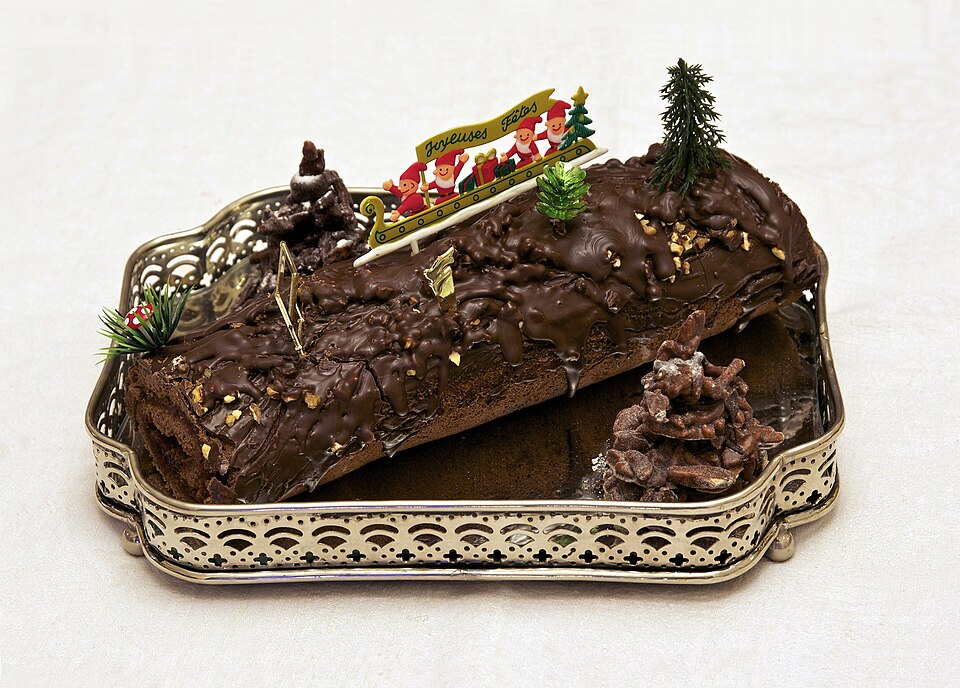
Independent UK sources: Good Housekeeping, Christmas Yule log review, updated 13 October 2026; British Baker, Christmas flavour trends, 28 October 2026. Featured image depicts a different homemade chocolate log with raspberry filling, not this orange and decaf recipe. Photograph by Jebulon, Wikimedia Commons, CC0 1.0.