Swiss Water decaf coffee: how the process works and the best UK options
A clear guide to 99.9% caffeine-free green coffee, Green Coffee Extract, flavour, organic certification and which Swiss Water coffee to choose.
Last updated 17 July 2026 | Written and reviewed by David Holly, founder of I Love Decaf
What is Swiss Water decaf coffee?
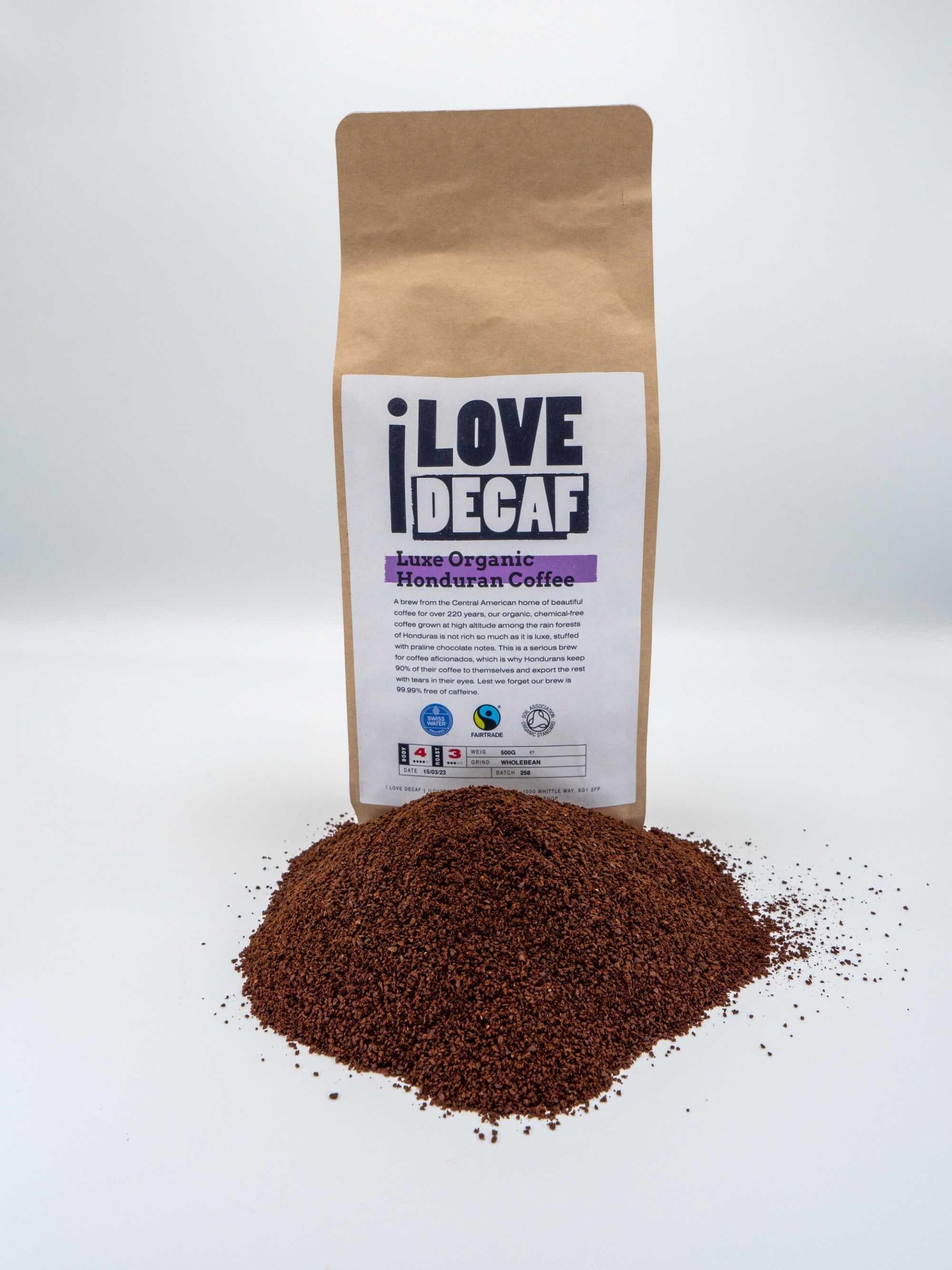
Swiss Water® decaf is coffee made from green beans that have had most of their caffeine removed through a proprietary water-based process. The method uses water, controlled temperature, time, a flavour-rich solution called Green Coffee Extract and carbon filtration. It does not introduce chemical solvents such as methylene chloride or ethyl acetate to the beans.
Swiss Water states that the finished green coffee is 99.9% caffeine-free. A brewed cup can still contain a small amount because serving size, dose and brewing method affect what reaches the mug. Decaf means very low caffeine, not a magic disappearance act performed by a tiny Swiss wizard.
The process is designed to protect the coffee’s original flavour and can preserve certifications the green coffee already holds. Swiss Water processing does not automatically make a coffee organic, Fairtrade or delicious. The bean, origin, roast, freshness and brewing still have work to do.
Swiss Water decaf in 60 seconds
The useful facts before we open the full coffee rabbit hole beneath you.
99.9% caffeine-free
Swiss Water guarantees the processed green beans are 99.9% caffeine-free. The final amount in a drink varies with the coffee dose, cup size and brewing method.
No added chemical solvents
The process uses water, temperature, time, coffee’s own soluble compounds and carbon filters rather than methylene chloride or ethyl acetate.
Four main stages
The current official process is described as preparation and hydration, caffeine migration, drying and organic filtration with renewal.
Origin flavour still matters
Swiss Water removes caffeine before roasting. The country, variety, growing conditions and roast profile remain central to taste.
Organic is not automatic
The process can preserve an existing organic certification. The coffee must already qualify and the finished roasted product must meet the relevant certification rules.
Swiss Water is a trade name
Swiss Water® is a proprietary process operated in Canada. It is not a generic name for every coffee decaffeinated with water.
What is on this page
What is on this page
The best Swiss Water decaf coffees in the UK
I Love Decaf currently offers two full Swiss Water coffees in beans, ground and fine-ground formats, plus organic Swiss Water coffee pods. A separate half-caf blend uses Swiss Water decaf as one half of the recipe but still contains meaningful caffeine.
The prices below are kept on the product pages so they remain current when bag sizes and offers change. Nobody benefits from a beautifully ranked landing page advertising a price that disappeared during the reign of George II.
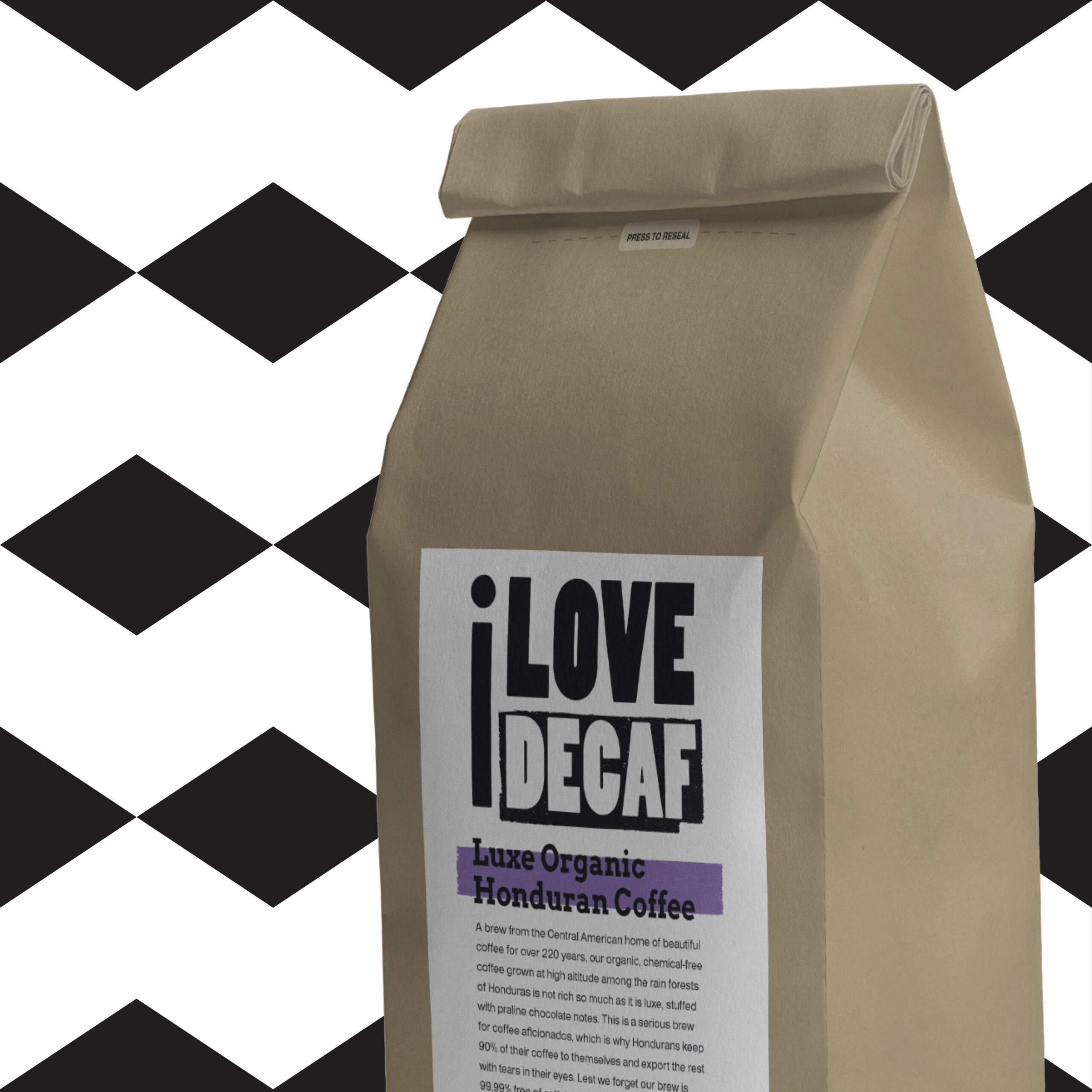
Luxe Organic Swiss Water Honduran Decaf Coffee
Luxe is the broadest recommendation because it combines Swiss Water processing with organic and Fairtrade certification, a medium roast and a full body. Its praline chocolate profile holds up black, through espresso pressure and with milk.
Read the verdict

Best overall Swiss Water decaf
Luxe is the broadest recommendation because it combines Swiss Water processing with organic and Fairtrade certification, a medium roast and a full body. Its praline chocolate profile holds up black, through espresso pressure and with milk.
It is available as whole beans, ground or fine ground in 250g, 500g and 1kg bags. The product had 88 customer ratings and a 4.64 out of 5 score when this guide was reviewed.
- Origin: Honduras
- Process: Organic Swiss Water
- Roast: Medium
- Body: Full
- Taste: Praline chocolate and rounded sweetness
- Best for: Espresso, bean-to-cup, cafetière and milk drinks
- Formats: Beans, ground and fine ground
- Sizes: 250g, 500g and 1kg
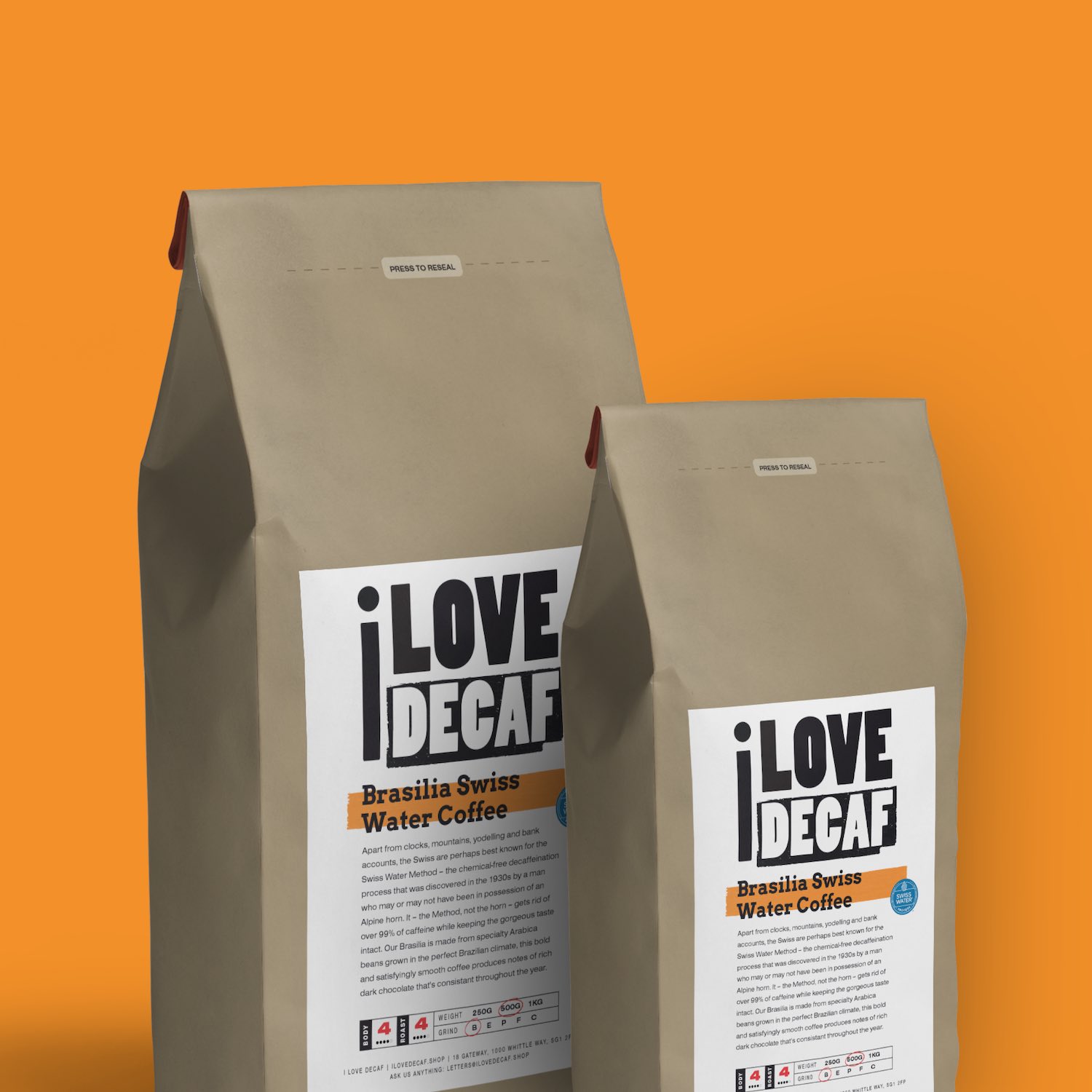
Natural Brasilia Swiss Water Decaf Coffee
Brasilia is the darker and more forceful option. Brazilian Arabica beans, a dark roast and a full body create a rich chocolate-led cup that remains clear in espresso, cappuccino and latte.
Read the verdict
Best dark Swiss Water decaf for espresso
Brasilia is the darker and more forceful option. Brazilian Arabica beans, a dark roast and a full body create a rich chocolate-led cup that remains clear in espresso, cappuccino and latte.
It is available as beans, ground or fine ground in 250g, 500g and 1kg bags. The product had 66 customer ratings and a 4.67 out of 5 score when this guide was reviewed.
- Origin: Brazil
- Process: Swiss Water
- Roast: Dark
- Body: Full
- Taste: Rich dark chocolate and a smooth finish
- Best for: Espresso and strong milk-based drinks
- Formats: Beans, ground and fine ground
- Sizes: 250g, 500g and 1kg

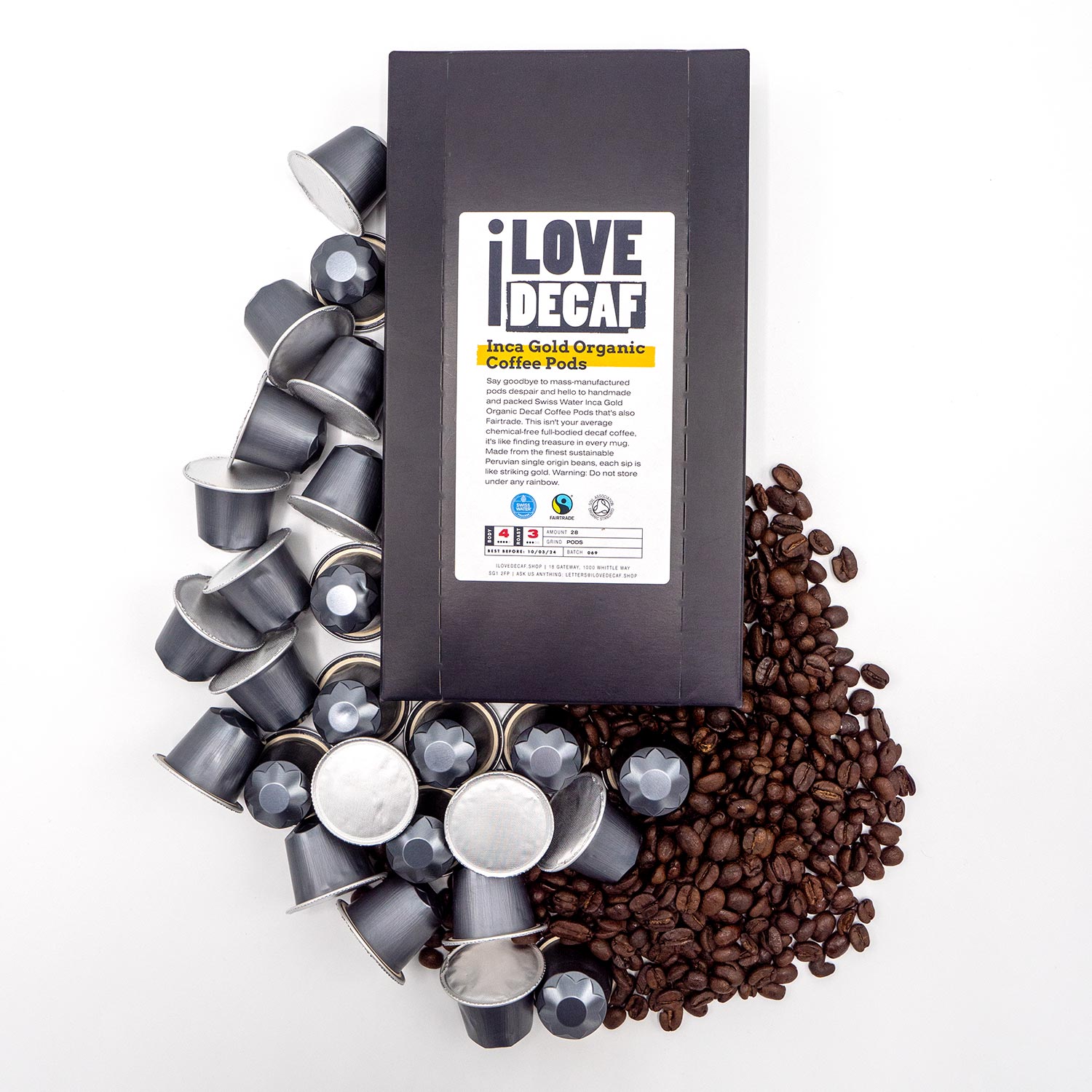
Inca Gold Organic Swiss Water Decaf Coffee Pods
Inca Gold provides organic and Fairtrade Peruvian Swiss Water coffee in a pack of 28 pods. The medium roast and full body aim for praline chocolate, useful crema and a fast single cup without grinding, dosing or discovering that somebody has adjusted the espresso machine again.
Read the verdict
Best Swiss Water decaf coffee pods
Inca Gold provides organic and Fairtrade Peruvian Swiss Water coffee in a pack of 28 pods. The medium roast and full body aim for praline chocolate, useful crema and a fast single cup without grinding, dosing or discovering that somebody has adjusted the espresso machine again.
The product had five customer ratings and a 5.00 out of 5 score when this guide was reviewed. Check the product page for current machine compatibility before ordering.
- Origin: Peru
- Process: Organic Swiss Water
- Roast: Medium
- Body: Full
- Taste: Praline chocolate
- Best for: Fast single-cup convenience
- Format: Pack of 28 pods
- Worth checking: Confirm pod-machine compatibility before purchase
No Nasties uses Swiss Water decaf, but it is not fully decaffeinated
No Nasties Half Decaf Organic Coffee blends Honduran organic and Fairtrade Swiss Water decaf with caffeinated Nicaraguan coffee. It is intended for people reducing caffeine gradually or keeping a smaller morning lift.
Half-caf is not decaf. It still contains a meaningful amount of caffeine and should not be chosen when a fully decaffeinated coffee is required.

Swiss Water coffee comparison
Three formats, three origins and one process. Choose by the cup you want rather than treating the Swiss Water logo as the entire tasting note.
Comparison table
| Coffee | Origin | Roast | Body | Main flavour | Format | Best for |
|---|---|---|---|---|---|---|
| Luxe Organic | Honduras | Medium | Full | Praline chocolate | Beans, ground or fine ground | Best overall, espresso and milk |
| Natural Brasilia | Brazil | Dark | Full | Rich dark chocolate | Beans, ground or fine ground | Dark espresso and milk drinks |
| Inca Gold | Peru | Medium | Full | Praline chocolate | Pack of 28 pods | Fast single-cup convenience |
How the Swiss Water Process works
How the Swiss Water Process works
The current official explanation has four main stages. The clever part is not simply soaking beans in water. Plain water would pull out caffeine and flavour compounds together. Swiss Water uses Green Coffee Extract that already contains coffee’s soluble flavour compounds but has had its caffeine filtered out.
Caffeine then moves from the beans into the surrounding extract through diffusion while much of the flavour material stays closer to equilibrium. Carbon filters remove caffeine from the extract so the liquid can continue through the closed process.

Step 1: Preparation and hydration
Green coffee beans are cleaned and gently hydrated. Controlled hydration prepares the internal structure of the bean for decaffeination while helping protect its origin characteristics.

Step 2: Caffeine migration
The hydrated beans meet caffeine-free Green Coffee Extract. Caffeine moves from the beans into the extract through diffusion while the surrounding liquid already contains the soluble coffee compounds responsible for much of the flavour.

Step 3: Controlled drying
The decaffeinated green beans are dried with high airflow and lower temperatures selected for the coffee’s origin. Moisture must be brought back to a stable level before storage, shipping and roasting.

Step 4: Carbon filtration and renewal
The caffeine-rich extract passes through carbon filters that trap caffeine. The refreshed Green Coffee Extract returns to the cycle, creating a closed process that avoids adding a solvent to the beans.
Swiss Water says the complete decaffeination cycle takes approximately eight to ten hours. The coffee is still green and unroasted when it leaves the decaffeination facility.

What is Green Coffee Extract?
Green Coffee Extract, usually shortened to GCE, is water containing the soluble compounds naturally found in unroasted coffee but without caffeine. It creates the conditions needed for selective caffeine migration.
A new batch of caffeinated beans contains more caffeine than the surrounding GCE, so caffeine moves out of the beans. The extract already contains other soluble coffee material, reducing the pressure for those compounds to move out in the same way.
Carbon filtration removes caffeine from the extract and the renewed GCE continues through the process. It is less mystical than the name suggests, but considerably more useful than simply leaving beans in a bucket and hoping the caffeine gets bored.
Does Swiss Water decaf taste better?
Swiss Water processing is designed to preserve origin characteristics and avoid flavours introduced by chemical solvents. It gives a good coffee a strong chance of remaining a good coffee after decaffeination.
The process cannot make poor green coffee excellent. Flavour still depends on origin, variety, harvest quality, processing at origin, storage, roast, freshness, grind and brewing. Swiss Water is a meaningful quality signal, not a certificate declaring every bean magnificent.
- Choose Luxe for praline chocolate, medium roast flexibility and organic plus Fairtrade certification
- Choose Brasilia for a darker roast, rich chocolate and stronger espresso performance
- Choose Inca Gold when pod convenience matters more than adjusting a grinder before anybody has spoken
- Choose a Mountain Water coffee when you want a separate water-based method and a different origin profile
Is Swiss Water decaf coffee organic and Fairtrade?
Swiss Water processing can preserve certifications the green coffee already holds, including organic certification. It does not create those certifications. A conventional coffee processed through Swiss Water remains a conventional coffee.
Organic and Fairtrade Swiss Water options
- Luxe Organic: Honduran, organic, Fairtrade and Swiss Water processed
- Inca Gold pods: Peruvian, organic, Fairtrade and Swiss Water processed
These products combine agricultural and trading certifications with the water-based decaffeination method.
Swiss Water without an organic claim
- Natural Brasilia: Brazilian Arabica processed through Swiss Water
- No Nasties: a half-caf blend containing organic Swiss Water decaf and caffeinated coffee
Read each product description rather than assuming the process logo confirms every separate certification.
Swiss Water vs Mountain Water and other decaf methods
Water-based decaffeination methods are related in principle but they are not interchangeable brand names. The current page used to mix Swiss Water and Mountain Water together and claim one was purer. The evidence does not support a universal winner. Taste depends on the coffee and how the process, roast and brew are handled.
| Method | Where or who | What removes the caffeine | Useful distinction |
|---|---|---|---|
| Swiss Water® Process | Proprietary process operated in Canada | Green Coffee Extract, diffusion and carbon filtration | 99.9% caffeine-free green coffee with no added chemical solvents |
| Mountain Water Process | Separate process associated with Mexico | Water-based extraction and filtration | Similar broad aim but not Swiss Water and not automatically better or worse |
| Sugarcane or EA process | Often used close to origin in Colombia | Ethyl acetate, which may be derived from sugarcane | Can retain fruit and sweetness but it is a solvent-based process |
| CO₂ process | Specialist industrial facilities | Pressurised carbon dioxide | Selective extraction without methylene chloride and useful at scale |
| Methylene chloride process | Regulated solvent process | Methylene chloride selectively removes caffeine | Efficient and legally regulated, but not chosen by buyers specifically seeking a solvent-free method |
Explore Orizaba Mountain Water Decaf or read the Swiss Water vs CO₂ comparison.
How much caffeine remains in Swiss Water decaf?
Swiss Water guarantees its processed green coffee is 99.9% caffeine-free. The company also notes that a brewed decaf can contain roughly 3 to 15 milligrams of caffeine depending on the serving size, coffee dose and brewing method.
A larger mug, a heavier dose or a more intensive extraction can produce more caffeine than a smaller drink. People who are highly sensitive to caffeine may still notice trace amounts.
Medical needs differ. Anybody limiting caffeine because of pregnancy, medication, a diagnosed condition or severe sensitivity should follow advice from an appropriate healthcare professional rather than a coffee page with jokes about Swiss banking.
How to brew Swiss Water decaf coffee
Start with the same basic recipe you use for good caffeinated coffee, then adjust by taste. Decaffeination changes the green bean and the roast response, so a familiar grinder setting may need a small change.
Espresso and bean-to-cup
- Choose Luxe for medium-roast flexibility or Brasilia for a darker shot
- Use a fine grind and keep the puck level
- If the shot runs too quickly, grind finer or increase the dose
- If it runs slowly and tastes bitter, grind slightly coarser
- Adjust one variable at a time because the machine is already emotional enough
Cafetière
- Use standard ground coffee or freshly ground beans
- Start around 60g of coffee per litre of water
- Steep for about four minutes before breaking the crust
- Pour gently to limit sediment
- Luxe gives more chocolate richness while Brasilia produces a darker cup
Filter and pour-over
- Use a medium grind and freshly boiled water allowed to settle briefly
- Start around 60g of coffee per litre
- Wet the grounds evenly and allow a short bloom
- Pour steadily rather than flooding the bed
- Luxe is the more rounded filter choice from the current Swiss Water range
Coffee pods
- Confirm compatibility before ordering Inca Gold
- Use the machine’s shorter setting first for a stronger cup
- Run a cleaning cycle when the flavour becomes dull
- Store the pods dry and away from heat
- Do not force the wrong pod into the machine unless the day needs an avoidable subplot
Read the decaf espresso and crema guide or the ground decaf coffee guide.
Frequently asked questions about Swiss Water decaf
The questions people ask before buying, brewing or disappearing into a seventeen-tab research session.
Is Swiss Water decaf completely caffeine-free?
No. Swiss Water states that its processed green coffee is 99.9% caffeine-free. A brewed drink can still contain a small amount and the total varies with dose, serving size and brewing method.
Does Swiss Water decaf use chemicals?
The process does not add chemical solvents such as methylene chloride or ethyl acetate to the beans. It uses water, temperature, time, Green Coffee Extract and carbon filtration. The phrase chemical-free is industry shorthand for solvent-free processing.
Does the process use only water?
Water is central, but saying only water leaves out the clever part. The method also relies on coffee’s own soluble compounds in Green Coffee Extract, controlled temperature, time, diffusion and carbon filters.
Is every Swiss Water coffee organic?
No. Swiss Water processing can preserve an existing organic certification, but it does not make conventional coffee organic. Check the specific product certification.
Is every Swiss Water coffee Fairtrade?
No. Fairtrade concerns sourcing and trading standards. Luxe and Inca Gold are sold as Fairtrade products while Brasilia is presented primarily as a Swiss Water Brazilian Arabica.
Is Swiss Water better than Mountain Water?
Neither method is universally better. They are separate water-based processes. The green coffee, origin, roast and brewing usually determine which cup a person prefers.
Does Swiss Water decaf taste like regular coffee?
It can. Decaf is regular coffee with most caffeine removed. High-quality green coffee, careful processing, good roasting and fresh brewing can produce full body, aroma and crema.
Which Swiss Water decaf is best for espresso?
Choose Luxe for a medium roast with strong crema and praline chocolate. Choose Brasilia for a darker, richer espresso that stays clear through milk.
Which Swiss Water decaf is best for a bean-to-cup machine?
Whole-bean Luxe is the safest all-round starting point. Brasilia suits drinkers who prefer a darker machine coffee.
Can Swiss Water decaf produce crema?
Yes. Caffeine does not create crema. Freshness, roast, retained carbon dioxide, grind, dose, pressure and extraction all matter.
Are there Swiss Water decaf coffee pods?
Yes. Inca Gold is an organic and Fairtrade Peruvian Swiss Water coffee sold as a pack of 28 pods. Confirm machine compatibility on the product page.
Why is Swiss Water decaf more expensive?
The coffee requires an additional controlled decaffeination stage before roasting. Specialist green coffee, certification, smaller production volumes, quality control and fresh roasting also affect price.
How should Swiss Water decaf be stored?
Keep the bag sealed in a cool, dry and dark cupboard. Limit air, heat, light and moisture. Grind only what you need where possible.
Can I drink Swiss Water decaf at night?
Many people choose it in the evening because it contains far less caffeine than regular coffee. Highly sensitive drinkers may still respond to trace caffeine, so personal experience matters.
How do I know a coffee really uses the Swiss Water Process?
Look for the Swiss Water name or registered logo and clear process information from the roaster. Swiss Water is a proprietary name, not a generic description for every water-processed decaf.
What is the best Swiss Water decaf coffee in the UK?
Luxe Organic is our best overall recommendation because it combines Swiss Water processing, organic and Fairtrade certification, broad brewing flexibility and strong customer evidence. Brasilia is the better choice for a darker espresso.
Sources and further reading
Process claims were checked against current information from Swiss Water Decaffeinated Coffee Inc. Product details, ratings, formats and prices should be checked on the current I Love Decaf product pages before purchase.
- Swiss Water: official decaffeination process
- Swiss Water: the science behind the process
- Swiss Water: how much caffeine remains in decaf
- Swiss Water: coffee certifications explained
- I Love Decaf: the complete guide to decaf coffee
- I Love Decaf: the best decaf coffee beans in the UK
- I Love Decaf: the best decaf coffee in the UK
Swiss Water® is a registered trade mark of Swiss Water Decaffeinated Coffee Inc. I Love Decaf sells coffees processed using the method and is not claiming ownership of the process.
Which Swiss Water coffee should you choose?
Choose Luxe Organic for the best overall balance, an organic and Fairtrade medium roast and broad brewing flexibility.
Choose Natural Brasilia for a darker roast, rich chocolate and stronger espresso or milk drinks.
Choose Inca Gold when you want organic and Fairtrade Swiss Water coffee in a convenient pod.
4.8 Trustpilot rating
Rated excellent by decaf drinkers
100% safe payments
Your details stay completely private
Fresh roast guarantee
Roasted fresh for fuller flavour
1st time promise
Love it or your money back