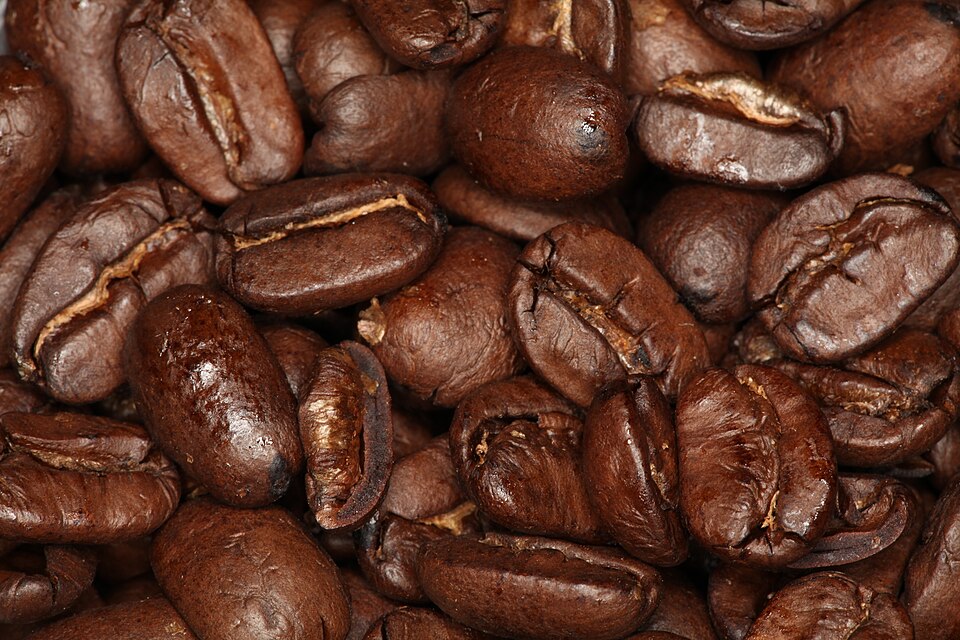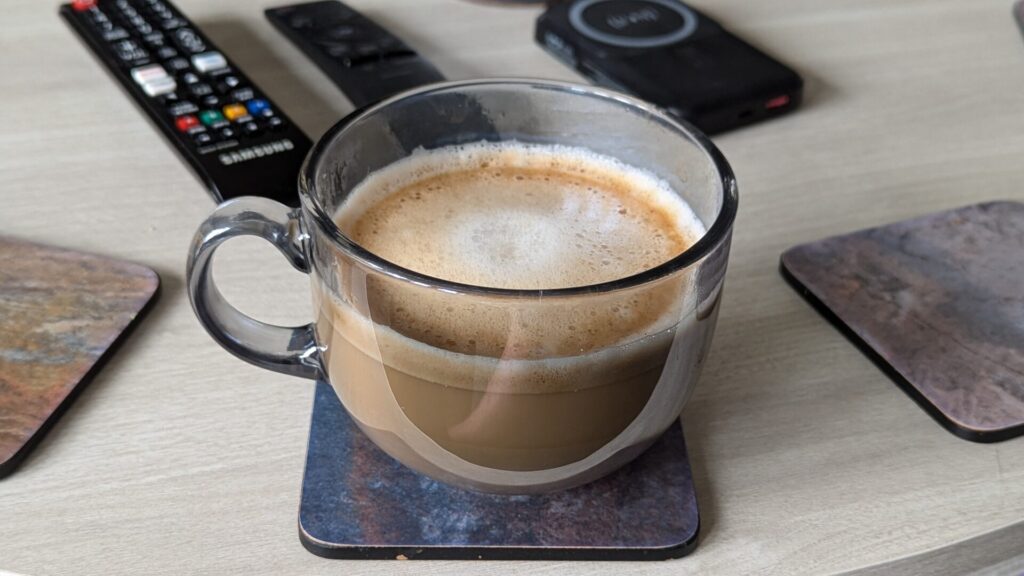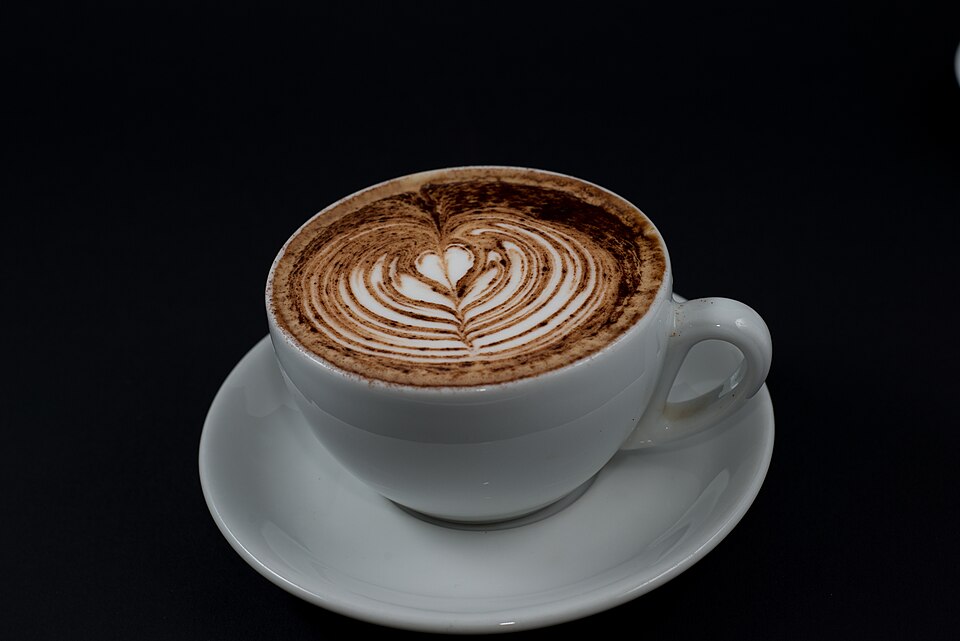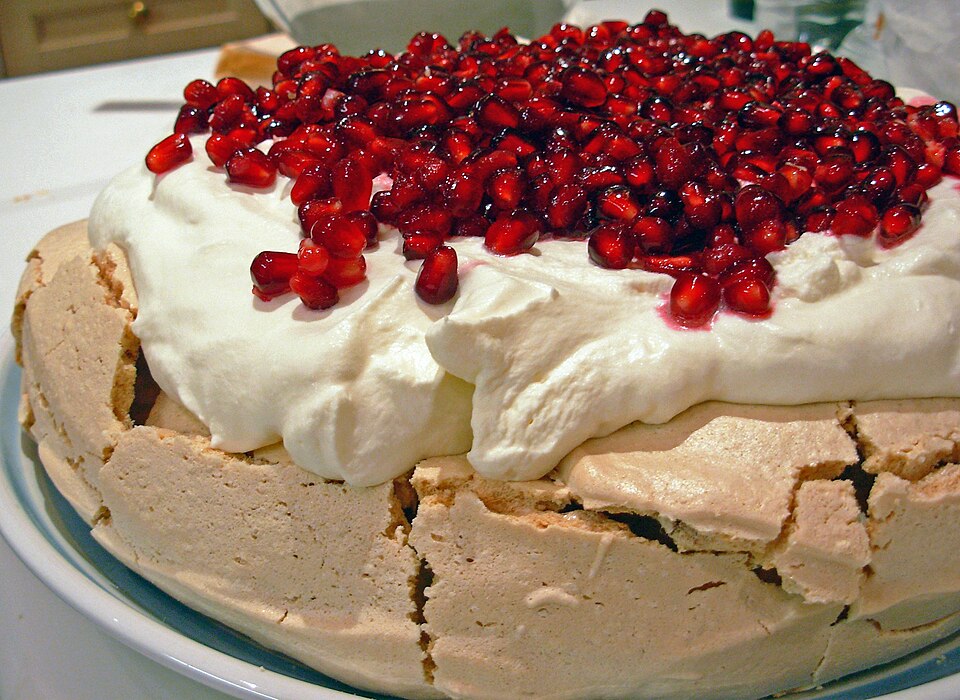
Photo: Blueberry pancake and Shades0404, CC BY 2.5 (resized for web). Illustrative Christmas pavlova, not the finished coffee cream recipe.
This Christmas pavlova keeps the crisp meringue shell, soft centre and generous cream that make the dessert worth bringing to the table. The I Love Decaf twist is a lightly sweetened cream folded with a small shot of cooled decaf coffee and finished with bright pomegranate seeds. It looks festive, cuts through a heavy Christmas dinner and lets you prepare the awkward bit the day before.
Make the meringue in advance, keep it dry and add the coffee cream shortly before serving. That last instruction matters. Leaving a filled pavlova in the fridge overnight turns its crisp shell into something less impressive than the picture you had in your head.
Why make a Christmas pavlova?
Christmas pavlova has a clear seasonal search pattern in Britain. Google Keyword Planner estimated 2,900 UK searches for “christmas pavlova” in November 2025 and 9,900 in December 2025, compared with 590 in October 2026. These are rounded historical estimates, and the December increase is predictable Christmas seasonality rather than proof of a newly invented food trend.
For the conventional dessert technique, Good Food has published a Christmas pavlova recipe demonstrating how meringue and cream can form a celebratory centrepiece. The British Baker Christmas 2026 report of 28 October 2026 also describes a UK appetite for familiar festive formats with interesting new flavour combinations. This is a separate I Love Decaf recipe with its own coffee-flavoured filling, pomegranate finish and make-ahead plan. The important festive skill is knowing which parts can wait.
Christmas pavlova with decaf coffee cream
Serves: 6 to 8. Preparation: about 30 minutes. Baking: roughly 75 to 90 minutes. Cooling: allow at least 2 hours in the switched-off oven. The recipe is a carefully specified home-cooking method and has not been described as kitchen-tested by our team.
For the meringue
- 4 large egg whites, at room temperature
- 200g caster sugar
- 1 teaspoon cornflour
- 1 teaspoon white wine vinegar
- 1 small pinch of salt
For the decaf coffee cream
- 250ml cold double cream
- 15ml strong decaf espresso, completely cooled
- 1 tablespoon icing sugar, sifted
- Half a teaspoon vanilla extract, optional
To finish
- Seeds from 1 pomegranate
- A little finely grated dark chocolate, optional
- Finely grated orange zest, optional
For the coffee element, choose a decaf you can brew strongly without making a large watery cup. Everyday Italiana Decaf Coffee offers a practical beans or ground coffee starting point. Brew a small shot and let it cool completely before it meets the cream.
Method: make the base first
- Prepare the oven. Heat to 140°C conventional or 120°C fan. Line a large flat baking tray with baking parchment and draw a circle about 20cm across on the underside as a guide. Keep the pen side down.
- Whisk the egg whites. Use a clean, completely grease-free bowl. Whisk the whites and salt until soft peaks form. Add the sugar a spoonful at a time, whisking continuously until the mixture is thick and glossy. Rub a tiny amount between clean fingertips: the sugar should feel mostly dissolved.
- Finish the meringue. Fold in the cornflour and vinegar gently with a spatula. Spoon onto the prepared parchment, building a raised edge and a shallow hollow for the filling. Avoid making the middle paper thin.
- Bake gently. Put the tray in the middle of the oven and bake for around 75 to 90 minutes. It should look dry on the outside and release carefully from the parchment when ready. Ovens differ, so watch the colour and avoid opening the door repeatedly.
- Cool gradually. Switch the oven off, leave the door just ajar and allow the pavlova to cool slowly for at least 2 hours. Moving a hot meringue straight into a cold room encourages cracks. Some cracks are normal and can be filled with cream.
- Whip the coffee cream. When ready to serve, whip the cold cream with the icing sugar and optional vanilla to soft peaks. Fold in the completely cooled, concentrated decaf a teaspoon at a time. Stop before it becomes loose or over-whipped. You might not need the full 15ml.
- Assemble and serve. Slide the meringue onto a serving plate. Spoon the coffee cream into the centre, scatter over pomegranate seeds and finish with a little chocolate or orange zest if you want it. Bring it to the table promptly.
The meringue should have a shell that gives way to a slightly marshmallow-like middle. The coffee cream should taste gently of actual coffee. If you want a stronger flavour, brew your decaf more strongly next time rather than flooding the whipped cream with extra liquid.
Why the decaf coffee must be cold
Hot espresso melts and loosens whipped cream. Even lukewarm coffee can make the filling less stable than you want. Brew your shot first, transfer it into a small clean cup and let it become completely cold before folding it through the cream.
Use just enough espresso to add flavour. A big mug of filter coffee introduces too much water. If you brew using a cafetière, concentrate the brew, measure a tablespoon and cool it. For most home kitchens, a short espresso is the easiest route.
How far ahead can Christmas pavlova be made?
The meringue shell: make it the day before. Once completely cool, store in an airtight container in a cool, dry place. Do not refrigerate the unfilled shell as fridge moisture can soften its crisp surface.
The coffee: prepare the small espresso ahead and keep it chilled in a covered clean container if necessary. Make sure it is cold before use.
The finished cream and topping: whip and assemble close to serving. Keep dairy cream refrigerated until needed and put any leftovers back in the fridge promptly. Once filled, pavlova is best eaten on the day.
If the oven is full of potatoes and other Christmas priorities, bake the shell on Christmas Eve. Your future self will be grateful for a dessert that requires little more than a whisk and a plate on the day itself.
Serving and flavour variations
Prefer a fruitier finish?
Use a few fresh raspberries alongside the pomegranate. Their sharpness works with sweet meringue and coffee cream. Pat washed fruit dry before adding it so it does not make the topping runny.
Want a more obvious coffee flavour?
Choose a short espresso and reduce the volume rather than adding watery coffee to cream. A fine dusting of cocoa can help reinforce the coffee impression without changing the structure.
Making individual pavlovas?
Divide the mixture into six to eight smaller nests, reduce the bake time and watch them carefully because smaller meringues dry faster. Fill each just before serving. Individual portions also make the last slice argument considerably less dramatic.
Frequently asked questions
Can you make pavlova without coffee?
Yes. Whip the cream with vanilla and icing sugar and omit the espresso. The coffee flavour is the original twist in this version, but the meringue method stands on its own.
Why did my meringue crack?
Sudden temperature changes, an oven that is too hot or moving the shell before it has cooled can cause cracks. A few cracks do not spoil the dessert; cream is conveniently good at hiding them.
What if the cream turns runny?
Start with thoroughly cold cream, whisk only to soft peaks and add the espresso when completely cold. Fold it in gradually. Once cream has become watery from excess liquid, further whisking is unlikely to rescue it neatly.
Can I use decaf ground coffee for the cream?
Yes, provided you brew and strain it first. Do not stir loose dry grounds into the cream. Match the grind to your equipment, brew strong coffee and cool it fully.
One good dessert, one properly brewed coffee
A Christmas pavlova should be light, generous and pleasantly messy to serve. Keep the meringue dry, keep the cream cold and use a restrained shot of decaf so the fruit and coffee can both be tasted. For the filling, shop Everyday Italiana Decaf Coffee and choose a grind that suits the brewing equipment you already own.