An eggnog latte is a festive coffee made by combining espresso with a creamy, lightly spiced eggnog base and finishing with nutmeg. For a decaf version, use a short, strong decaf espresso and a commercially prepared eggnog that is ready to drink. If eggnog is difficult to find in a UK shop, you can make a clearly labelled custard-style alternative with everyday ingredients.
Christmas drinks need not require a branded paper cup and a small mortgage. The best homemade version is warm, properly spiced and still recognisably coffee. Sweetness and richness are yours to control.
Why eggnog latte is a Christmas 2026 opportunity in the UK
Eggnog latte is an established winter coffee idea: creamy, gently spiced and suited to the Christmas period. A decaf home version is useful if you want to control the coffee, sweetness and ingredients yourself. The recipe below offers a straightforward preparation method for UK kitchens, with an alternative for anyone who prefers to use ingredients readily available in supermarkets.
A check of Google Keyword Planner on 31 October 2026 found 880 average monthly UK searches for “eggnog latte” in its historical data. The monthly estimates were 880 in October 2025, 4,400 in November 2025 and 3,600 in December 2025. For “eggnog latte recipe”, estimates were 70 in October 2025, 390 in November and 390 in December. This is a documented annual seasonal pattern, not proof that November 2026 will repeat exactly.
What is eggnog and what should go in a latte?
Traditional eggnog is a sweet drink made with egg, milk or cream, sugar and warm spices, sometimes with alcohol. A coffee-shop eggnog latte adds espresso and usually a nutmeg topping. Recipes differ. A prepared eggnog product may contain egg and dairy, so read the pack’s ingredient and allergen information rather than assuming every version is identical.
Our main recipe is alcohol-free and designed for a UK kitchen. It uses a ready-to-drink, commercially prepared eggnog base rather than asking you to whip raw eggs into coffee. The eggnog and coffee share the work. Nutmeg supplies the Christmas atmosphere without needing a cupboard full of syrups.
Easy decaf eggnog latte recipe for one
Serves: one. Time: roughly five to seven minutes. This recipe assumes your eggnog is already prepared for consumption. Follow the label for heating, refrigeration and use-by instructions.
Ingredients
- 30 to 40ml freshly brewed decaf espresso, or a concentrated decaf coffee
- 90ml commercially prepared, ready-to-drink eggnog, suitable for warming according to the pack
- 90 to 120ml milk, or a suitable milk alternative if compatible with the eggnog
- A little freshly grated nutmeg, to finish
- Optional ground cinnamon, used sparingly
- No extra sugar initially, because most prepared eggnog is already sweet
Method
- Prepare the decaf espresso first and keep it hot in a mug
- Pour the eggnog and milk into a small saucepan, checking the eggnog label first for heating instructions
- Warm gently while stirring. Avoid boiling the mixture or leaving it unattended
- Whisk or use a milk frother if the mixture and its packaging directions permit it
- Pour the warm eggnog mixture over the espresso and stir gently
- Taste before adding sweetener. Finish with a light grating of nutmeg
Use less eggnog for a more coffee-forward drink or a little more for a richer result. The ratio is intentionally flexible because prepared eggnog products vary in sweetness, thickness and spice. Boiling a dairy-based mixture is an effective way to get a saucepan to smell festive while making the drink worse.
No eggnog in the supermarket? Make a UK custard-style alternative
Eggnog can be awkward to source outside specialist or seasonal UK shops. A quick alternative uses ordinary chilled or ambient ready-made vanilla custard, warm milk, nutmeg and decaf espresso. It is eggnog-inspired rather than authentic eggnog, and that distinction matters if someone expects the traditional taste.
Custard-style version: ingredients and method
- 2 tablespoons ready-made vanilla custard
- 140 to 160ml milk
- 30 to 40ml strong decaf espresso
- A pinch of nutmeg and an optional small pinch of cinnamon
Warm the custard and milk together gently, stirring until smooth. Brew the espresso separately. Pour the warmed custard milk over the espresso and finish with nutmeg. The flavour is closer to a vanilla custard latte but it gives the same sort of creamy, cosy finish. Do not describe the result as egg-free unless the custard and all other ingredients are confirmed to contain no egg.
Can I make eggnog from raw eggs?
Homemade traditional eggnog recipes sometimes use raw or lightly cooked eggs. We have deliberately kept raw egg out of this quick coffee recipe. If you want to prepare eggnog from scratch, use a tested recipe, follow appropriate egg handling guidance and consider pasteurised egg products. The UK Food Standards Agency’s published guidance on safe egg storage, handling and use explains risks and precautions, particularly for people who may be more vulnerable to foodborne illness.
Do not assume warming an uncooked egg mixture briefly in a latte makes it safe. For this article, buy a commercially prepared eggnog sold as ready to drink or use the easy custard-style alternative. Check all packaging for allergies and storage. This is kitchen guidance, not a personalised medical recommendation.
How to choose decaf coffee for a creamy festive latte
A rich eggnog base can overwhelm a weak brew. Make the espresso short and concentrated, particularly if you like the nutmeg and vanilla to support the coffee rather than hide it. The Only Trillionaire’s Decaf Coffee is an available I Love Decaf Mountain Water decaf with chocolate, nut and caramel tasting notes described on its product page. These are tasting notes for the coffee, not a claim that the beans contain chocolate or nuts.
Beans give you control if you have a grinder; ground coffee can be easier when you know which brewing equipment you have. Use the right grind for an espresso machine, moka pot or your preferred method. A cafetière concentrate works in a pinch, but it will taste a little different from espresso.
Three ways to serve your decaf eggnog latte
A shorter after-dinner cup
Use 30ml espresso and around 100 to 120ml of the warmed eggnog and milk mixture. Serve in a smaller cup with a little grated nutmeg. The coffee stays in charge and the drink is less filling after a big meal.
An iced eggnog latte
Make the decaf espresso, let it cool and pour into a glass filled with ice. Add chilled ready-to-drink eggnog and milk, stir and finish with a touch of nutmeg. Only use products whose label permits cold serving. Do not pour a piping-hot egg mixture over ice and assume it has been made safely.
A dairy-free inspired version
Use a suitable oat or other plant-based milk with the custard-style variation, but check the custard label carefully. Standard eggnog often contains egg and dairy, so using oat milk in just one part of the recipe does not make a traditional eggnog latte vegan or dairy-free.
Common problems with a homemade eggnog latte
- It tastes more like pudding than coffee: use less eggnog or custard and a shorter, stronger decaf espresso
- It is too sweet: reduce the sweet base rather than adding more syrup
- The milk has separated or become grainy: heat more gently next time and check the prepared eggnog’s heating directions
- Nutmeg is overpowering: grate only a little onto the surface
- It is too thick: thin the mixture with warm milk in small amounts
- It tastes flat: use freshly brewed decaf and adjust the coffee-to-milk ratio before adding extra spice
Frequently asked questions
Is an eggnog latte the same as a gingerbread latte?
No. Eggnog latte traditionally centres on a creamy eggnog mixture and nutmeg. Gingerbread latte usually gets its distinctive taste from ginger, cinnamon and sweet syrup. Our decaf gingerbread latte recipe covers that separate drink.
Can I use instant decaf coffee?
Yes, if it gives a reasonably concentrated coffee base. Dissolve an appropriate serving of instant decaf in a small amount of hot water, according to the pack, rather than making a full weak mug. The flavour will differ from espresso but the recipe remains usable.
Does this eggnog latte contain alcohol?
Our recipe adds no alcohol, but you must check any prepared eggnog product you buy because traditional versions can contain alcohol. Choose one clearly labelled alcohol-free if that is your requirement.
Is an eggnog latte caffeine-free when made with decaf?
No. Decaf coffee contains substantially less caffeine than ordinary coffee but can retain a little. It is more accurate to call the drink decaf than entirely caffeine-free.
Can I prepare a batch for visitors?
You can scale the ingredients for several cups but prepare and serve them promptly. Follow the eggnog’s storage and reheating instructions and avoid repeatedly warming and cooling dairy or egg-based drinks. Brew fresh decaf separately for better flavour.
Make Christmas coffee your own
A homemade eggnog latte should offer an easy route to the flavour, with enough proper coffee to justify the name. Choose a prepared eggnog that suits you, start with a short decaf espresso and do not bury the whole thing under sugar. Explore The Only Trillionaire’s Decaf Coffee for a suitable coffee base and make the festive part at home.
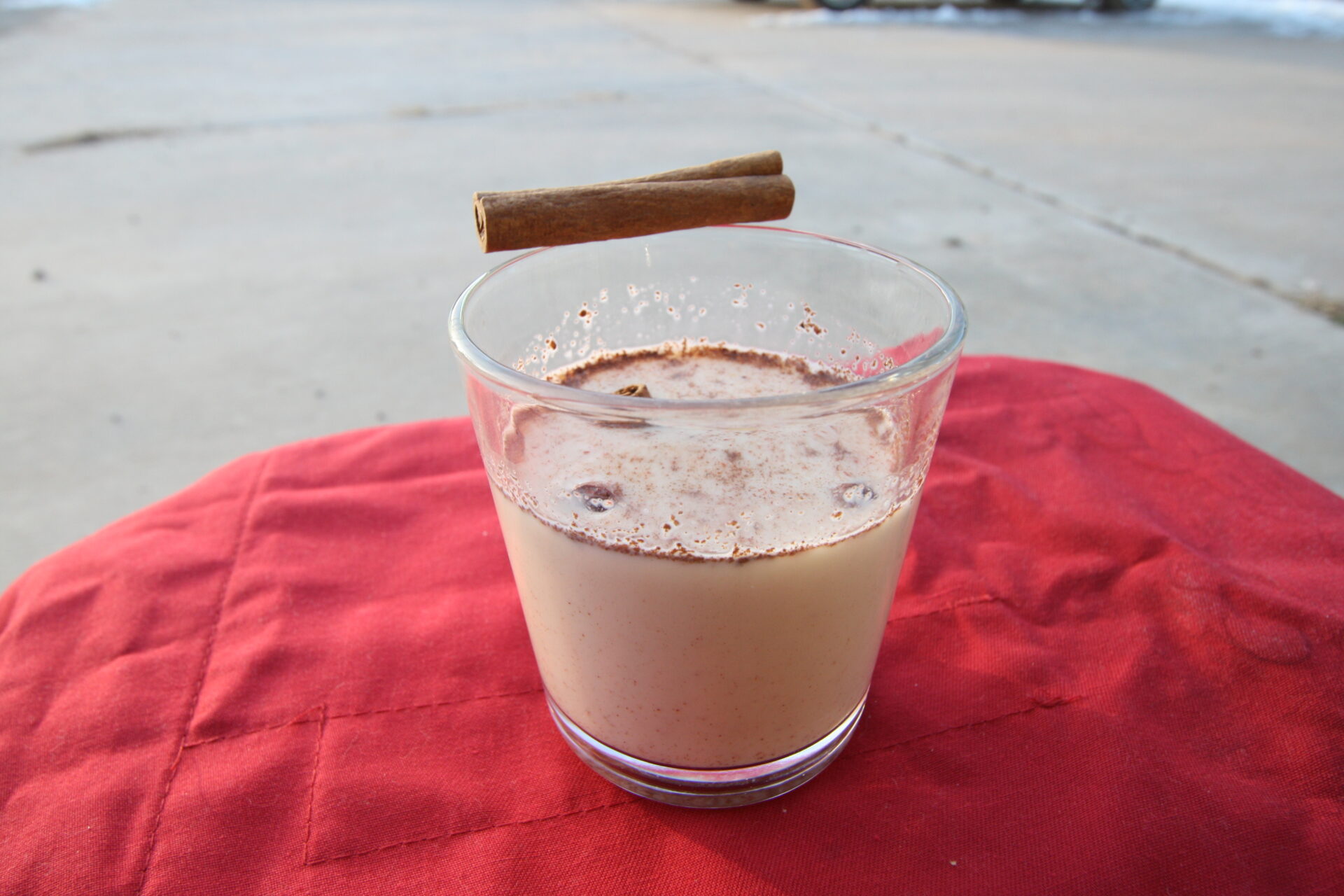
Image credit: Illustrative photograph of eggnog with cinnamon by Wheeler Cowperthwaite, Wikimedia Commons, CC BY 2.0. WordPress may resize the image for display. It shows eggnog before espresso is added, not our finished decaf recipe or an I Love Decaf product.