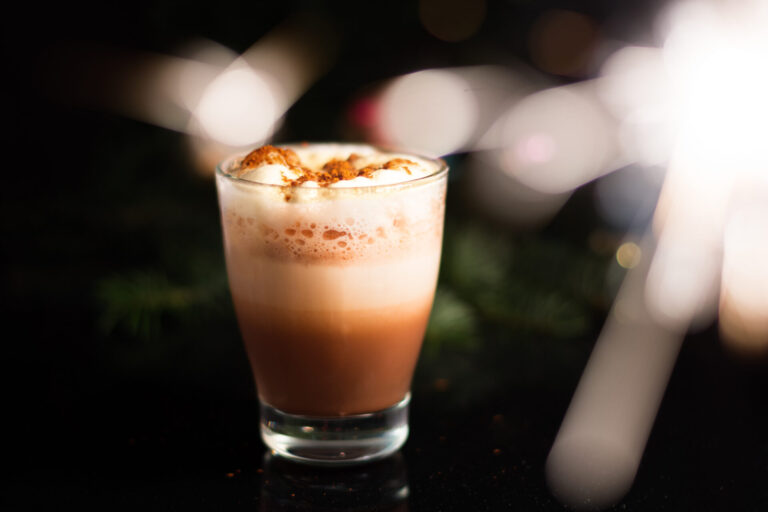

Gingerbread latte recipe: a proper decaf Christmas coffee
For a homemade gingerbread latte, mix a strong shot of decaf coffee with ginger, cinnamon, a little brown sugar and warm milk. You can make it in about five minutes without buying a bottle of gingerbread syrup that will still be lurking in the cupboard in April.
The UK festive coffee season has already begun. Costa announced its 2026 Christmas drinks on 20 October and brought back the Gingerbread Latte when the menu launched on 22 October. An iced gingerbread matcha is a separate new addition; it uses tea, not coffee. This home recipe is our own straightforward decaf version, not a copy of Costa’s formulation.
Why make a gingerbread latte in November?
It is a seasonal search opportunity with a predictable UK pattern. Google Keyword Planner figures checked on 29 October 2026 estimate 390 UK searches for gingerbread latte recipe in November 2025 and 320 in December 2025, compared with 10 to 30 in many spring and summer months. The wider term gingerbread latte reached an estimated 4,400 searches in November 2025. These are historical, rounded Google advertising estimates, not a forecast of traffic to I Love Decaf.
Spiced coffee also makes practical sense as the evenings get darker. It can sit alongside mince pies, ginger biscuits or a winter pudding. Decaf gives you the coffee flavour with most caffeine removed, which suits people who prefer not to order a regular espresso after dinner. It still contains a little caffeine.
Easy decaf gingerbread latte recipe for one
Preparation: five minutes. Serves: one. Choose a mug large enough for roughly 200ml of drink plus a little foam. This recipe uses ground spices instead of requiring syrup.
Ingredients
- 30 to 40ml freshly brewed decaf espresso, or an equally concentrated coffee base
- 150 to 180ml milk or a suitable plant-based alternative
- ¼ teaspoon ground ginger
- ¼ teaspoon ground cinnamon
- A very small pinch of nutmeg or mixed spice, optional
- 1 to 2 teaspoons light or dark brown sugar, adjusted to taste
- A drop of vanilla extract, optional
- A small ginger biscuit for serving, optional
How to make it
- Brew the decaf espresso using the grind appropriate for your coffee machine
- Put the ginger, cinnamon and brown sugar in a warm mug
- Add a tablespoon of the hot coffee and stir into a smooth paste; this prevents pockets of dry spice floating around
- Add the rest of the coffee and stir
- Warm the milk gently, avoiding boiling, and froth it if you want a café-style top
- Pour the milk into the spiced coffee, hold back a little foam and spoon that on last
- Taste before adding extra sugar, finish with a tiny dusting of cinnamon and serve straight away
A small amount of ground ginger gives the drink its gingerbread character. More is not always better. Once the powder takes over, it begins to taste suspiciously like the contents of the spice drawer.
Which decaf coffee works best?
Use a coffee you would happily drink on its own, but brew it slightly more concentrated than usual. Sweetened milk and warming spices can make a weak coffee almost invisible. An espresso machine makes this easy; a moka pot is another option, with the correct grind. With a cafetière, use a stronger brew and expect a different body.
The Only Trillionaire’s Decaf Coffee is an I Love Decaf option listed as a dark roast, available in beans, ground and fine ground. The product page describes Mexican Arabica beans and Mountain Water decaffeination. Its stronger roast makes it a sensible candidate for trying with milk and spice, but choose your own preferred coffee strength rather than assuming everybody wants the same drink.
Need help choosing a grind? Our coffee grind guide explains why the same beans behave differently across machines. The grinder can change the drink more than an extra teaspoon of syrup.
Make a quick gingerbread syrup for several drinks
If you are making a batch of lattes for guests, a small spiced syrup is easier than measuring powder into every cup. Add 60ml water, 35g brown sugar, half a teaspoon of ground ginger and half a teaspoon of cinnamon to a small saucepan. Heat gently, stirring until the sugar dissolves, then simmer briefly for a minute or two. Remove from the heat, allow it to cool and strain if you prefer a cleaner texture.
Start with one teaspoon of syrup per cup and add more only after tasting. You can add vanilla once the pan is off the heat. Use a clean container, refrigerate the cooled syrup promptly and make only as much as you need for the occasion. The recipe is a convenient flavouring, not a shelf-stable preserved product.
Three festive variations that keep coffee in the picture
Iced gingerbread decaf latte
Use the same concentrated decaf and gingerbread syrup, let the coffee cool briefly, then pour it over a sturdy glass of ice and cold milk. Skip the ground-spice paste if you want a smoother cold drink. The British weather is under no obligation to approve of iced coffee in December.
Less sweet gingerbread coffee
Reduce the sugar to half a teaspoon or leave it out. Keep the ginger and cinnamon restrained. Unsweetened milk and a strong coffee base give a more grown-up result that does not depend on a syrup flavour dominating everything.
Chocolate gingerbread decaf mocha
Add one teaspoon of unsweetened cocoa powder to the initial spice paste, then follow the main method. A little cocoa rounds off the ginger and cinnamon. Check the ingredients of any packaged chocolate mix if serving someone with an allergy.
How to serve it at Christmas without making a production of it
For guests, arrange the coffee, warm milk, small ginger biscuits and a bowl of cinnamon by the kettle. Brew one or two decaf shots at a time, depending on the machine, and give people the choice of sweetener. Nobody needs a seven-step drinks menu on Christmas Day, particularly the person who has already cooked the roast potatoes.
If you are serving a mixed crowd, ask which milk people prefer and check allergies in biscuits, cream, flavourings and plant milks. Label the coffee as decaf but avoid describing it as entirely caffeine-free. Espresso-based drinks normally contain less liquid than a huge mug of filter coffee, so make sure the cup size and milk ratio suit your guests.
Frequently asked questions
Can I make a gingerbread latte without syrup?
Yes. Ground ginger, cinnamon and brown sugar stirred into a paste with hot coffee give the flavour without bottled syrup. The fine spices will leave a little sediment, so stir before drinking.
Can I make it with decaf ground coffee?
Yes. Choose the correct grind for your brewer. Fine ground coffee intended for espresso is not automatically suitable for a cafetière. Make a concentrated base so the milk and spices do not bury the coffee.
Does a gingerbread latte need whipped cream?
No. Warm frothed milk is enough. Whipped cream, biscuit crumbs and flavoured sauces are optional toppings and make it a richer dessert drink.
Is decaf suitable for an after-dinner Christmas coffee?
It can be a convenient lower-caffeine choice for adults who enjoy coffee after dinner. Decaf is not completely caffeine-free, and individual preferences vary. This recipe makes no claims about sleep, health or medical suitability.
What is the difference between a gingerbread latte and gingerbread iced matcha?
A gingerbread latte uses coffee, usually espresso, with milk and spiced flavouring. Gingerbread iced matcha uses powdered green tea and is not decaf coffee. Costa’s 2026 Christmas launch includes both drink styles, which is why the names are easy to muddle.
Your festive decaf coffee, sorted
Choose The Only Trillionaire’s Decaf Coffee if you want to try a darker roast beneath the gingerbread spices. Brew it properly, use the milk you prefer and taste the sugar before adding more. It is a small piece of Christmas organisation that does not require its own spreadsheet.
Sources and editorial note
UK seasonal evidence: Costa Coffee UK Christmas menu announcement, 20 October 2026. UK seasonal search figures: Google Keyword Planner historical monthly estimates reviewed 29 October 2026. Drink instructions are original editorial suggestions, not an officially endorsed retailer recipe or a claimed product tasting test.