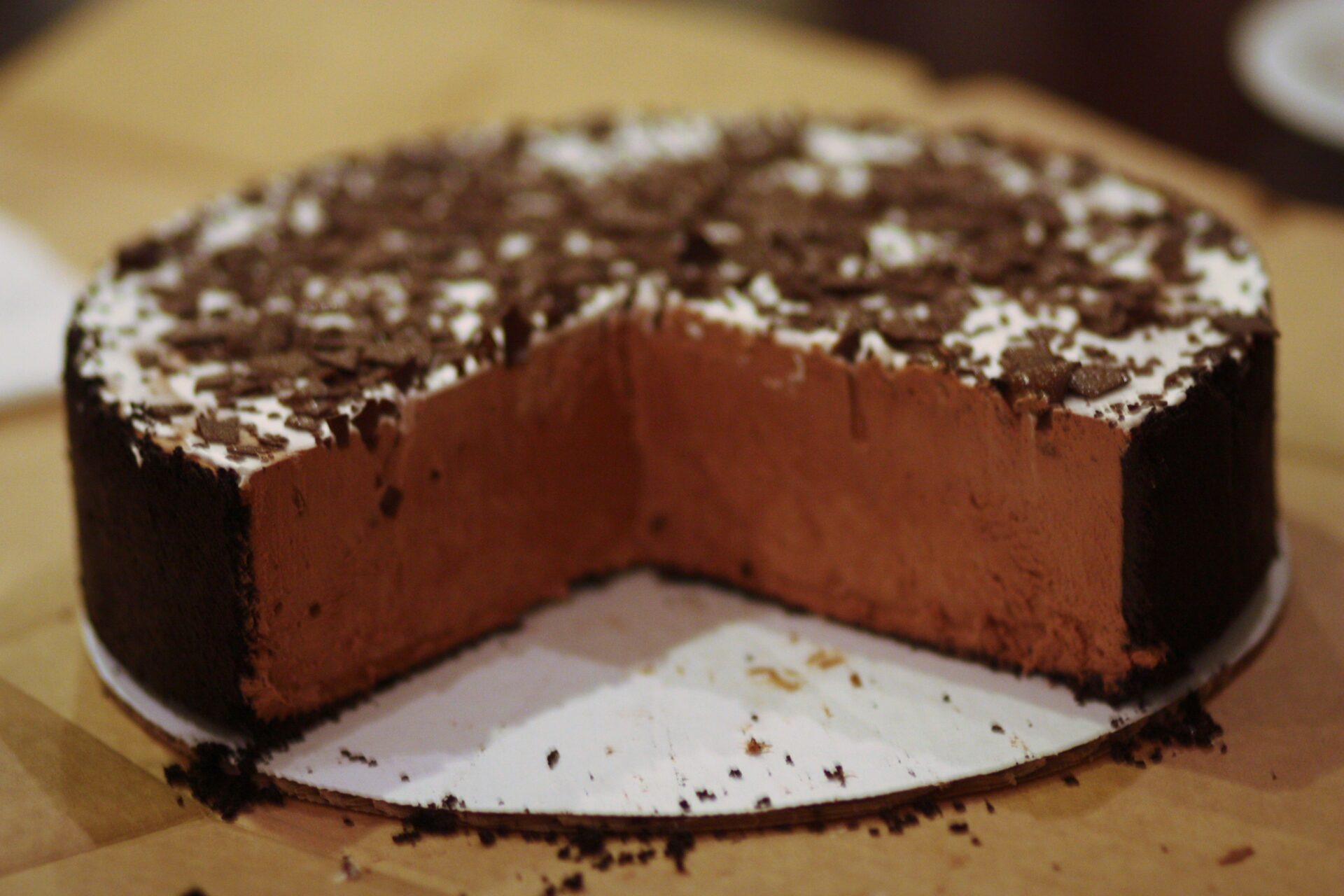
Photo: Cut chocolate cheesecake, karendotcom127, CC BY 2.0 (resized for web)
A no-bake chocolate coffee cheesecake is a Christmas dessert you can assemble the day before, leave to set in the fridge and bring to the table without claiming valuable oven space. This version combines a crisp chocolate biscuit base, a soft chocolate filling and a concentrated shot of decaf espresso. It gives coffee a proper role without making every guest order an espresso after dinner.
Make it for a small festive gathering, a Boxing Day lunch or the evening when the Christmas cooking has already taken more of your life than anyone reasonably intended. The recipe below is an original I Love Decaf kitchen suggestion, with UK weights and clear steps. It has not been represented as personally kitchen tested.
Why a make-ahead cheesecake works for Christmas
Christmas cooking often turns into a competition for the oven, hob and the last clear shelf in the fridge. A chilled cheesecake lets you do most of the work before guests arrive, provided you plan for the chilling time and make enough room for the tin. A modest 20 cm round cheesecake gives around eight dessert portions, depending on how enthusiastically everybody has approached the roast potatoes.
UK food editors continue to favour preparation in advance during the festive season. The Guardian’s 12 November 2026 Christmas preparation feature explains how chefs organise dishes before the big day. Separately, IFE’s 21 September 2026 UK Christmas food preview highlights familiar desserts in new formats and the demand for practical entertaining choices. Our chocolate and coffee cheesecake is a practical home interpretation of the wider make-ahead dessert opportunity, rather than a claim that coffee cheesecake itself has suddenly become a national craze.
Ingredients for an eight-slice cheesecake
For the chocolate biscuit base
- 220 g plain chocolate biscuits, crushed finely
- 85 g unsalted butter, melted and allowed to cool slightly
For the chocolate and decaf filling
- 500 g full-fat soft cheese
- 250 ml cold double cream
- 80 g icing sugar, sifted
- 180 g plain dark chocolate, roughly 60 to 70 per cent cocoa solids
- 30 to 40 ml strong decaf espresso, completely cooled
- 1 teaspoon vanilla extract, optional
For serving
- A few shavings of dark chocolate
- A light dusting of cocoa powder, optional
- Fresh raspberries or a few sliced strawberries, optional
You will need a 20 cm loose-bottomed cake tin, baking parchment, two mixing bowls and a whisk or hand mixer. Keep the ingredient weights consistent and avoid adding lots of extra coffee: too much liquid can soften a filling that depends on chilling rather than baking.
How to make the biscuit base
- Line the base of the tin with baking parchment. If the side of your tin is awkward, add a narrow strip of parchment around the edge for easier removal later.
- Crush the chocolate biscuits into fine crumbs using a food processor or a rolling pin and a sturdy bag. A few small pieces are fine, but large chunks make the base hard to slice neatly.
- Stir in the cooled melted butter until the crumbs resemble damp sand. Press them firmly into the bottom of the tin with the back of a spoon or the base of a small flat glass.
- Put the tin in the fridge for at least 30 minutes while you prepare the filling. A firm base helps support the cream cheese mixture when you eventually cut the first slice.
How to make the decaf chocolate filling
- Brew the coffee. Make a short, concentrated double decaf espresso and leave it to cool fully. Hot coffee can soften the mixture and interfere with setting.
- Melt the chocolate. Melt the dark chocolate gently in short microwave bursts, stirring between them, or in a heatproof bowl over barely simmering water. Keep water out of the chocolate. Let it cool until it is no longer warm to the touch but still fluid.
- Blend the soft cheese. Beat the full-fat soft cheese with the icing sugar and optional vanilla until smooth. If the cheese is fridge-cold and the chocolate is much warmer, the chocolate may set in little specks. Allow the cheese to lose its chill briefly before combining.
- Bring in the chocolate and coffee. Fold the melted chocolate into the cheese mixture, then add the cooled espresso gradually. Stop once the mixture is evenly coloured and there are no visible streaks. Resist the urge to add a full mug of coffee.
- Whip the cream separately. Whip the cold double cream to soft peaks. Fold it gently into the chocolate mixture with a spatula. Work just enough to combine, preserving some of the air for a lighter texture.
- Fill and chill. Spoon the mixture over the cold biscuit base and smooth the surface. Cover the tin without pressing the covering into the cheesecake. Refrigerate for at least six hours, preferably overnight, until it is firm enough to slice.
For the cleanest portions, release the outer ring carefully, warm a sharp knife under hot water, dry it and wipe it between cuts. There is no requirement for an elaborate mirror glaze. A sprinkle of chocolate shavings provides a perfectly respectable finish.
What decaf coffee should you use?
Use a coffee that tastes good when brewed strong. The filling contains dark chocolate and full-fat dairy, so a weak cup will disappear into the mixture. A short espresso keeps the coffee flavour present without introducing too much water. Brew your decaf first so it has plenty of time to cool before mixing.
Everyday Italiana Decaf Coffee is a suitable starting point for the espresso component and is available in different grind formats. Choose the version that fits your machine and avoid adding dry coffee grounds directly to the filling. Grounds create a gritty texture and do not substitute for a properly brewed shot.
How far ahead can you make it?
Assemble the cheesecake the day before your meal and keep it covered in the fridge. Add delicate fruit and chocolate shavings shortly before serving so they remain fresh and attractive. Keep the finished cheesecake refrigerated until serving and return leftovers to the fridge promptly. Follow the use-by dates and storage instructions on your cream and soft cheese.
If you need to travel with it, keep the tin chilled and transport it in a suitable cool bag. Do not leave a dairy cheesecake on a warm buffet for hours. This is an excellent make-ahead pudding, not a licence to forget the existence of refrigeration.
Make it suit your Christmas table
Prefer a stronger coffee flavour?
Choose a more concentrated brew rather than adding extra liquid. Coffee intensity comes from the strength of the shot, not from turning the filling into soup. You can increase the espresso by a few millilitres if the mixture remains firm, but avoid major changes to the ratio.
Want a less sweet finish?
Use darker chocolate and begin with a slightly lower quantity of icing sugar. Taste the cheese mixture before folding in the cream, recognising that the finished chilled cheesecake will taste different from the room-temperature filling.
Need to serve smaller portions?
Cut the cheesecake into ten thin slices and offer berries alongside it. Rich chocolate desserts often benefit from a modest serving after a large lunch, particularly when somebody has already arrived with a tin of homemade biscuits.
Can you make individual portions?
Press a little biscuit mixture into small glasses and spoon the filling on top. Keep them refrigerated and give them the same setting time. They are convenient when there is no space to manoeuvre a whole cake tin onto the table.
Frequently asked questions
Does no-bake cheesecake need gelatine?
This version relies on full-fat soft cheese, whipped double cream and melted chocolate for structure, followed by a long chill. Do not swap in a thin low-fat cheese without reconsidering the method.
Does decaf coffee work in chocolate cheesecake?
Yes. A small, strong decaf espresso gives coffee flavour while adding limited liquid. Decaf coffee contains a little residual caffeine, so the recipe should not be described as entirely caffeine-free.
Can I use instant decaf instead?
You can make a very concentrated small volume with instant decaf, but its flavour will differ from brewed espresso. Dissolve it fully, cool it and avoid adding dry granules directly to the filling.
Can children eat this recipe?
It contains dairy, wheat in the biscuit base and potentially other allergens depending on the chocolate and biscuit labels. Decaf coffee still contains some caffeine. Check the ingredients and decide what is appropriate for your guests.
A Christmas dessert with the coffee already built in
Chocolate cheesecake has enough character to stand on its own, and a small amount of strong decaf gives it another layer without complicating the recipe. Make it the day before, keep it chilled and serve it with a warm mug of Everyday Italiana Decaf Coffee if the table wants an additional coffee course. The oven remains free, the washing-up can wait and Christmas might briefly resemble a well-organised event.
Photo shows a different illustrative chocolate cheesecake, not a finished I Love Decaf recipe. Recipe ratios and method are original editorial guidance; they have not been described as kitchen tested.