A hojicha latte is a drink made with roasted Japanese green tea and milk, not coffee. Its toasted flavour is a change from matcha’s greener character. For coffee lovers who want to try the trend without entirely abandoning espresso, add a small shot of decaf coffee. We call that a dirty hojicha latte. It is our home variation, not a claim about the ingredients in any café’s version.
Below are practical hot and iced recipes, an explanation of what hojicha is and a straightforward way to combine it with a decaf espresso. The most useful distinction comes first: the ordinary drink is tea; our optional extra is coffee. You do not have to buy a new machine to take part.
Why hojicha is turning up on UK menus
Hojicha is roasted green tea, valued for its toasted taste and the way it works in hot or iced milk drinks. The UK Tea & Infusions Association’s guide describes increasing interest in hojicha drinks in British cafés. Our optional short shot of decaf espresso is a home variation for readers who want some coffee flavour alongside the roasted tea.
There is a UK search signal to support the subject. Google Keyword Planner historical UK estimates checked on 5 November 2026 show approximately 2,900 average monthly searches for “hojicha latte”. They increased from 2,400 in July 2026 to 3,600 in August and 4,400 in September. These are rounded estimates, not sales records. No coffee terms appeared in the latest sampled UK Google Trends top and rising lists; those lists only show their limited leading terms.
What makes hojicha different from matcha and decaf?
- Hojicha: Japanese green tea that has been roasted. The roasting changes the colour and brings out toasted notes
- Matcha: powdered green tea with a very different flavour and colour. Both remain tea
- Decaf espresso: brewed coffee made from decaffeinated beans. It adds coffee flavour but is not tea
- Dirty hojicha: a hojicha latte with an added espresso shot. Our version uses decaf coffee
Hojicha is a tea made from the tea plant and it contains caffeine. Decaffeinated coffee can retain a small amount of caffeine too. Calling either drink completely caffeine-free would be inaccurate. We make no sleep, pregnancy or health claims about the combination.
Hot hojicha latte: the basic recipe
Makes: one mug. Time: around seven minutes. Choose plain hojicha leaves or an appropriate hojicha powder. If you buy a prepared latte blend, check whether it already contains milk powder and sugar.
Ingredients
- 2g loose-leaf hojicha or 1½ teaspoons suitable hojicha powder, adjusted to the packet instructions
- 60ml hot water, at the brewing temperature recommended on the tea pack
- 170ml milk or an alternative suitable for heating and frothing
- Optional: up to 1 teaspoon sugar or maple syrup
- For the dirty hojicha variation: 20 to 30ml freshly brewed decaf espresso
Method
- Brew loose leaves in 60ml hot water following the packet instructions, then strain well. With powder, whisk a little warm water into a paste before adding the rest
- Warm the milk gently without boiling it hard. A pan and handheld whisk are enough; a steam wand is optional
- Pour the tea concentrate into your mug. Add the warm milk and spoon over any foam. Taste it before adding sweetener
- If you want the coffee variation, add one short decaf espresso shot and stir. Begin with 20ml to preserve the tea flavour
- Adjust sweetness only after tasting the combined drink. The purpose of trying a roasted tea is to notice the flavour, not bury it under syrup
For loose tea, steeping longer is not always the same as making a better drink. Start at the packet’s recommended time. Powder must be mixed smoothly before the milk goes in, otherwise the first sip can be a mouthful of chalky clumps.
Iced hojicha latte with decaf coffee
Prepare the same 60ml of hojicha concentrate and let it cool. Fill a tall glass halfway with ice, pour in 150ml cold milk and add the cooled tea. For an iced dirty hojicha latte, brew a short decaf espresso separately, cool it and pour it in. Stir before drinking. The layered appearance looks very clever for several seconds but the ingredients become much more cooperative once mixed.
Avoid pouring boiling liquid into a cold glass that is not suitable for sudden temperature changes. Cooling the tea first also prevents your ice from turning the drink watery before it reaches the table.
Which decaf coffee works with roasted tea?
Hojicha’s appeal is a mellow, toasted taste. A very large shot of strong espresso can overpower it. Start small. Everyday Italiana Decaf Coffee is a live I Love Decaf smooth medium-roast Arabica blend sold as beans, ground and fine ground coffee. It is a practical option if you want to add coffee to the recipe without making the whole drink taste like an espresso milkshake.
Choose the grind for your actual equipment. An espresso machine takes a finer grind than a cafetière. Without an espresso machine, make a small, stronger-than-usual cafetière brew with a suitable grind. Use a little of it as your coffee addition and accept that the result is your own kitchen version. The drink will survive the absence of a professional barista.
Troubleshooting the drink
- Too weak: strengthen the tea concentrate before adding more milk
- Too much coffee: use only 10 to 15ml decaf espresso next time
- Too bitter: follow the tea maker’s brewing temperature and time, rather than repeatedly boiling the leaves
- Powder clumps: make a smooth paste with water before adding the milk
- Not sweet enough: use a little sweetener after tasting, not an entire syrup bottle on principle
Frequently asked questions
Does a hojicha latte contain coffee?
Not normally. It is a roasted tea drink. This guide includes an optional version with a decaf espresso shot, which is a different drink.
Can I make the latte without a milk frother?
Yes. Heat the milk in a pan and whisk. You can also use a clean cafetière plunger to foam a suitable amount of milk. Do not use a sealed container with dangerously hot liquid.
Is hojicha the same as decaf coffee?
No. Hojicha is roasted tea and decaf coffee is coffee made from decaffeinated beans. The two can share roasted flavours but they are different ingredients.
Can I serve it iced in November?
Yes. A cold drink remains a cold drink regardless of the calendar. Using cooled tea first prevents the glass becoming an accidental bowl of diluted milk.
Try the coffee twist
Start by making the proper hojicha latte, then decide whether it would benefit from 20ml of strong decaf espresso. For the coffee component, see Everyday Italiana Decaf Coffee. One small addition is more useful than drowning a new flavour in something familiar.
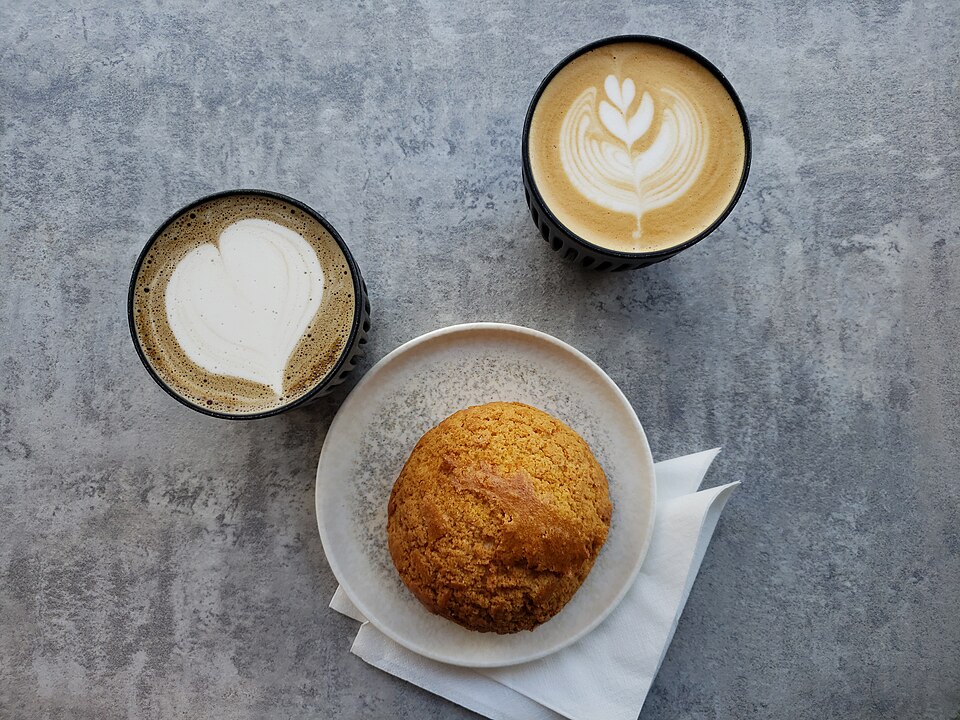
Featured image: Hojicha latte on the left and a latte on the right, photographed in Brighton by Andy Li. original image, Wikimedia Commons, CC0 1.0 public domain dedication. Illustrative only; the picture does not show our finished decaf recipe.