An ube latte combines the gentle, nutty sweetness of Filipino purple yam with milk, and it can be made with decaf espresso. The colour tends towards lilac rather than the aggressive purple of a novelty milkshake. Start with genuine ube halaya or food-grade ube powder, use a concentrated coffee base and add sweetness only after tasting.
Ube has travelled from Filipino kitchens to British coffee counters. Making an ube coffee at home is a sensible way to discover the flavour without treating purple food colouring as a personality. The trick is to respect the ingredient and let the coffee do its job.
Why are UK coffee shops talking about ube?
Ube is a purple yam with a long history in Filipino desserts and sweet preparations. British food coverage in 2026 has explored its growing use in drinks and puddings. The Week’s UK food coverage, published 3 May 2026, explains the ingredient’s Filipino roots and its appearance on British menus. The colour is eye-catching, but the ingredient and its culinary history deserve more attention than a passing fashion.
UK Google Keyword Planner figures checked on 31 October 2026 estimated 1,900 average monthly UK searches for “ube latte”. Its rounded monthly series showed 1,300 in October 2025, 4,400 in March 2026 and 2,400 in September 2026. For “ube coffee” the same UK series recorded 170 in October 2025, 3,600 in March 2026 and 480 in September 2026. These are historical search estimates, not our website visits, and March’s surge should not be described as a fresh October spike. The continuing demand gives people a reason to look for a useful home recipe.
Ube, taro and purple sweet potato are different things
Ube is a type of purple yam. It is not the same as taro, and it should not automatically be labelled a purple sweet potato. Products sold as ube powder, ube flavouring and ube halaya can also differ considerably. Ube halaya is a prepared sweet yam preserve, often made with milk or coconut ingredients. Check the label for the actual contents, allergen information and preparation instructions, particularly when buying imported products in the UK.
Pure ube can taste mildly earthy and nutty. Many café versions bring most of their sweetness from syrup, sweetened jam or flavouring. Your homemade version can be sweeter or much more coffee-led, depending on what you choose to put in the cup.
Decaf ube latte recipe: the hot version
Serves: one. Preparation: around seven minutes. This is our independent, home-friendly version, not a copy of a particular coffee chain’s recipe. Choose prepared ube halaya or a food-grade ube product made for drinks. Follow any instructions on the pack before mixing.
Ingredients
- 30 to 40ml strong freshly brewed decaf espresso or concentrated decaf coffee
- 1 to 2 teaspoons prepared ube halaya, adjusted to the sweetness of your particular product
- 150 to 180ml milk or a suitable plant-based alternative
- 1 tablespoon hot water to loosen the halaya, if needed
- A pinch of cinnamon or a few drops of food-grade vanilla flavouring, optional
- Extra sugar or syrup only if your ube ingredient is not already sweet enough
Method
- Put the ube halaya in a heatproof mug and loosen it with a tablespoon of hot water, whisking until there are no large lumps
- Brew the decaf espresso separately. If you only have a cafetière or another brewer, make a small, deliberately strong serving rather than a full mug of weak coffee
- Warm the milk gently. Stop before it boils and froth a portion if you prefer a lighter top
- Mix a little warm milk into the ube to make a smooth purple base, then add the remaining milk
- Pour in the decaf espresso and stir to combine. The final drink may be mauve, light brown or softly layered rather than bright violet
- Taste before adding any sweetener. Finish with optional cinnamon or a little frothed milk
A very thick halaya can leave small pieces in the bottom of the mug. Whisk thoroughly or strain the loosened mixture through a fine sieve if texture matters to you. There is no reason to sacrifice a pleasant drink to preserve the dramatic photograph on the packet.
How to make an iced ube latte with decaf
For an iced version, make the same ube base but use cold milk and ice. Stir the halaya with a splash of warm water first, then allow it to cool. Add the cooled base to a tall glass, fill with ice, add 150ml cold milk and pour a freshly brewed, slightly cooled double decaf espresso over the top. Stir before drinking.
If you want a layered appearance, add the espresso slowly over the back of a spoon. It may still mix. Different milks, ube preparations and temperatures behave differently, which is much more normal than a perfectly separated social-media photograph suggests.
What coffee works in an ube latte?
Choose a smooth decaf espresso with enough flavour to stand up to milk. Everyday Italiana Decaf Coffee is an actual I Love Decaf coffee sold as beans and ground options. Its product page is the place to check available formats and current stock. Use the correct grind for your machine or brewing equipment.
There is no special chemical reaction between decaf and ube. Strong coffee simply prevents the drink becoming sweetened purple milk with an espresso rumour attached. If you prefer a milder drink, reduce the espresso to a single shot and use less ube at first.
Buying ube ingredients in the UK: the useful label checklist
- Look for genuine ube or purple yam in the ingredients, not just purple colouring
- Check whether the product is already sweetened before adding syrup
- Follow the preparation instructions for powders and concentrates
- Check dairy, coconut and other allergen declarations in halaya or dessert mixes
- Choose food-grade ingredients sold for eating or drinking, never craft colourants
- Store opened products according to their label, particularly prepared jars
A tub labelled ‘ube flavour’ may be designed for baking rather than drinks. It might work when the directions allow it, but a spoonful of genuine prepared ube usually provides a more intelligible starting point. The UK product label takes precedence over a generic online recipe when they disagree about preparation or storage.
Why your ube latte might not look purple
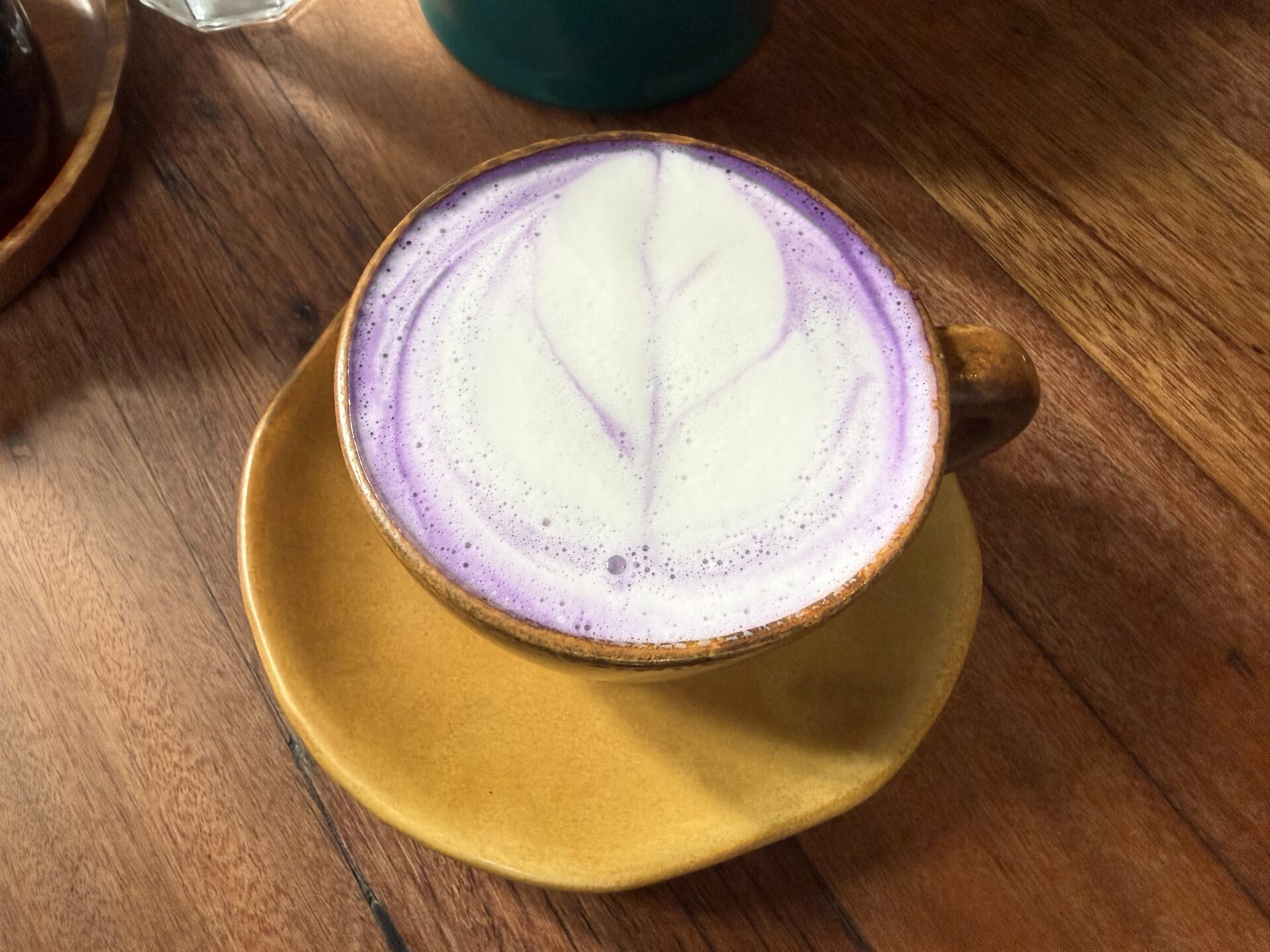
Espresso is dark. Naturally coloured ube preparations vary. Mix the two and you may get beige-lilac rather than photographic violet. That is not a failure. If your aim is flavour, adjust the ratio of ube and coffee before reaching for artificial colouring. More syrup will usually make the drink sweeter, not necessarily more authentically purple.
The mixture is grainy
Loosen the ube before adding coffee, whisk in warm milk gradually and strain if necessary. Some powders need cooking or resting, so read the pack rather than tipping them straight into a cold glass.
The coffee has disappeared
Brew a shorter, stronger decaf shot. Reduce the ube preserve and vanilla. A single espresso can be lost under a large quantity of sweet milk, regardless of whether caffeine is involved.
It is far too sweet
Use less halaya or a less sweet ube ingredient, and skip extra syrup. If you have already made the drink, more unsweetened milk can soften it, though the coffee flavour may need another small decaf shot.
Frequently asked questions about ube coffee
Does an ube latte contain coffee?
Not always. “Ube latte” can describe a milk-based drink without espresso. This recipe deliberately adds coffee and uses decaf. Ask what is in a café’s version rather than assuming the word latte guarantees espresso.
Can you use ube powder instead of halaya?
Yes, if it is a food-grade product intended for drinks and you follow the pack instructions. Different powders need different preparation and may already contain sugar. The spoon measurements in our halaya recipe should not be blindly applied to every powder.
Does decaf mean no caffeine at all?
No. Decaffeinated coffee typically contains some residual caffeine. The decaf version is chosen for its reduced caffeine content, not a promise of zero.
Is this a Filipino recipe?
Ube is rooted in Filipino cooking. This particular espresso drink is our own practical home recipe inspired by modern UK café menus, not a claim to reproduce a traditional Filipino preparation.
Make a proper decaf ube coffee
Start with the ingredient that gives the drink its character and finish with coffee you actually want to taste. Browse Everyday Italiana Decaf Coffee for a proper espresso base, then adjust the ube to your liking. The colour is a bonus; the cup should still taste good.
Image credit: Illustrative ube latte at George and Onnie’s, photographed by Josh Lim (Sky Harbor), Wikimedia Commons, CC BY-SA 4.0. The original image is resized by WordPress for display. The photograph shows an example of an ube latte, not our decaf recipe or an I Love Decaf product.