
The great decaf shortage: Why it’s still so hard to find good decaf in the UK
Something quietly dramatic has been happening to the world’s coffee supply, and decaf drinkers have had a front-row seat for all of it. Not by choice. By necessity.
Arabica futures hit an all-time high of $4.41 per pound in early 2025, driven by droughts in Brazil, collapsing robusta production in Vietnam and a shipping industry that decided to charge roughly double for the privilege of moving things around. Roasters who were paying $2.40 per pound for green beans in January 2024 were paying close to $4 per pound twelve months later. That is not a rounding error. That is a 70 per cent increase in a single year, and it landed squarely on an already complicated supply chain.
When global coffee supply sneezes, decaf coffee catches a particularly bad cold. Here is why, what happened and what the picture looks like in 2026.
Why decaf feels the squeeze harder than regular coffee
Decaffeination is an extra step in an already complicated supply chain. Before a decaf bean reaches your cup it has to be grown, harvested, processed, exported, decaffeinated, re-exported, roasted and finally shipped to you. Each of those steps involves a different set of suppliers, facilities and logistics. Each one is a potential point of failure when global supply gets tight.
Decaffeination capacity is itself a bottleneck. Swiss Water, one of the world’s largest and most respected decaffeination processors, reported a 29 per cent drop in revenue in Q3 2023, partly due to capacity limitations caused by a site move before the completion of a new production line. When you are running a specialist processing operation with limited global capacity, even a temporary interruption sends ripples through the entire supply chain. The beans still need processing. There is just nowhere near enough room to process them.
Meanwhile demand for decaf went in entirely the opposite direction. The National Coffee Association’s Spring 2025 report showed decaf consumption in the US rising from 9 per cent to 12 per cent of all coffee drunk in a single year. In the UK, Mintel reports that one in five coffee drinkers regularly chooses decaf. Buyers in Colombia were scrambling for decaffeination slots, with traders shipping far more coffee than usual just to secure processing time. More people wanting decaf, fewer facilities to make it, and the underlying green bean more expensive than it has ever been. This is the great decaf squeeze in a nutshell, and it was wearing a very uncomfortable shell.
What caused the coffee shortage in the first place
Brazil and Vietnam together account for the lion’s share of global coffee production. Between 2021 and 2024, the world drained 14.6 million bags from global coffee reserves as supply repeatedly fell short of demand. Brazil’s key arabica-growing regions recorded their driest conditions in decades. Vietnam, the world’s largest robusta producer, saw a 20 per cent production drop for the 2023 to 2024 season, followed by a 50 per cent reduction in robusta exports in 2024, as farmers in some areas began switching to more profitable crops rather than persisting with coffee in worsening conditions.
On top of that, shipping costs doubled. A standard 40-foot container from Shanghai to New York hit nearly $10,000 in mid-2024. Geopolitical disruptions forced vessels to reroute around key shipping lanes, adding time and cost at every stage. The European Union Deforestation Regulation added new compliance requirements for exporters. Everything that could make coffee more expensive and harder to move did exactly that, all at once.
Where things stand in 2026
The good news, if you are prepared to accept it cautiously, is that the worst appears to be behind us. After the historic highs of early 2025, when arabica futures peaked at $4.41 per pound, prices have begun to fall. Analysts at commodity platform ChAI and the CEO of Illycaffe both predict the C price stabilising at between $2.50 and $3 per pound through the second half of 2026, still above the five-year average before the crisis but a significant retreat from the panic highs.
Forecasters expect a surplus of around 1.55 million bags in 2025 to 2026, growing to 8.64 million bags in 2026 to 2027, as Brazilian and Vietnamese production recovers and new growing regions expand supply. That is a meaningful reversal, though as one commodities analyst noted, speculation in coffee futures regularly runs at five times the volume of physical coffee actually traded, which means price swings can happen with only a loose connection to what is actually sitting in warehouses.
In other words: the supply is coming back, the prices are easing, but the coffee market has always had a talent for making things more complicated than they need to be. We are not entirely out of the woods. We are just no longer quite so deep in them.
What this means for decaf specifically
Decaf demand is not going anywhere. The trend that drove the squeeze is accelerating, not reversing. One in five UK coffee drinkers regularly chooses decaf. The Asia Pacific decaf market is projected to grow at 8.2 per cent annually. A decaf Typica won the 2024 US Brewers Cup, which is the coffee equivalent of a non-alcoholic wine winning a tasting at Bordeaux. The specialty coffee world, which once regarded decaf the way a sommelier regards a paper straw, is taking it seriously.
The structural challenge remains that decaffeination is a specialist process with limited global capacity and a supply chain that requires the green bean to be in the right place at the right time before any of the rest of it can happen. As demand grows, that capacity needs to grow with it. The industry is aware of this. Swiss Water’s new production line was built precisely to address it. If you want to understand more about how the Swiss Water Process works and how it compares to other decaffeination methods, we have covered it in detail separately.
The sensible decaf drinker’s response to all of this
If you have noticed your favourite decaf coffee becoming harder to find, more expensive, or occasionally out of stock over the past couple of years, this is why. It was not the supermarket being disorganised. It was a genuinely global squeeze on a product that was already running on tighter margins than its caffeinated counterpart.
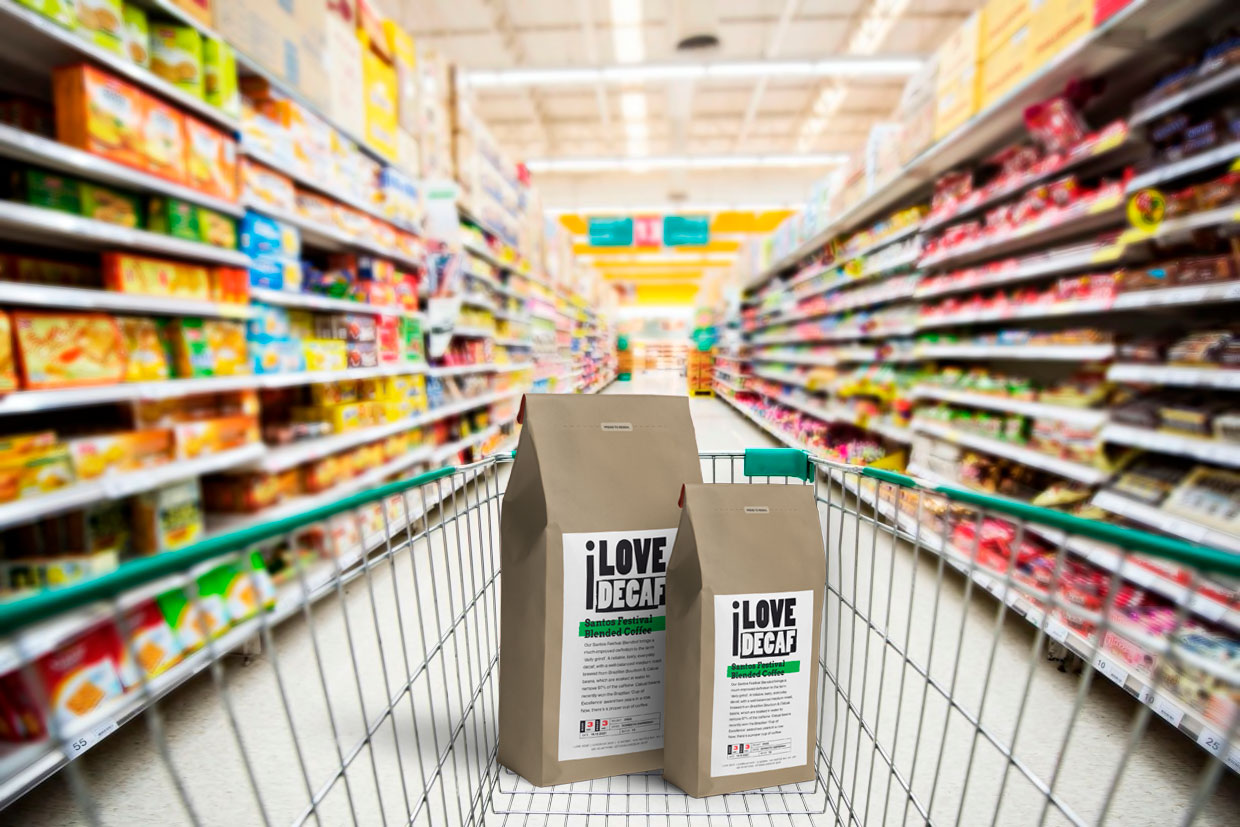
The practical response is to buy from a specialist. Supermarket decaf selections are limited at the best of times and the first to suffer when supply gets tight. A specialist decaf retailer maintains relationships with multiple roasters and decaffeination sources, which means far more resilience when one part of the supply chain goes sideways. You also get considerably better coffee, which is the whole point. If you are not sure where to start, our guide to the best decaf coffee in the UK is a reasonable place.
And if coffee is not your only decaf drink of choice, it is worth knowing that decaf tea and naturally caffeine-free herbal and fruit infusions sit entirely outside the green bean supply chain and have been entirely unaffected by any of the above. Something to bear in mind when the barista at your local looks apologetic about the decaf.
Frequently asked questions
Is there still a decaf coffee shortage in 2026?
The acute shortage of 2024 to 2025 has eased as coffee production in Brazil and Vietnam recovers. Prices have fallen from their historic highs of early 2025 and forecasters expect meaningful surpluses through 2026 and 2027. Decaf supply remains tighter than regular coffee due to limited decaffeination capacity, but the worst of the squeeze appears to be over.
Why did decaf coffee prices go up so much?
A combination of severe droughts in Brazil and Vietnam, doubled shipping costs, new regulatory compliance requirements and a surge in decaf demand all hit simultaneously between 2022 and 2025. Arabica futures peaked at $4.41 per pound in early 2025. Prices have been falling since.
Why is decaf harder to find than regular coffee?
Decaf requires an additional decaffeination processing step before roasting, which adds cost, time and a supply chain dependency that regular coffee does not have. When green bean supply tightens, decaf processors face capacity constraints that amplify the squeeze beyond what regular coffee experiences.
Will decaf coffee prices come down in 2026?
Yes, according to current forecasts. Arabica prices are expected to stabilise between $2.50 and $3 per pound through the second half of 2026, down significantly from the 2025 highs. Larger surpluses are forecast for 2026 to 2027 as production recovers.
Is decaf coffee becoming more popular?
Significantly. US decaf consumption rose from 9 per cent to 12 per cent of all coffee drunk between 2024 and 2025. One in five UK coffee drinkers regularly chooses decaf. Demand is growing faster than decaffeination capacity, which is part of what made the shortage so acute.
The bottom line
The great decaf shortage was real, it was caused by a genuinely remarkable convergence of bad luck across the global coffee supply chain, and it is easing. Prices are coming down, supply is recovering and the structural investment in decaffeination capacity is finally catching up with demand.
What has not changed is that decaf demand is growing, the category is being taken more seriously than it has ever been, and the supermarket shelf is still the worst possible place to look for a good one. Some things the shortage did not fix.
Browse the full I Love Decaf range of decaf coffee, decaf tea and naturally caffeine-free herbal and fruit infusions.
Sources
- Food Navigator: Coffee prices drop after record highs (March 2026)
- Business Focus: Coffee shortage not expected in 2025/26 with surplus easing prices
- Coffee Intelligence: What’s happening with decaf? (2025)
- Perfect Daily Grind: Revenue down for decaf coffee (2023)
- GlobalEdge: The coffee industry crisis
- Fratello Coffee: Adapting to accelerating coffee costs in 2025