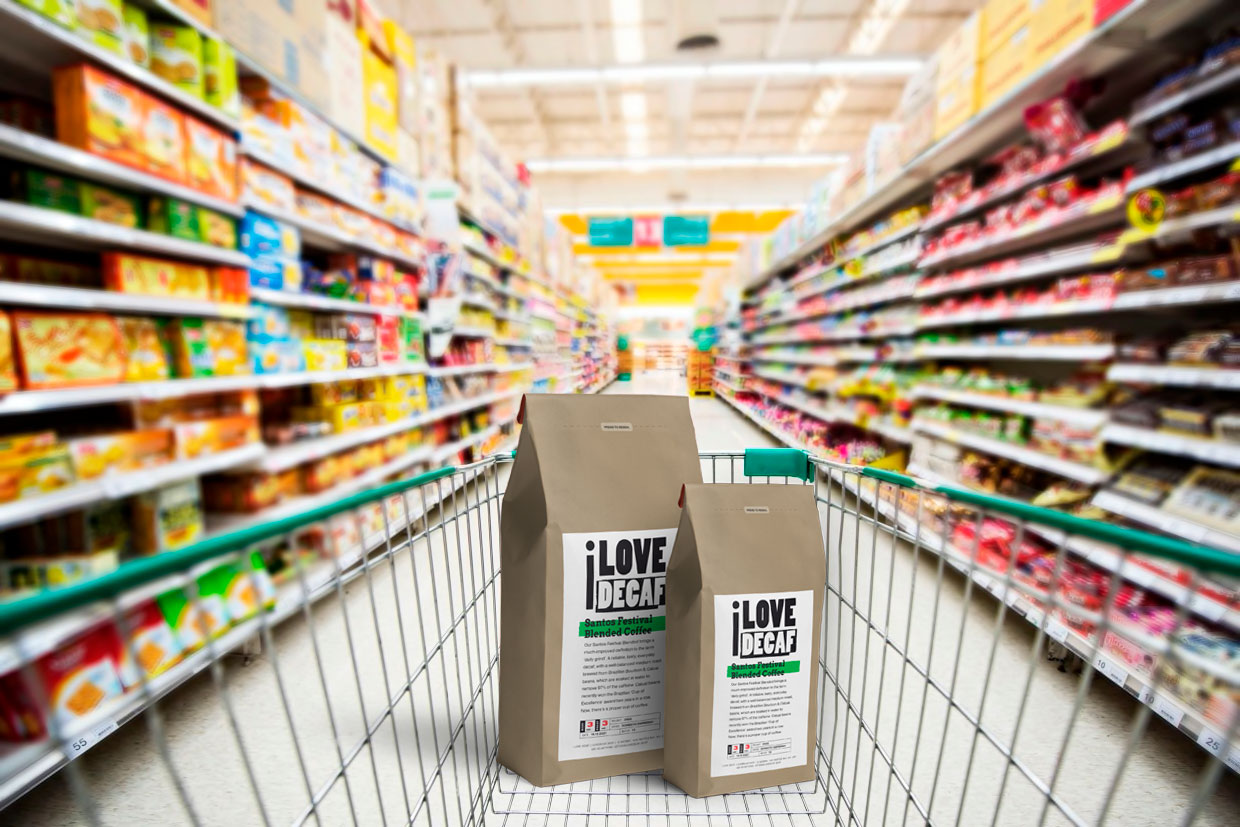
There are good reasons to buy decaf at a supermarket. It is convenient, you can pick it up with the groceries and the price is clearly marked. The challenge is working out which bag or jar will make a cup you actually want to drink.
The best supermarket decaf is the one that suits your equipment, taste and budget. A premium label, fancy jar or aggressive roast-strength number does not answer those questions on its own. This is a buying guide based on product information and practical brewing advice. It is not a first-hand tasting test of every brand in Britain.
Start with the kind of coffee you want
A supermarket’s decaf options may include instant, ground, whole beans and pods. They serve different purposes. Instant is simple when speed matters. Ground coffee suits a cafetière, filter or espresso machine if you choose the right grind. Whole beans are useful if you can grind fresh. Pods are convenient only if they match your exact machine system.
- Instant decaf: easiest for quick drinks and office cupboards
- Ground decaf: compare roast, grind and pack freshness before buying
- Whole-bean decaf: useful for grinders and bean-to-cup machines
- Decaf pods: confirm exact Original, Vertuo or other machine-system compatibility, not just the word ‘compatible’
You do not need to own a shiny espresso machine to get more flavour from coffee. A modest cafetière with the right grind is often enough to tell whether you prefer brewed coffee to instant.
What should be on a decent decaf label?
A useful label describes what is in the bag. Origin information helps you understand whether a coffee comes from one growing region or is a blend. A roast description gives a rough guide to flavour. Decaffeination details tell you how the caffeine was removed. Grind information tells you whether the bag will work with your brewer.
Swiss Water and Mountain Water are water-based decaffeination processes. Carbon dioxide and ethyl acetate are other approaches. None is a universal guarantee of better flavour, and words such as ‘chemical free’ can be imprecise. If the process is important to you, look for an exact description rather than an impressive-sounding adjective.
Does a more expensive supermarket decaf taste better?
It might, but the price tag cannot prove it. Some of the cost reflects packaging, format and retail distribution. Comparing a 100g instant jar with a 227g bag of whole beans tells you very little until you know your dose per mug. You will generally use far more dry brewed coffee than instant granules.
Try dividing the pack price by the number of servings you actually make. For a cafetière, approximately 15g of ground coffee to 250ml of water is a sensible starting point. For instant, follow the product’s serving instructions. Compare convenience and flavour as well as the calculated pence per cup.
How fresh is supermarket ground decaf?
Whole beans generally retain aromas longer than pre-ground coffee, but packaging, storage and the age of the roast all matter. Look for a roast date if one is supplied and check the best-before date without treating them as the same thing. A coffee with a distant best-before date has not necessarily been roasted recently.
Store opened coffee sealed, cool and dry, away from steam and direct sunlight. Buying an enormous bag can be poor value if you take months to finish it. Smaller packs may make more sense for somebody who drinks one cup a day.
Does Tesco sell decaf coffee beans?
Yes. Tesco’s UK catalogue has listed whole-bean decaf from different suppliers, although stock and prices can vary with postcode and time. We corrected our older article on this very question after checking the actual retailer listings. See what decaf coffee beans Tesco offers for the details and retailer source links.
Treat any supermarket stock statement as a dated snapshot. A product appearing on a national website is not a promise it will be in your local branch. Check the current shop listing or delivery postcode before setting off.
What do specialist decaf retailers offer?
A specialist may provide more information about origin, decaffeination, roast profile and grind choices. Those details can be useful if you know what flavour you like, need a particular brewing method or want to compare processes. Specialist products can still vary in quality, so check the actual description rather than assuming expertise from the shop’s name.
At I Love Decaf we focus on decaffeinated drinks and provide guides to help you choose. Our best decaf coffee in the UK page explains different formats and routes to the current product range. If you prefer beans, start with our decaf beans comparison.
How to compare two decaf coffees yourself
Choose two bags suitable for the same brewing method. Brew both with the same equipment, water and approximate coffee-to-water ratio. Taste them while warm and again after they have cooled slightly. Take note of sweetness, acidity, body and the lingering flavour rather than simply deciding which one looks darker.
If you add milk, repeat the comparison in the drink you usually make. A coffee that tastes bright and delicate when black may behave differently in a flat white. Use your own observations; do not trust an imaginary taste panel or a mystery league table with no method.
A practical UK decaf shopping checklist
- Does the format fit your existing machine or preferred brew?
- Do you know the roast and any useful flavour notes?
- Is the decaffeination process named when that is important to you?
- Can you check the current pack weight, price and availability?
- Will you finish the bag while it still tastes fresh to you?
- Does the retailer provide clear returns, delivery and product information?
A cheap, convenient cup is fine when that is the job. A carefully chosen bag of freshly roasted decaf can offer another experience. There is room for both in a British kitchen. The only unforgivable coffee is the one you bought because a label bullied you into it.
Frequently asked questions
Is supermarket decaf always poor quality? No. Quality and taste vary by product, format, roast and freshness.
Does decaf from supermarkets contain caffeine? Most caffeine is removed, but small amounts can remain. See our caffeine explainer.
Are pods interchangeable between machines? No. Machine systems differ, and ‘compatible’ has a specific meaning for each range. See our pod compatibility guide.
How this guide was prepared
Revised on 28 October 2026 using current I Love Decaf products and existing UK supermarket availability research, including our Tesco catalogue comparison. This is a consumer buying guide, not an independently verified head-to-head taste test. No claim is made to have tasted every UK supermarket decaf.