Organic decaf coffee: is it actually worth paying more for or is it just vibes?
Organic. The word that divides the coffee aisle into people who check the label and people who think checking the label is what other people do. We are not here to judge either camp. We are here to tell you what organic decaf coffee actually means, what it costs you, what it gets you and whether the gap between the two is worth crossing.
Short answer: yes, for reasons that have nothing to do with crystals or chakras and everything to do with chemistry and your liver’s quiet, ongoing efforts on your behalf.
What organic actually means on a bag of decaf coffee
Organic certification on a coffee bag covers two distinct things that most people assume are the same but are not. The first is how the beans were grown. Certified organic coffee is grown without synthetic pesticides, herbicides or chemical fertilisers. The beans are grown in conditions that regulators have verified as meeting organic standards, which is a more rigorous process than a nice picture of a farm on the front of the packet.
The second, and this is the one that matters specifically for decaf, is how the caffeine was removed. A coffee can be organically grown and then decaffeinated using methylene chloride, at which point the organic certification on the growing side becomes somewhat academic. Proper end-to-end organic decaf will have been decaffeinated using Swiss Water Process or Mountain Water Process, both of which are certified organic compatible and involve no synthetic chemical solvents whatsoever.
When a bag of decaf says organic and specifies the decaffeination method, that means something. When it says organic and does not mention how the caffeine was removed, that is worth a raised eyebrow and a follow-up question to the retailer.
What non-organic decaf coffee involves
Conventionally grown coffee beans are regularly treated with synthetic pesticides and herbicides during cultivation. Coffee is one of the most chemically treated crops in the world by volume of pesticide use, which is a sentence that requires a moment to sit with before continuing.
The roasting process does eliminate many of these residues, and the levels remaining in a brewed cup are, according to food safety regulators, well below harmful thresholds. We are not telling you that non-organic coffee will do you immediate damage, because it will not, and anyone who tells you otherwise is selling something that probably comes in a small glass bottle and costs forty-five pounds.
What we are saying is that the difference exists, and for people who want to minimise their exposure to synthetic agricultural chemicals across their diet, organic decaf removes one more source from the daily total. Given that many decaf drinkers are already making health-conscious choices about caffeine, this is a consistent next step rather than a contradictory one.
The flavour argument for organic decaf
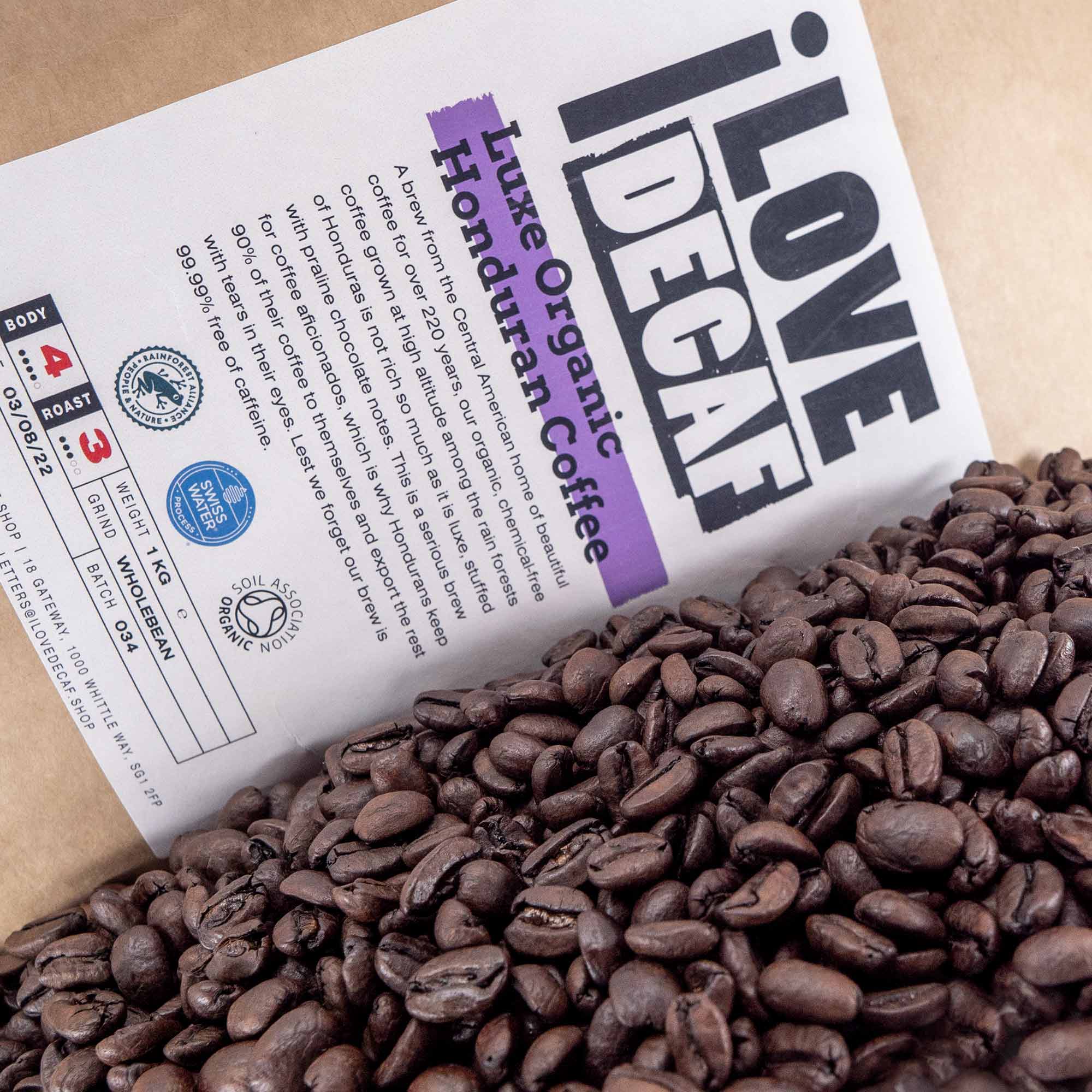
Organic decaf coffee tends to come from beans grown at higher altitudes with more careful cultivation practices, partly because organic certification demands it and partly because the kind of roaster who pursues organic certification is usually the kind of roaster who pursues quality generally. The correlation is not perfect but it is real. Our Luxe Organic Swiss Water Honduran is a case in point. Grown at high altitude in Honduras, organic and Fairtrade certified, Swiss Water processed. The flavour is richer and more complex than most non-organic decaf at a similar price point, and we would put that down partly to the origin and growing conditions rather than purely to the decaffeination method.
The idea that organic coffee has a more complex flavour profile than conventionally grown coffee is broadly supported by agronomic research, though it is also true that growing conditions and origin matter more than the organic label alone. What organic certification does is increase the probability that you are dealing with a producer who cares about the whole process, which tends to correlate with better coffee.
Organic decaf beans vs organic ground decaf
If you are buying organic decaf and you want to get the most from it, buy the whole beans and grind just before brewing. As soon as you grind coffee, the clock on losing flavour starts ticking with some urgency. Buying beans and a grinder adds a step but the difference in the cup, particularly with a quality organic decaf, is noticeable. If beans are not practical, buy ground decaf in smaller quantities more frequently rather than a large bag that sits open for three months slowly becoming less interesting.
Is organic decaf worth the extra cost?
The premium for organic decaf over non-organic is typically modest when you are buying from a specialist roaster, because the specialist’s non-organic decaf is already sourced from quality green beans with clean processing. The supermarket organic premium is larger in percentage terms partly because the supermarket’s baseline is lower.
Our honest view: if you care about what goes into your coffee and how it was produced, organic decaf from a clean decaffeination method is worth the small additional cost. If you mainly care about convenience and price, a quality non-organic decaf from a specialist roaster with a clean decaffeination method will serve you very well. The most important variables remain freshness, decaffeination method and brewing equipment, in that order.
Frequently asked questions
Is organic decaf coffee better for you?
Organic decaf coffee is grown without synthetic pesticides and herbicides, and when properly certified is decaffeinated without chemical solvents. For people wanting to minimise synthetic chemical exposure in their diet, organic decaf is a consistent choice. The health benefits of decaf coffee itself, including antioxidants and polyphenols, are present in both organic and non-organic versions.
Does organic decaf taste better than regular decaf?
Organic decaf tends to come from beans grown with more careful cultivation practices at higher altitudes. This often produces a more complex flavour profile. However, the quality of the green bean, roast and freshness matter more than the organic label alone.
What decaffeination method is used for organic decaf?
Certified organic decaf must be decaffeinated without synthetic chemical solvents. Swiss Water Process and Mountain Water Process are both organic certified and chemical-free. CO2 decaffeination is also considered a clean method. If a bag says organic but does not specify the decaffeination method, it is worth asking the retailer directly.
Are organic decaf coffee beans worth buying over ground?
Yes, if freshness matters to you. Whole beans retain flavour and CO2 significantly longer than pre-ground coffee. Grinding just before brewing produces a noticeably better cup, particularly with a quality organic decaf where the nuances of the bean are worth preserving.
What is the best organic decaf coffee in the UK?
Our Luxe Organic Swiss Water Honduran Decaf is organic, Fairtrade and Swiss Water processed. Our Inca Gold Organic Swiss Water Decaf Pods offer the same clean credentials in pod format. Both are freshly roasted with a declared roast date.
Browse the full single origin organic decaf range and the complete decaf coffee collection.