Photo: Andy Li, Wikimedia Commons (CC0)
Vietnamese salted coffee, or cà phê muối, brings together strong coffee, sweetened condensed milk and a lightly salted cream topping. The salt goes into the cream in a very small quantity. Our home version uses concentrated decaf, so the main attraction is the coffee flavour and the soft creamy finish, not the caffeine.
The drink is associated with Huế in central Vietnam, where it is traditionally prepared with strong coffee, often brewed through a phin filter. Our recipe is a UK kitchen adaptation using espresso or another concentrated brew. You can make it iced or warm and you do not need to acquire an impressive collection of specialist tools.
What does Vietnamese salted coffee taste like?
The first sip is creamy, gently sweet and full of coffee. A tiny pinch of salt rounds out the condensed milk and makes the topping more interesting without turning it into savoury coffee. Imagine the balance of salted caramel, except the cup still tastes unmistakably of coffee.
Use a restrained hand with salt. It is easy to add more, and remarkably difficult to remove once the cream has been whipped. Fine salt dissolves differently from chunky flakes, so start with less than you expect.
Ingredients for one decaf salted coffee
- 40 to 50 ml double decaf espresso, or a similarly concentrated decaf brew
- 2 teaspoons sweetened condensed milk, roughly 12 g
- 35 ml chilled double cream
- 15 ml chilled whole milk, with a little extra if the topping needs loosening
- A tiny pinch of fine salt, no more than about one sixteenth of a teaspoon to begin with
- Ice cubes for the cold version
- Optional dark chocolate shavings for a simple finish
Equipment: a cup or glass, small bowl, teaspoon and a whisk or handheld frother. A machine for espresso is convenient, but a carefully brewed small, strong coffee also works. For a phin, use the grind and preparation method recommended for the filter.
How to make iced Vietnamese salted decaf coffee
- Prepare a strong base. Brew the decaf espresso first. Set it aside until cool enough to add to ice. An ordinary mug of coffee will be too dilute once cream and ice enter the picture.
- Sweeten the coffee. Put the condensed milk in a glass and stir in the decaf coffee until the milk has dissolved. Taste a small spoonful before adding more sweetness. The cream will contribute richness.
- Whisk the topping. Mix the cold cream, milk and smallest pinch of salt. Whisk until the mixture is thick but still runs slowly from a spoon. Aim for soft ribbons rather than stiff peaks.
- Build the layers. Put ice in the glass, then slowly spoon the salted cream onto the coffee. Pour over the back of a spoon if you want clearly defined layers.
- Serve. Sip through the cream for contrasting textures or stir gently to combine. Finish with a little dark chocolate if you like, keeping the flavour of the coffee at the centre.
If the cream sinks straight through, it is probably too thin or too warm. Chill it and whisk a little longer. A sinking topping is perfectly drinkable. It has simply declined to perform for the camera.
Make it warm without losing the cream
Brew the double decaf immediately before serving and stir the condensed milk into the hot coffee. Whisk the cream topping cold in a separate bowl, then spoon it over the warm drink. The cream will gradually soften and merge with the coffee. Leave enough room in the cup for the topping instead of filling it to the brim.
A heated cream topping can be difficult to whip. Keeping it cold until the last moment is the simpler approach. If you prefer an entirely blended drink, stir the topping into the warm coffee after serving.
Which decaf coffee is best for this recipe?
The most useful quality is concentration. A weak brew disappears beneath sweet milk, leaving a fancy glass of dairy with almost no coffee character. A double espresso is easy to measure and gives the topping something worth sitting on.
For the decaf adaptation, Naturally the Best Colombian Decaf Coffee is available in beans and ground options. It is an Arabica coffee from Huila, Colombia, decaffeinated by the sugar cane process. Match your grind to your equipment and keep the recipe clearly distinct from the original Vietnamese preparation, which commonly uses a different coffee style.
If you use a cafetière, aim for a smaller quantity of concentrated coffee and strain it promptly. A moka pot also gives a relatively strong base when used according to its instructions. Both methods let you make the drink without buying a new machine merely to impress your kitchen worktop.
Adjust sweetness, salt and texture
It tastes too sweet
Reduce condensed milk to one teaspoon and brew the decaf a little stronger. Avoid adding extra salt to compensate for an overly sweet base. Better coffee balance is more useful than increasing two competing flavours.
The topping tastes salty
Whisk in a little more unsalted cream, or prepare a fresh topping with a smaller pinch. Salt measures are deliberately tiny because different grains produce very different results in a small serving.
The coffee becomes watery
Cool the espresso before adding ice and avoid using a large mug of ordinary filter coffee as the base. You want a short concentrated brew so that the cold drink stays interesting rather than fading away.
The topping becomes too stiff
Stir in a teaspoon of cold milk to return it to a thick pouring consistency. Very stiff cream sits as a separate dessert on top of the glass, which rather defeats the purpose of making a drink.
Can you prepare salted coffee ahead?
Make the coffee in advance and cool it in a covered container in the fridge if required. Keep the dairy ingredients chilled separately and whip them just before serving. Freshly whipped topping has the best texture, particularly over ice. Follow the storage directions on your cream and milk and do not leave prepared dairy drinks sitting out for an extended gathering.
Frequently asked questions
Does Vietnamese salted coffee actually taste salty?
It should be gently rounded rather than noticeably salty. Start with the smallest pinch and taste before deciding whether more is needed.
Do I need a phin filter?
A phin is part of the traditional coffee method. This home adaptation uses espresso or concentrated decaf so that UK readers can make the drink with equipment they already own.
Can I use decaf for salted coffee?
Yes. Strong decaf supplies the same role of coffee flavour in our adapted drink. Decaffeinated coffee still contains a small amount of caffeine.
Is it better hot or cold?
Both versions work. Ice keeps the cream distinct and makes the layers easy to see. Warm coffee gradually melts the topping into a more blended drink. Choose according to the weather and how much washing-up you fancy.
Try it with proper decaf coffee
The central trick is simple: strong coffee first, sweetness second and salt used so sparingly it barely gets a speaking part. Brew a small concentrated cup and taste as you go. For an easy starting point, use Naturally the Best Colombian Decaf Coffee in the grind that suits your brewer.
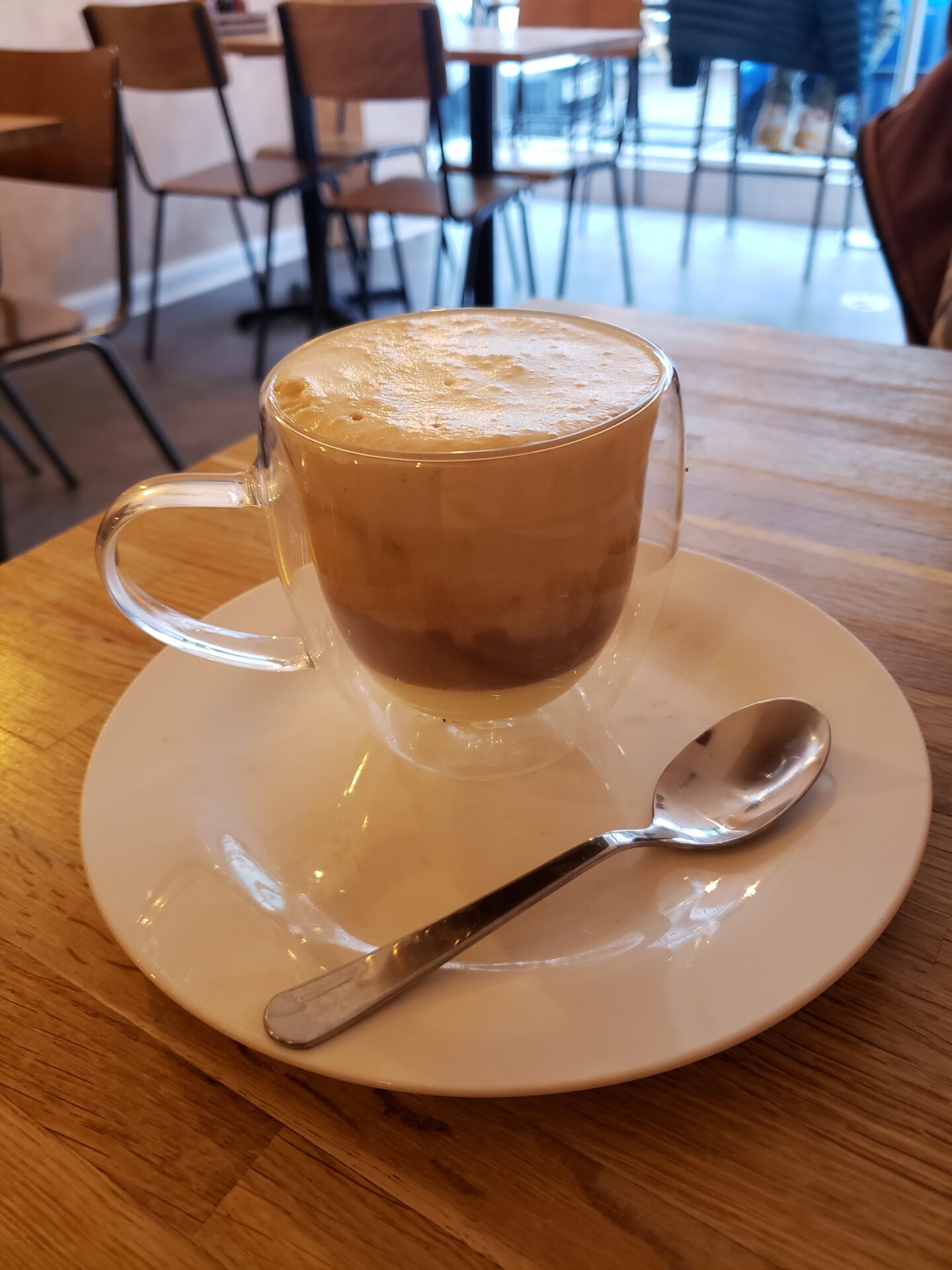
Background on the drink’s Vietnamese origins: CNN report, 27 June 2024. This decaf method is original editorial guidance. The photograph illustrates a salted coffee serving and is not a photograph of our finished recipe.