
Half-Caff Coffee in the UK: Half the Buzz, All the Beans
Britain has found the volume knob on coffee. It is called half-caff.
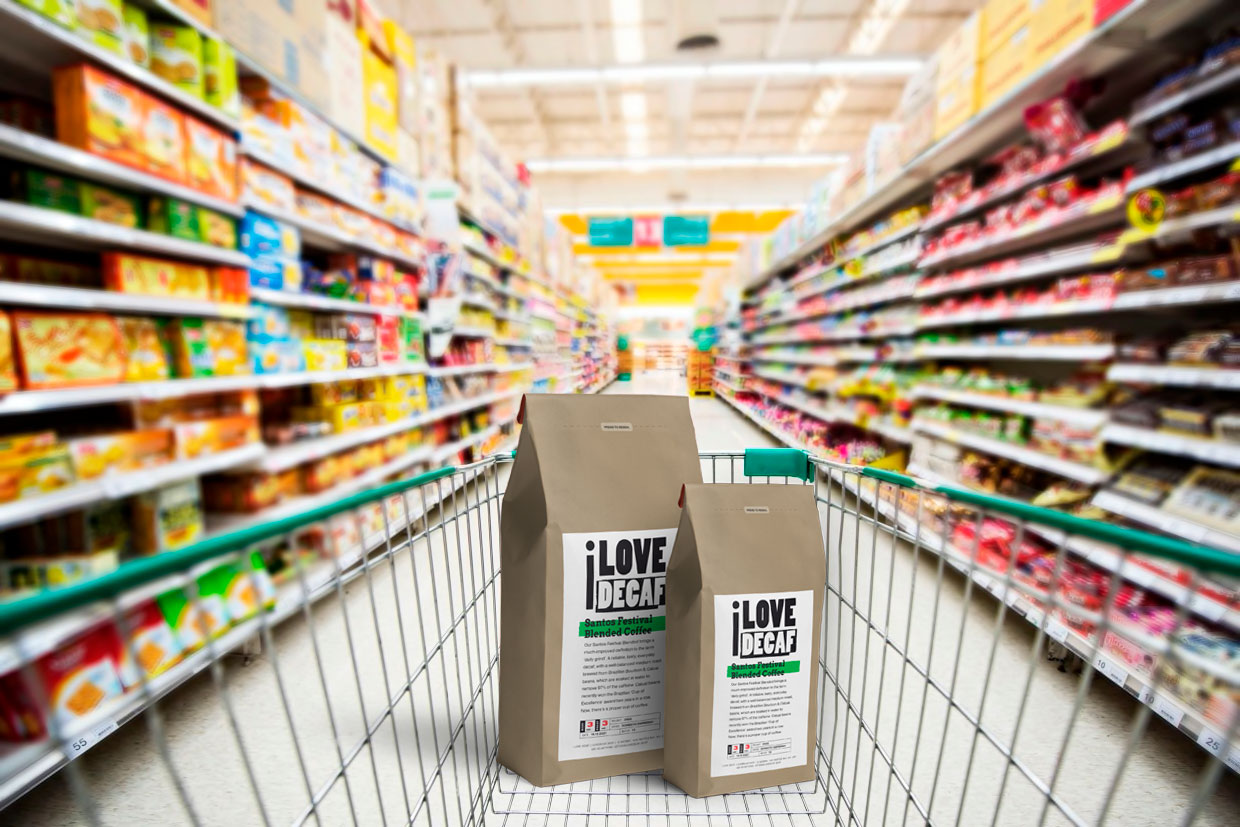
Taylors launched a Half Caff blend into Sainsbury’s in September 2026. Union had already introduced its own version through British supermarkets earlier in the year. Sainsbury’s has a Taste the Difference half-caff ground coffee too. Suddenly, the choice between a full-strength brew and decaf has a middle setting. Nobody has to make a dramatic announcement about it.
Half-caff coffee is usually a mix of regular and decaffeinated coffee, often fifty-fifty by weight. You still get genuine coffee. You also get noticeably less caffeine than you would from a comparable regular brew. It is not completely caffeine free, and it does not come with a precisely calibrated half-dose. Bean variety, roasting, brewing and the little bit of caffeine still present in decaf all affect the finished cup.
So who is it for? People who want to moderate caffeine without abandoning a regular coffee altogether, people who enjoy several cups across the day and anyone who prefers to make the change gradually. If you want as little caffeine as possible, proper decaf is still the more logical choice.
At I Love Decaf, we already have an organic half-decaf option called No Nasties. Its name sounds like a promise made by an unusually honest biscuit tin. The point is simple: flavour first, with some of the caffeine left out.
Here is what UK supermarkets are selling, what half-caff really contains and how to make your own using the coffee already in your cupboard.
What is half-caff coffee?
Half-caff means a lower-caffeine coffee made by combining caffeinated and decaffeinated beans or grounds. A typical blend uses equal amounts of each. Sainsbury’s own Taste the Difference half-caff, for example, lists 50% coffee and 50% decaffeinated coffee in its UK product information.
A 50/50 mix has roughly half the caffeine of an equivalent all-regular blend if the beans, dose and brewing are otherwise comparable. It is not a laboratory-standard measurement. Different caffeinated beans naturally contain different amounts of caffeine and decaf retains a little.
Half-caff also differs from a light roast. Roast colour describes how the coffee was roasted. Half-caff describes its blend of regular and decaffeinated coffee. A pale packet is not a caffeine calculator.
Why is half-caff appearing in UK supermarkets now?
The evidence comes from real UK products on British shelves, not a fashion report imported from California.
- September 2026: Taylors announced Half Caff for Sainsbury’s, combining caffeinated and decaffeinated speciality arabica with a medium-roast profile
- Earlier in 2026: Union introduced Half Caff, stocked through Waitrose and other UK retailers, combining regular Colombian beans with decaffeinated Peruvian beans
- UK supermarket own label: Sainsbury’s lists a Taste the Difference Half Caff Ground Coffee with an explicit 50/50 ingredient split
There is supporting UK consumer evidence as well. In a December 2025 Censuswide survey commissioned by Nespresso Professional, 26% of 2,000 UK respondents said they had increased their decaf consumption during the preceding year. That measures reported decaf drinking, not sales of half-caff specifically. The supermarket launches show that British retailers are offering the halfway option; they do not prove a sudden October search boom.
Which half-caff coffees can you buy in the UK?
Here are the choices worth knowing about. Availability and promotions vary by branch and delivery postcode.
- Taylors Half Caff: A medium-roast blend launched for Sainsbury’s in September 2026, described by Taylors as nutty and sweet
- Union Half Caff: Available through Waitrose, with chocolate, toffee and tangerine tasting notes supplied by the roaster
- Sainsbury’s Taste the Difference Half Caff: Ground coffee made from an even split of regular and decaffeinated arabica
- I Love Decaf No Nasties Organic Half Decaf: Our organic halfway option, offered in bean and ground formats. Check the live listing for available weights and current pricing
The best buy depends on how you make coffee. Ground coffee is convenient for a cafetière or filter. Whole beans give you control over the grind. Neither approach requires a complicated new machine or a personality change.
Does half-caff have half the caffeine?
Approximately, in a genuine 50/50 blend. Not exactly. Coffee is an agricultural product and caffeine varies with the beans and the serving. A half-caff espresso and a half-caff cafetière mug cannot be assumed to contain the same number of milligrams.
Also, the decaf half is not entirely free of caffeine. Our existing guide on how much caffeine remains in decaf explains why the word ‘decaf’ needs that small qualification.
If you need to manage a specific caffeine limit, do not rely on a half-caff label as a precise dose. The NHS advises a daily caffeine limit of 200mg during pregnancy, so somebody following that guidance should count all sources of caffeine and use official advice rather than guessing from a coffee blend.
Half-caff versus decaf versus regular coffee
- Regular coffee: Full regular-coffee caffeine content, varying by bean and preparation
- Half-caff: A blend of regular and decaf, normally intended to deliver materially less caffeine while retaining some
- Decaf: Coffee from which most caffeine has been removed, with a small residual amount possible
For an evening drink, the distinction matters. The NHS explains that caffeine can affect sleep for hours after drinking it. Half-caff still delivers a meaningful caffeine dose. Our guide to when to switch to decaf covers the timing question in more detail. Nothing in this article promises that switching blends will treat a sleep problem.
How to make half-caff at home
If you have regular coffee you like and a decent decaf, you can make the blend yourself in under a minute. The easiest method is to weigh equal amounts of each before grinding or brewing.
- For an 18g brew dose, use 9g regular coffee and 9g decaf
- Match the grind to your equipment: coarse for cafetière, medium for filter or appropriately fine for espresso
- Mix the grounds thoroughly, then brew as normal
- Taste the result before adjusting the grind, dose or blend
- Want less caffeine next time? Try 6g regular and 12g decaf for an approximately one-third regular-coffee blend
Do not worry about achieving a mystical perfect ratio on the first attempt. A small set of kitchen scales is more useful than an enormous online argument about mouthfeel.
Which decaf works best in a half-caff blend?
Start with a decaf you would happily drink on its own. Half-caff is still mostly an exercise in making coffee taste good, not covering up bad beans with slightly fewer stimulants.
Choose a similar roast style for both parts. Medium-roast decaf pairs naturally with many everyday medium-roast regular beans. A fuller, chocolate-led decaf can help a half-caff latte retain its coffee flavour once the milk arrives. For espresso, grind setting and freshness are as important as the blend.
Our best decaf coffee in the UK guide compares the coffees by flavour, roast, format and preparation method. It is a more useful starting point than buying something labelled ‘low caffeine’ and hoping for the best.
Want the halfway coffee without mixing two bags?
Try No Nasties Organic Half Decaf Coffee. It is I Love Decaf’s ready-made half-decaf option for people who want part of the caffeine, the full coffee ritual and less kitchen arithmetic.
Prefer to leave nearly all the caffeine out? Compare our fully decaffeinated coffees and choose by flavour and brewing method instead.
Half-caff coffee: common questions
Is half-caff the same as decaf?
No. Half-caff normally contains a substantial regular-coffee component. Decaf has had most of its caffeine removed.
Can I make half-caff using any decaf beans?
Yes. Choose a good whole-bean decaf, weigh it with your regular beans and grind for your usual brewing method.
Does half-caff taste weaker?
It need not. Caffeine level and flavour strength are different things. Roast, bean quality and extraction still matter.
Can I make half-caff in a cafetière?
Yes. Mix the appropriate weights of coarse-ground regular and decaf coffee before adding hot water.
Is half-caff completely caffeine free?
No. For substantially less caffeine choose fully decaffeinated coffee, remembering that a small amount may remain.
Why are UK supermarkets selling it now?
Several British retailers have introduced branded or own-label half-caff options in 2026. This offers shoppers another way to moderate caffeine while keeping the type of coffee they enjoy.
UK sources and further reading
- The Grocer, 9 September 2026: Taylors Half Caff launch
- Waitrose: Union Half Caff product listing
- Sainsbury’s: Taste the Difference Half Caff ingredients
- Retail Times, 11 December 2025: UK decaf consumer survey
- NHS: Foods to avoid during pregnancy, caffeine section
- NHS: Self-help tips to fight tiredness and caffeine
UK retail ranges and source details checked 27 October 2026. Search volumes are research estimates, not evidence that a query is surging. I Love Decaf sells the products linked on this page.