The best decaf coffee in the UK: proper coffee without the caffeine circus
The best decaf coffee in the UK is the one that still tastes like coffee after the caffeine has been shown the door. It should have proper aroma, body, sweetness, roast character and the kind of flavour that makes you reach for another cup because you want one, not because your nervous system has filed a complaint.
For too long, decaf has been treated like a punishment. Mainstream brands have often behaved as though removing caffeine means removing ambition, flavour, joy, charm and all evidence of civilisation. The result has been supermarket shelves full of apologetic jars, grey packets and coffees that taste as though someone whispered “Brazil” into a damp envelope.
Good decaf has moved on. Very good decaf has moved on even further. The right beans, the right roast, the right decaffeination method and the right grind can produce a cup that tastes rich, smooth, bold, sweet, chocolatey, nutty, bright, mellow or whatever else the coffee was meant to be before caffeine barged into the room wearing a headset and shouting about productivity.
I Love Decaf exists for people who want the coffee ritual without the caffeine pantomime. Morning coffee, afternoon coffee, after-dinner coffee, sofa coffee, book coffee, “I have survived the emails” coffee. All of it still belongs to you. Decaf should not feel like opting out. It should feel like finally finding coffee that fits the whole day.
Best decaf coffee UK: the quick answer
Choose decaf coffee by looking at five things: the decaffeination method, the bean quality, the roast, the grind and the way you actually brew at home. A good decaf should tell you how the caffeine was removed, what kind of flavour to expect and whether it suits cafetiere, espresso, filter, moka pot, pods or bean-to-cup machines.
Swiss Water, Mountain Water and CO2 decaf methods are especially attractive to people who want great taste without traditional solvent-led processing. Swiss Water describes its process as chemical-free and built around water, temperature and time. Decaf coffee is not usually completely caffeine-free, but the remaining amount is tiny compared with standard coffee. Swiss Water says brewed decaf commonly contains trace caffeine, often around 3mg to 15mg per cup depending on serving size and brewing method.
The best decaf coffee for you depends on your routine. Espresso drinkers need fine ground coffee or pods that can produce body and crema. Cafetiere drinkers need a coarser grind so the cup does not turn bitter and gritty. Bean-to-cup drinkers need whole beans that stay fresh and grind cleanly. Evening drinkers need a cup that keeps the comfort and loses the “why am I reorganising the shed at midnight?” energy.
Why so much decaf coffee still tastes disappointing
Decaf’s reputation problem is not mysterious. For decades, it was treated as the side salad of coffee. Technically present, rarely loved and often left wilting somewhere near the edge of the plate.
Many big coffee brands built their reputation around caffeine, energy and morning performance. Decaf then became the awkward cousin. Same surname, less attention, worse outfit. A caffeinated blend might get care, storytelling, roast development, packaging, provenance and advertising. The decaf version would often be parked at the back like someone had remembered it five minutes before a board meeting.
Supermarket decaf has another problem: it needs to serve everyone at once. One product has to work for people who drink instant, people who drink filter, people who want cheap, people who want organic, people who want strong, people who want mild and people who only bought it because the doctor raised an eyebrow. When a product tries to please everyone, it often ends up tasting like a shrug.
Good decaf starts from a different belief. It starts from the idea that decaf drinkers deserve choice. Not one jar. Not one lonely packet of pre-ground compromise. Choice. Beans, ground coffee, pods, dark roasts, medium roasts, organic options, Swiss Water options, bulk buys, espresso grinds and all-day blends. Coffee should match the person, the machine, the cup and the moment.
What makes decaf coffee actually good?
Good decaf coffee begins with good coffee. Decaffeination cannot turn poor beans into a miracle. It can only protect what is already there. Start with flat, stale or low-grade beans and the final cup will still have all the charisma of a waiting room carpet.
The first sign of proper decaf is clear information. The packet or product page should tell you the origin, roast, grind, tasting notes and decaffeination method. Vague decaf is rarely your friend. A serious decaf brand should not hide the method behind marketing fog. You are allowed to know what you are drinking.
The second sign is roast balance. Decaf beans can behave differently during roasting because the decaffeination process changes the structure and moisture content of the green bean. A roaster needs to understand that. Heavy-handed roasting can flatten the character and produce bitterness. Too light and the coffee may taste thin or sour. The sweet spot depends on origin, process and brewing method.
The third sign is freshness. Whole beans keep their aroma longer because grinding increases the surface area exposed to air. Ground coffee is convenient and can still taste excellent, but it needs suitable packaging and sensible use once opened. Buying the right grind matters more than pretending everyone has the time, equipment or moral calling to grind beans at 6.48am.
The fourth sign is compatibility with your brew method. Espresso, cafetiere, filter, Aeropress, moka pot and pods all extract coffee differently. The wrong grind can ruin good beans. Fine grounds in a cafetiere can over-extract and leave bitterness. Coarse grounds in an espresso machine can under-extract and taste sour. Coffee is not being difficult. It is simply asking not to be abused.
Best decaf coffee beans
Decaf coffee beans are the right choice if you care about freshness, use a bean-to-cup machine or have a grinder at home. Beans let you grind immediately before brewing, which helps preserve aroma and flavour. They also give you more control over the cup.
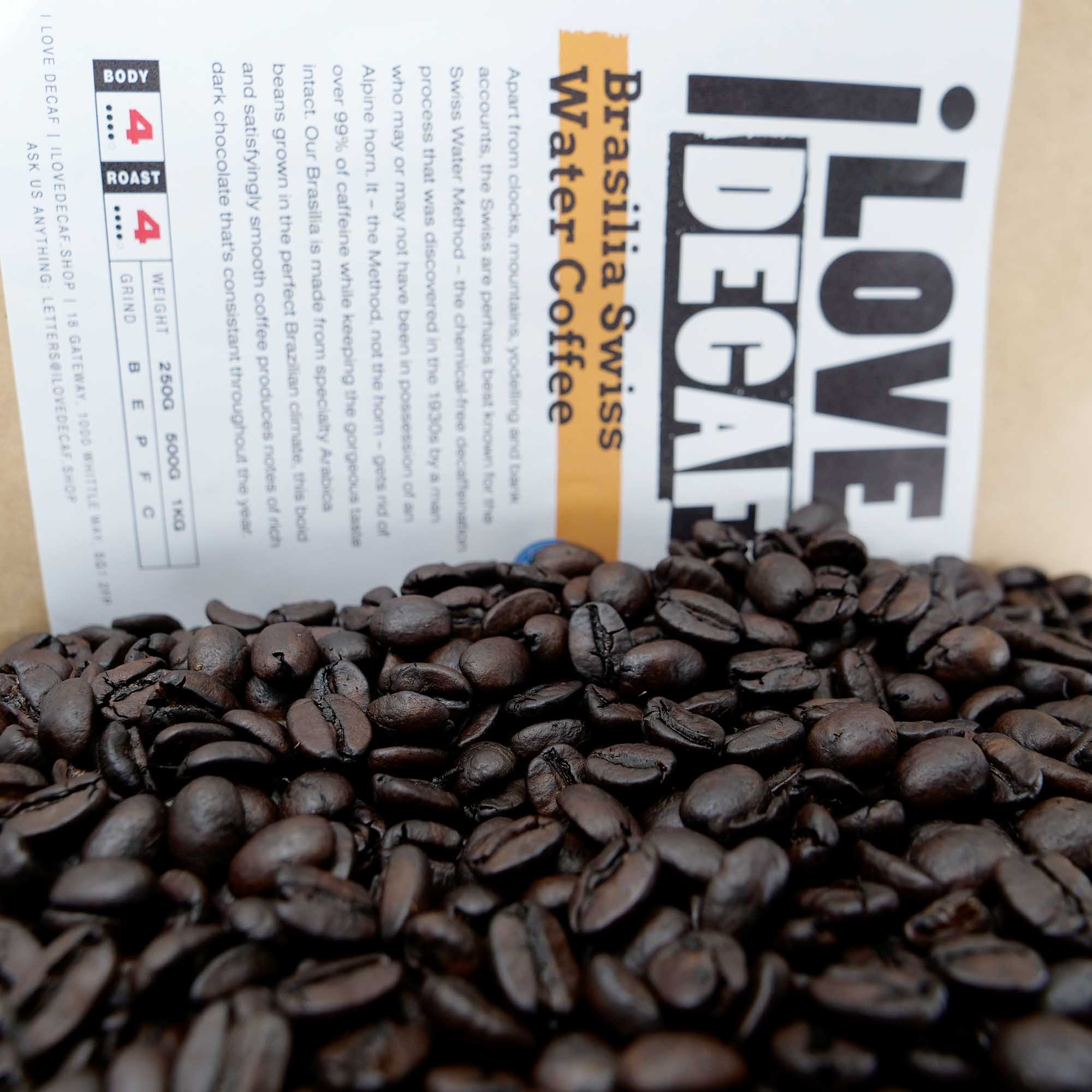
The best decaf coffee beans should have enough body to survive the loss of caffeine without tasting hollow. Look for beans with chocolate, nut, caramel, fruit, spice or malt notes depending on your taste. Brazilian decaf can be rich, smooth and chocolatey. Honduran decaf can be sweet, rounded and nutty. Mexican Mountain Water style coffees can bring body, texture and a clean cup when handled properly.
Whole beans suit people who want the freshest possible brew and are prepared to do one extra thing before drinking it. Not a marathon. Not a wellness retreat. Just grinding coffee. The reward is a cup with more aroma and more control.
Shop decaf coffee beans: https://www.ilovedecaf.shop/the-best-decaf-coffee-beans-in-the-uk/
Best decaf ground coffee
Ground decaf coffee is the most practical choice for many homes. It is quick, tidy and does not require you to operate a grinder before your brain has fully accepted the day. The key is buying the right grind for your equipment.
A cafetiere needs a coarse grind. Espresso needs a fine grind. Filter and Aeropress generally sit somewhere in the middle. Moka pots often prefer a fine to medium-fine grind, depending on the coffee and your kit. The product page should make this easy. Nobody should need a qualification in particle size distribution to buy coffee.
Good ground decaf should still smell like proper coffee when you open it. It should not smell stale, dusty, burnt or like the inside of a cupboard in a church hall. Store it well, seal it properly and use it while it is fresh.
Shop ground decaf coffee: https://www.ilovedecaf.shop/decaf-ground-coffee/
Best Swiss Water decaf coffee
Swiss Water decaf is one of the most searched-for decaf choices because people associate it with clean processing and strong flavour retention. The Swiss Water process uses water, time, temperature and carbon filtration to remove caffeine without adding chemical solvents.
For many decaf drinkers, that matters. Some people want decaf because they are reducing caffeine for sleep, pregnancy, anxiety, heart sensitivity or general wellbeing. Others simply want to drink coffee all day without turning into a haunted percussion instrument. In either case, the decaf method becomes part of the buying decision.
Swiss Water decaf is especially useful on a commercial page because it answers a real concern. People search for “chemical-free decaf coffee”, “Swiss Water decaf UK” and “best Swiss Water decaf coffee” because they are not just buying taste. They are buying reassurance.
A strong Swiss Water decaf should still give you aroma, body and a complete cup. It should not taste stripped, thin or apologetic. When the beans are good and the roast is handled well, Swiss Water decaf can be one of the best ways to enjoy coffee with far less caffeine and no sense of compromise.
Shop Swiss Water decaf coffee: https://www.ilovedecaf.shop/swiss-water-decaf-coffee/
Best organic decaf coffee
Organic decaf coffee is for people who want the whole chain to feel cleaner: the farming, the processing and the cup. The organic label alone does not guarantee great flavour, but it does tell you something about how the coffee was grown and handled.
The best organic decaf coffee should combine proper certification with proper taste. There is no glory in an ethical cup that tastes like boiled paperwork. A good organic decaf should still have body, aroma and a clear flavour profile. It should work as coffee first and a values-led choice second.
Organic decaf works especially well when paired with water-based decaffeination methods such as Swiss Water or Mountain Water. That pairing gives customers a clear reason to choose it: fewer concerns about caffeine, fewer concerns about traditional solvent processing and no need to drink something miserable in the name of virtue.
Shop organic decaf coffee: https://www.ilovedecaf.shop/ultimate-organic-decaf-coffee/
Best decaf coffee pods
Coffee pods are one of the biggest convenience routes in coffee. Press button, receive coffee, continue pretending the morning is under control. For decaf drinkers, pods matter because they make evening coffee and quick coffee much easier.
The problem is that pod coffee can be poor when the coffee inside has not been treated with enough respect. A pod is only as good as what goes into it. Decaf pods need enough roast character, body and grind consistency to produce a satisfying cup under pressure.
Swiss Water decaf pods are a strong choice for Nespresso compatible machines because they combine convenience with a cleaner decaf story. They are useful for people who want a quick cup after dinner, a low-caffeine coffee at work or an easy route into decaf without buying new equipment.
Shop Inca Gold Organic Decaf Coffee Pods Swiss Water: https://www.ilovedecaf.shop/product/inca-gold-organic-decaf-coffee-pods-swiss-water/
Best decaf espresso
Decaf espresso has to work harder than most coffee. Espresso is concentrated, fast and unforgiving. If the grind is wrong, the roast is wrong or the beans lack body, the machine will tell everyone immediately.
A good decaf espresso should have body, sweetness and crema. It needs enough depth to stand alone as a short coffee and enough character to cut through milk in a flat white, cappuccino or latte. Thin decaf espresso is one of life’s smaller but more persistent insults.
Look for espresso-suitable decaf with a fine grind, a roast profile that supports body and flavour notes that suit pressure brewing. Chocolate, nut, caramel and dark fruit notes often perform well. Bright citrus notes can work too, but only when balanced. Nobody wants an espresso that tastes like it has had an argument with a lemon.
Shop decaf espresso coffee: https://www.ilovedecaf.shop/best-decaf-espresso-grounds-and-the-amazing-crema/
Best bulk buy decaf coffee
Bulk buy decaf coffee makes sense when decaf is part of your daily routine. If you drink it every day, buying tiny packets can become annoying and unnecessarily expensive. Bulk buying also works for offices, shared homes, hospitality settings and anyone who has decided life is too short to run out of coffee on a Tuesday.
The key is buying bulk decaf you already trust. A kilo of disappointing coffee is not a bargain. It is a commitment to regret. Choose a decaf you enjoy, check the grind, check the roast and store it properly.
Bulk decaf also helps customers who have fully switched or mostly switched from caffeinated coffee. Once decaf is no longer a “just in case” packet at the back of the cupboard, it needs to be bought like proper coffee. Because it is proper coffee.
Shop bulk buy decaf coffee: https://www.ilovedecaf.shop/discount-bulk-buy-decaf-coffee-a-kilo-or-more/
Does decaf coffee still have caffeine?
Yes, decaf coffee usually still contains a small amount of caffeine. Decaf does not normally mean zero caffeine. It means most of the caffeine has been removed.
The remaining amount depends on the original beans, decaffeination method, serving size and brewing method. A small brewed decaf may contain only a few milligrams. A large mug made strong may contain more. It is still far lower than a standard caffeinated coffee.
For most people, that makes decaf a practical way to cut caffeine while keeping the coffee ritual. For people who are extremely sensitive to caffeine or have been told by a healthcare professional to avoid caffeine completely, it is worth checking specific product details and getting personal medical advice.
Herbal and fruit infusions are different. Peppermint, rooibos and many fruit teas are naturally caffeine-free because they are not made from the tea plant and do not need to be decaffeinated. They are not decaf in the strict sense. They are no-caf. A small distinction, but one that matters if your caffeine tolerance is lower than a Victorian fainting couch.
Can you drink decaf coffee when pregnant?
Many pregnant people switch to decaf because they want to reduce caffeine without losing the comfort of coffee. UK NHS guidance says caffeine can be consumed during pregnancy, but recommends no more than 200mg per day. It also explains that caffeine is found in coffee, tea, cola, energy drinks and chocolate.
Decaf coffee can help keep caffeine intake lower, but it is still sensible to remember that decaf may contain trace caffeine. If you are pregnant and drinking several cups a day, include decaf in your overall thinking rather than pretending it has vanished into a parallel universe.
For most people, decaf is a useful swap because it keeps the taste, warmth and habit. The ritual matters. Pregnancy already involves enough advice, judgement and people saying “ooh, should you be having that?” while eating crisps over your shoulder. Good decaf lets you keep a civilised cup of coffee with much less caffeine involved.
Is decaf coffee better for sleep?
Decaf is the obvious choice for people who want coffee later in the day. Caffeine can stay in the body for hours and its half-life varies from person to person. Sleep Foundation notes that caffeine half-life can range from 2 to 12 hours depending on the individual.
That explains why one person can drink an espresso at 9pm and sleep like a Labrador, while another has a latte at 3pm and spends the night mentally reorganising every cupboard they have ever owned.
Decaf gives you the evening ritual without the same caffeine load. A cup after dinner, with pudding, during a film, over a book or during the sacred quiet after everyone else has stopped asking where the charger is. That is where decaf earns its place. It protects the pleasure of coffee from the timing problem of caffeine.
Which decaf grind do you need?
Grind choice is one of the quickest ways to ruin or rescue your coffee. The same beans can taste completely different depending on how they are ground and brewed.
Cafetiere coffee needs a coarse grind because the grounds sit in the water for several minutes. Fine grounds in a cafetiere can over-extract, slip through the mesh and create a bitter, sludgy cup. Espresso needs fine ground coffee because the water passes through quickly under pressure. Coarse grounds in an espresso machine can leave you with weak, sour disappointment and a machine that knows you have wronged it.
Filter coffee usually needs a medium grind. Aeropress can work with a range of grinds depending on recipe, but medium to fine is a sensible starting point. Bean-to-cup machines need whole beans. Pods need compatible capsules designed for your machine.
Buy the coffee for the equipment you actually own. Not the imaginary lifestyle version of yourself who rises at dawn, hand-grinds beans while wearing linen and writes tasting notes in a notebook. The real you deserves good coffee too.
How to brew decaf properly
Treat decaf like real coffee and it will behave more like real coffee. Use fresh water. Avoid boiling the life out of it. Store the coffee properly. Match the grind to the brewing method. Measure with some consistency. Give the coffee enough contact time to extract flavour without punishing it.
For cafetiere, use coarse ground decaf, hot water just off the boil and around four minutes as a starting point. Stir gently, plunge slowly and pour once brewed rather than letting the coffee sit on the grounds forever like a hostage.
For espresso, use a fine grind, a clean machine and a dose that suits your basket. Watch the flow. If it gushes through, the grind may be too coarse or the dose too low. If it chokes, the grind may be too fine or the dose too high.
For filter, rinse the paper if using one, use a medium grind and pour steadily. For pods, keep the machine clean. Pod machines are convenient, but they still need basic maintenance unless you enjoy coffee with notes of old kettle and municipal pipe.
Good brewing will not save terrible coffee, but bad brewing can absolutely sabotage good coffee. Give your decaf a fighting chance.
Why buy decaf from a decaf specialist?
A decaf specialist starts from a different place. The question is not “how do we make a version of our normal coffee with less caffeine?” The question is “how do we make decaf worth choosing?”
That changes everything. Range matters. Grind matters. Method matters. Tone matters. The customer matters. People buying decaf are not all the same. Some are cutting down slowly. Some are pregnant. Some are caffeine-sensitive. Some want evening coffee. Some want espresso. Some want pods. Some want organic. Some want beans. Some want tea. Some want everything in the cupboard because one hot drink personality is clearly not enough.
I Love Decaf only exists because decaf drinkers deserve better than being treated as a niche inconvenience. The point is choice, flavour and personality. Decaf coffee does not need to sit in the corner in beige trousers, apologising for itself. It can be rich, bold, smooth, bright, sweet, dark, aromatic and full of character.
The best decaf coffee in the UK is not defined by the loudest brand, the biggest jar or the most supermarket shelf space. It is defined by the cup. If the cup tastes good, suits your routine, keeps your caffeine where you want it and makes you glad you bought it, you have found the right decaf.
Best decaf coffee UK FAQs
What is the best decaf coffee in the UK?
The best decaf coffee in the UK is one that uses good beans, a clear decaffeination method, the right roast and the correct grind for your brewing equipment. For many people, Swiss Water, Mountain Water and organic decaf coffees are strong choices because they combine flavour with a cleaner processing story.
Is Swiss Water decaf better?
Swiss Water decaf is popular because it removes caffeine without traditional chemical solvents. It is a strong choice for people who want a cleaner decaf method and a coffee that still tastes full and satisfying.
Is decaf coffee completely caffeine-free?
Most decaf coffee is not completely caffeine-free. It usually contains trace caffeine, but much less than regular coffee. People who need to avoid caffeine completely should check product information and speak to a healthcare professional.
Is decaf coffee suitable in pregnancy?
Decaf coffee can help reduce caffeine intake during pregnancy. NHS guidance recommends limiting caffeine to no more than 200mg per day during pregnancy. Decaf can still contain trace caffeine, so it should be considered as part of total daily intake.
Can decaf coffee help with sleep?
Decaf can be a better choice for later in the day because it contains far less caffeine than regular coffee. Caffeine can remain in the body for hours and affects people differently, so switching to decaf in the afternoon or evening can help protect the coffee ritual without the same risk of bedtime alertness.
Are decaf coffee beans better than ground decaf?
Beans can stay fresher for longer and let you grind just before brewing. Ground decaf is more convenient and still works very well when it is fresh, properly packed and matched to your brewing method.
What grind do I need for decaf coffee?
Use coarse ground decaf for cafetiere, fine ground decaf for espresso, medium ground decaf for filter and whole beans for bean-to-cup machines. Pods should match your machine type.
Does decaf taste different from regular coffee?
Decaf can taste slightly different because removing caffeine changes the bean. Good decaf still tastes like proper coffee when the beans, roast, method and grind are handled properly.
Is organic decaf worth it?
Organic decaf is worth considering if you want coffee grown without synthetic pesticides and fertilisers. The best organic decaf also needs to taste good, so look for clear flavour notes, origin, roast and decaffeination method.
Where can I buy the best decaf coffee in the UK?
You can explore I Love Decaf’s decaf coffee range, including beans, ground coffee, Swiss Water decaf, organic decaf, pods, espresso and bulk buy options at https://www.ilovedecaf.shop/