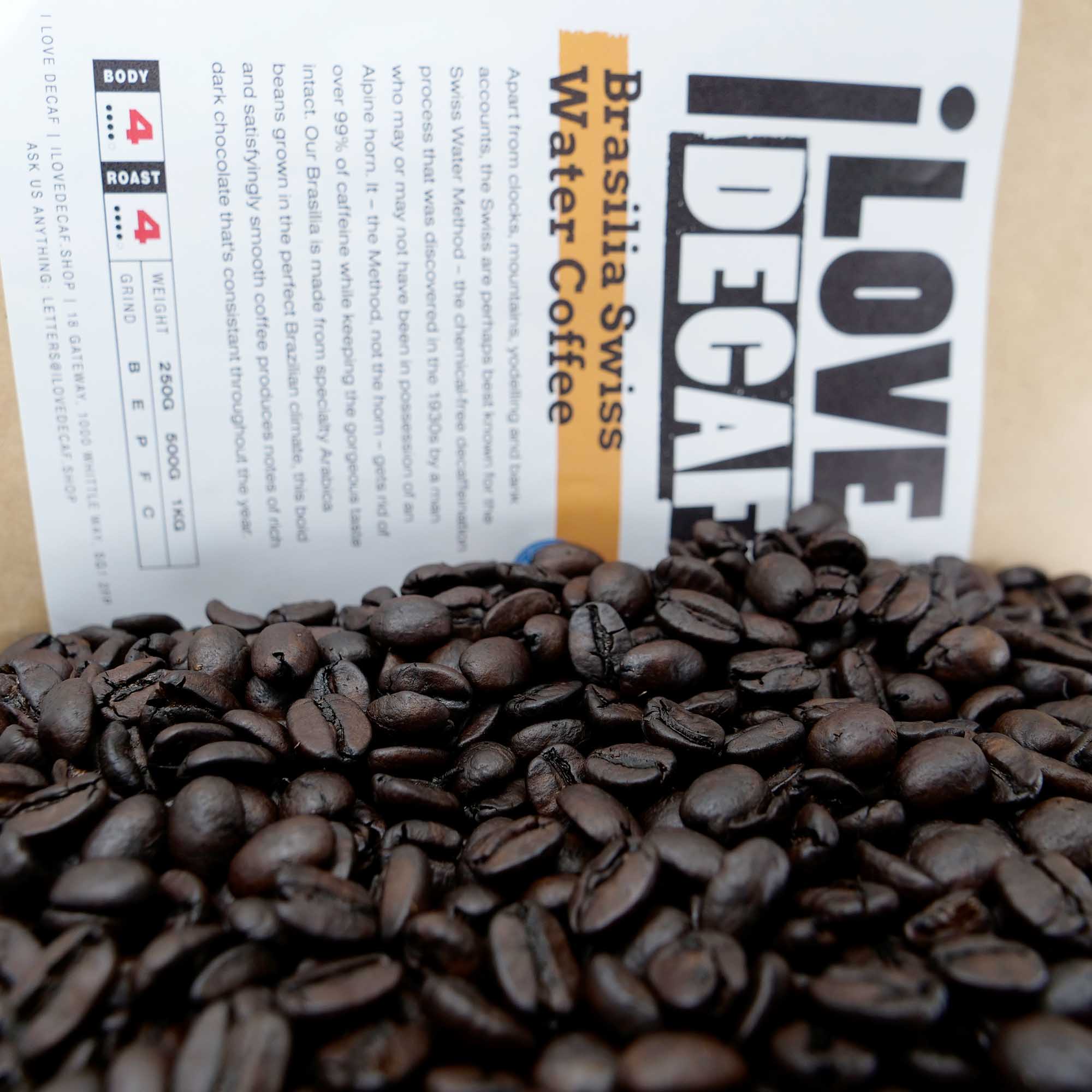
Dark roast decaf is for people who enjoy a pronounced roasted coffee character with much less caffeine. The best dark roast decaf is the one that tastes right to you and works in your brewer. A bag can offer cocoa-like or bittersweet notes without needing an invented award or a claim that the roast prevents illness.
There is a lot of confusion between ‘strong’, dark and caffeinated. Roast level describes how the beans have been roasted. The strength of a finished cup depends on grind, dose and preparation. Decaffeination removes most caffeine regardless of whether you choose a medium or dark roast.
What does dark roast decaf taste like?
Dark roasting tends to emphasise roasted, bittersweet flavours over some of the brighter notes associated with lighter roasts. Depending on the beans and roast, you may notice cocoa, toast or a heavier impression of body. Tasting notes are descriptions of aroma and flavour, not necessarily added ingredients.
A darker coffee can be enjoyable in an espresso or milk drink when you want the coffee to remain distinctive. It can also make a good cafetière brew if you prefer the full flavour. There is no universal rule that a dark roast tastes best.
Does dark roast have more caffeine?
Roast shade is not a reliable measure of caffeine in a prepared cup. Decaf is processed before roasting to remove most of its original caffeine. Some residual caffeine remains, and the amount in the drink also depends on how much coffee you use.
The British Heart Foundation provides an illustrative 200ml decaf coffee at around 7mg caffeine versus roughly 100mg in a comparable regular drink. Those are indicative figures for comparison, not a laboratory result for a particular dark roast.
Does dark roast decaf prevent heart disease or cancer?
No such product-level benefit has been established. An old version of this guide made confident claims about preventing stroke and cancer simply by drinking dark-roast decaf. Those statements could not be supported from suitable evidence and have been removed.
Coffee research may find associations between consumption patterns and health outcomes in studied groups. Such observations do not demonstrate that a particular dark roast prevents illness. If you have health concerns, use relevant professional advice rather than a roaster’s sales copy.
What is Swiss Water dark roast?
Swiss Water is a named water-based decaffeination process. It removes most caffeine from green beans using water, green coffee extract and filtration. The process tells you how the caffeine was removed, not whether the roast is dark or whether a particular coffee is certified organic.
Check the product description for origin, roast and current stock. The I Love Decaf Swiss Water guide explains the process and relevant buying choices.
How to brew a good dark roast decaf
- Espresso: grind fine enough for a controlled extraction, then adjust for taste
- Cafetière: start around 15g coarse ground coffee for 250ml hot water and about four minutes
- Filter: start at a medium grind and adjust extraction if the drink is thin or bitter
- Bean-to-cup: use whole beans and follow machine instructions when changing grind
- Milk drinks: choose a coffee with enough body to stay recognisable after adding milk
If the cup tastes harsh or dry, adjust grind, dose or extraction before assuming you bought a bad coffee. Different beans behave differently, even when the roast level sounds similar.
Choosing a coffee for your kitchen
Read the actual roast description and note whether the product comes as whole beans or suitable grounds. For someone using a cafetière, a very fine espresso grind may create muddy coffee. A grinder offers flexibility but is not essential if the retailer provides the correct ground option.
Our UK decaf coffee beans guide includes options to compare roast and origin. If you want the dark roasted flavour, pick a current coffee genuinely labelled as dark rather than relying on an old ‘number one’ claim.
Frequently asked questions
Is dark roast decaf stronger? It can taste more strongly roasted, but brewed strength depends on dose and method.
Is dark roast decaf completely caffeine-free? No. Small amounts usually remain.
Is Swiss Water always better for flavour? No method guarantees every coffee will taste better. Origin, roast and preparation matter.
UK sources
Updated in October 2026 using the British Heart Foundation’s caffeine explanation and Swiss Water’s process description. The previous dark-roast disease-prevention claims have been removed; this is a buying guide, not medical advice.