
Swiss Water vs CO2 Decaf: Which Process Makes Better Coffee?
Swiss Water and CO2 are both established ways of removing caffeine from green coffee beans. Neither guarantees a better tasting cup. Good origin, careful roasting, freshness and the way you brew it matter enormously. Sorry to anybody hoping the answer was as easy as ticking a box marked ‘fancy decaffeination’.
Decaf should taste like proper coffee. The goal is to remove most of the caffeine without leaving you drinking something that resembles the contents of a recently rinsed coffee mug. Here is what the two processes actually do.
Swiss Water versus CO2: the differences
| Question | Swiss Water | CO2 process |
|---|---|---|
| How caffeine is removed | Water-based diffusion using Green Coffee Extract and carbon filtration | Pressurised carbon dioxide extracts caffeine from hydrated green coffee |
| Uses methylene chloride or ethyl acetate extraction | No | Not in the standard CO2 process |
| Does it retain coffee flavour? | Designed to preserve soluble coffee compounds | Designed for selective caffeine extraction |
| Automatically the better tasting coffee? | No | No |
| Best buying clue | Clear process identification, origin and roast information | Clear process identification, origin and roast information |
How the Swiss Water Process works
Swiss Water is a named process, not simply coffee washed with water. First the green beans are prepared and hydrated. They are then placed in Green Coffee Extract, which already contains soluble coffee compounds but very little caffeine. Caffeine moves from the beans into the extract. Carbon filters remove that caffeine from the extract before it is used again. The beans are dried and eventually roasted.
The company explains its technology in the official Swiss Water process guide and reports 99.9% caffeine removal. The process aims to preserve as much of the original bean’s character as possible, but taste also depends on everything else that happens to the coffee.
How CO2 decaffeination works
The CO2 method uses carbon dioxide at controlled temperatures and high pressures to extract caffeine from the green beans. It requires specialist equipment and processing conditions. The caffeine is separated from the CO2 so the extraction medium can be reused.
Carbon dioxide is a chemical compound, so describing CO2 decaf as literally ‘chemical free’ would be rather silly. The useful distinction is that the standard process does not rely on the conventional methylene chloride or ethyl acetate extraction methods. The technology is described in a scientific overview of supercritical CO2 decaffeination and a 2025 study of extraction from green coffee beans.
Which process preserves more flavour?
There is no credible universal winner. To compare methods fairly you would need similar green beans, matched roasting and matched brewing, with repeatable sensory assessment. A dark roasted Swiss Water Brazilian and a lightly roasted CO2 Colombian are different coffees in several ways before the kettle has even boiled.
The Specialty Coffee Association’s explanation of sensory assessment describes why controlled tasting matters. Don’t mistake a process label for a tasting note.
Does decaf contain any caffeine?
Usually yes, a small amount remains. The US Food and Drug Administration gives a typical range of 2 to 15 mg in an 8 fluid ounce cup of decaf. Exact amounts depend on the coffee and preparation. A claim such as ‘99.9% removed’ describes removal during processing, not proof that the finished drink has absolutely zero caffeine.
What about Mountain Water and sugarcane decaf?
Mountain Water is another water-based process. Sugarcane decaf generally uses ethyl acetate, an extraction solvent that may be derived from sugarcane. It’s perfectly possible to enjoy outstanding coffee made using any of these methods. What matters is knowing what the terms mean. Our guide to Swiss Water, Mountain Water and sugarcane decaf goes through all three.
How to choose the best decaf for your own kitchen
Try judging coffee on the following information, in this order:
- Taste and roast: do you want smooth and mellow, chocolatey and full bodied or lighter and fruitier?
- Your equipment: a bean to cup machine, cafetiere and espresso machine may need different roast and grind choices.
- Origin and transparency: is the coffee traceable beyond a vague promise of ‘premium beans’?
- Freshness: how is it packed and stored, and is roast information available?
- Decaffeination method: decide whether a specific process matters to you, then verify it on the product details.
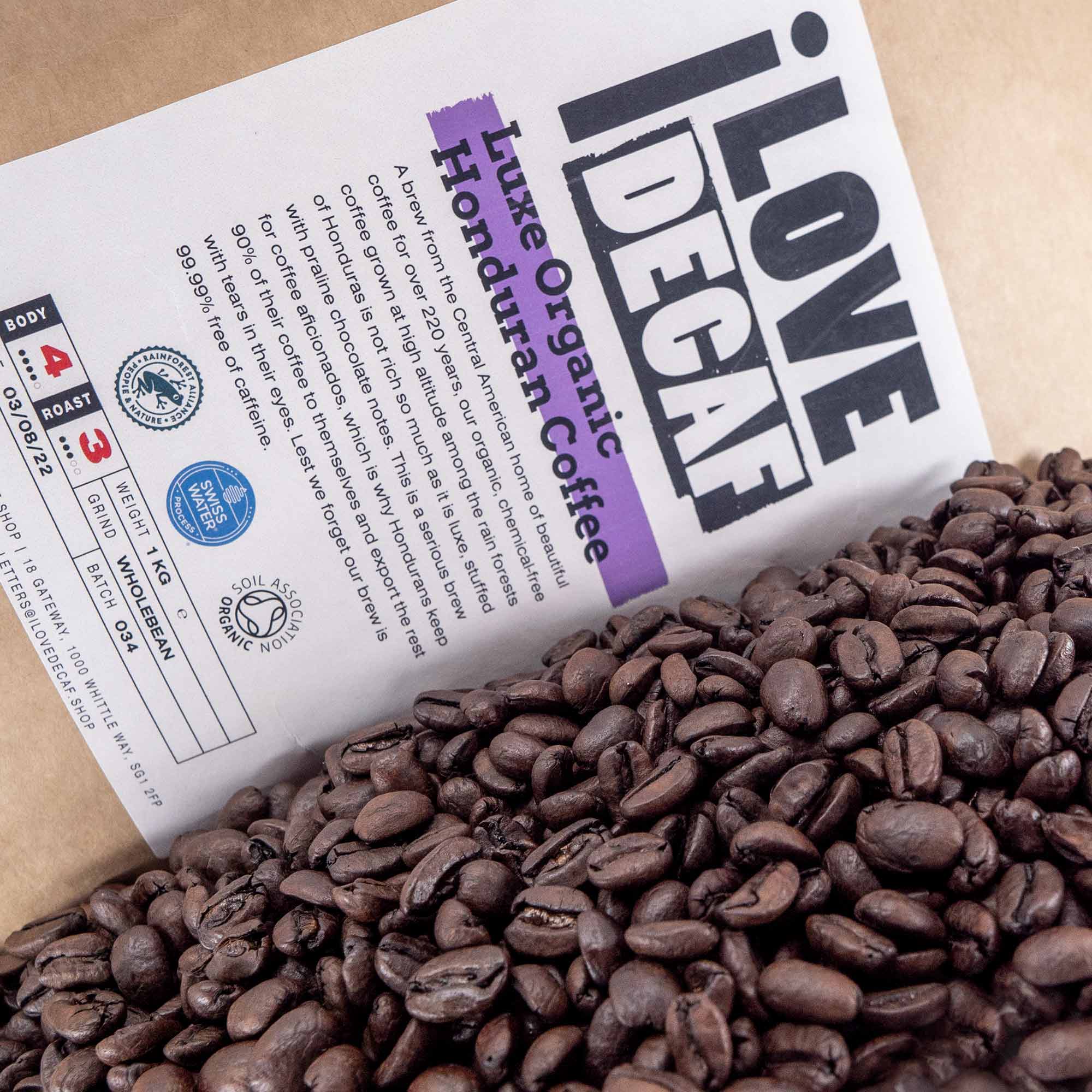
For water processed coffees, compare Luxe Organic Honduran Decaf and Orizaba Mountain Water Decaf. For a wider range, visit our best decaf coffee buying guide.
Frequently asked questions
Is Swiss Water the same as CO2 decaf?
No. Swiss Water uses diffusion in a water-based extract and carbon filtration. CO2 uses pressurised carbon dioxide.
Is one more natural?
‘Natural’ is a marketing term with little precision here. Ask which extraction method is used and whether the coffee’s other claims are substantiated.
Does Swiss Water taste stronger?
Not automatically. Dose, brew method, origin and roast all affect the cup.
Does organic mean Swiss Water?
No. Organic certification and decaffeination method are separate attributes that should be verified independently.
Sources and further reading
- Swiss Water: how the process works
- Decaffeination using supercritical carbon dioxide, scientific review
- 2025 research on CO2 extraction from coffee
- Specialty Coffee Association: sensory and cupping science
- US FDA: caffeine levels in decaf coffee
Editorial note: descriptions are grounded in process documentation and research. This is buying guidance, not a claim that we conducted a controlled laboratory comparison.