
Gym and Coffee: But Does Decaf Work the Same?

In the realm of fitness and health, coffee often emerges as a champion beverage, celebrated for its energising effects and potential to enhance physical performance. The spotlight usually falls on caffeinated coffee for its stimulating benefits. However, with a growing trend towards healthier lifestyles and the avoidance of stimulants by some individuals, decaffeinated coffee (decaf) has piqued the interest of health enthusiasts and athletes alike. This article seeks to explore the science behind coffee, with a particular focus on decaf, and its relationship with physical exercise.

The Stimulating World of Caffeine

Boosting Performance with Caffeine

Caffeine is renowned for its ability to enhance physical performance. It’s a powerful stimulant that can improve endurance, increase alertness, and make strenuous workouts feel more manageable. According to a study in the Journal of the International Society of Sports Nutrition, caffeine ingestion can significantly enhance exercise performance, including endurance and strength. This effect is attributed to caffeine’s ability to block adenosine receptors, reducing perceived effort and fatigue. Read the study here.

Caffeine’s Direct Impact on Exercise

Research supports caffeine’s role in not only enhancing endurance sports performance but also in high-intensity short-term exercises. An article on Healthline based on various studies outlines caffeine’s benefits in increasing power output and improving reaction times, which can be crucial for athletes in both training and competitive environments. Explore the Healthline article.

Decaf’s Place in the Fitness World

Decaf Coffee: Benefits Beyond Caffeine

Turning our attention to decaf, it’s important to note that whilst the caffeine content is minimal, decaf coffee is not devoid of health benefits. A study published in Nutrients suggests that decaf coffee can improve blood glucose management and reduce oxidative stress, thanks to its high content of antioxidants and other bioactive compounds. These properties might not directly enhance physical performance as caffeine does, but they contribute to overall health, which is foundational for long-term fitness and wellness. Read the Nutrients study.

The Psychological Edge of Coffee Rituals

The act of consuming coffee, regardless of its caffeine content, may also play a psychological role in preparing individuals for exercise. A ritual as simple as drinking a warm cup of decaf before hitting the gym could provide a mental boost, contributing to a more focused and productive workout session.

Exploring the Health Benefits of Decaf

Cardiovascular Health and Chronic Disease Prevention

Decaf coffee consumption has been linked to a lower risk of developing certain chronic diseases, including type 2 diabetes and neurological disorders. The antioxidant properties of decaf can also play a role in promoting cardiovascular health by reducing inflammation and improving endothelial function, which is vital for maintaining healthy blood vessels.

Decaf and Digestive Well-being

Decaf coffee is often recommended for individuals who are sensitive to caffeine’s gastrointestinal effects. Studies have shown that decaf can offer a gentler alternative, providing the comforting warmth and taste of coffee without causing the same level of digestive upset or disrupting sleep patterns.

Practical Considerations for Athletes and Fitness Enthusiasts

Incorporating Decaf into Your Fitness Regimen

For those sensitive to caffeine or who exercise later in the day, decaf coffee can serve as a viable pre-workout beverage. It allows individuals to enjoy the ritual of coffee consumption without the potential for caffeine-induced sleep disturbances or jitteriness, which could interfere with recovery and performance.

Decaf Coffee as a Recovery Aid

The antioxidants in decaf coffee can aid in recovery by combating oxidative stress and inflammation induced by intense physical activity. This makes decaf an excellent choice for post-workout recovery, helping to reduce muscle soreness and speed up the recovery process.

Decaf Coffee in the World of Fitness

Whilst caffeinated coffee holds the crown for enhancing physical performance due to its stimulant properties, decaf coffee offers a realm of benefits that extend beyond immediate physical enhancement. Its health benefits, coupled with the psychological comfort provided by the coffee-drinking ritual, make decaf a worthy contender in the diet of fitness enthusiasts and athletes alike. Whether seeking to avoid caffeine’s side effects or simply enjoying the taste of coffee without the buzz, decaf coffee can play a supportive role in a healthy, active lifestyle.

As we explore the nuances of coffee’s impact on exercise and wellness, it’s clear that both caffeinated and decaffeinated varieties have their place. The choice between them should be tailored to individual health goals, sensitivities, and preferences, ensuring that coffee—whether decaf or fully loaded—supports your journey towards optimal health and performance.
The Art of Roasting Swiss Water Decaffeinated Coffee: From Colour to Craftsmanship

Subtle Variations in Coffee Bean Colours: Regular vs. Decaffeinated

Have you ever wondered about the subtle differences in colour between decaffeinated coffee and its regular counterpart? When you delve into the world of green coffee beans, especially those from the Swiss Water Decaf Coffee Company, you’ll quickly notice a fascinating distinction in hues.

Typically, a regular green coffee bean exhibits a bluish-green tint, while decaffeinated coffee beans take on a more intriguing appearance, ranging from a delicate straw yellow to a light cinnamon brown. This captivating contrast is a result of the meticulous decaffeination process that these beans undergo.

Mastering the Art of Roasting Swiss Water Decaf Coffee

When it comes to roasting Swiss Water Decaf coffee, it demands unwavering attention to detail and a wealth of experience. The shifts in colour during the roasting process can be quite subtle, especially as you approach the end of the roasting curve.

As Europe’s premier (and sole) decaf coffee company, I Love Decaf takes pride in roasting Swiss Water Decaf coffee week in and week out. This extensive experience places us at the forefront of decaffeinated coffee expertise.

The Colour Spectrum: Roast Regular Coffee vs. Roast Decaffeinated Coffee

Decaffeinated coffee, in its roasted form, tends to display a darker hue compared to regular coffee. This contrast arises from the fact that green decaffeinated coffee appears lighter and paler in its raw form before undergoing the roasting process.

In our pursuit of the perfect roast for Swiss Water Decaf coffees, we adopt a balanced approach, favouring a medium to medium-dark roast profile. In essence, we adhere to a more classic roasting style, setting us apart from many independent roasters.

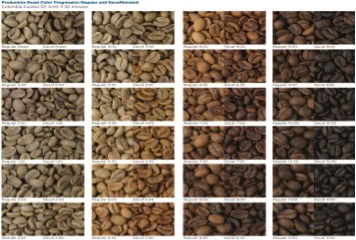
For a vivid illustration of the differences in colour between regular and decaffeinated coffee, refer to this colour palette curated by the skilled artisans at Swiss Water Decaf:

Image
Image 1

Roasting Decaf: A Journey Beyond Colour

In conclusion, the world of coffee roasting is a symphony of colours, flavours, and expertise. Swiss Water Decaf coffee, with its unique appearance and flavour profile, is a testament to the artistry of decaffeination and roasting. Whether you’re a seasoned coffee connoisseur or just beginning your journey, exploring the fascinating world of decaffeinated coffee is a delightful adventure worth embarking upon. Join us in savouring the beauty of Swiss Water Decaf coffee—a truly exceptional brew.

Elevate Your Roasting Game with Swiss Water Decaf Coffee

In an era of coffee connoisseurs and an ever-discerning clientele, it’s imperative to raise your roasting standards and embrace decaffeination with the same zeal as any other coffee in your line-up. An intriguing shift occurred in 2017 when decaffeinated coffee consumption outpaced its non-decaffeinated counterpart, particularly in the restaurant and café sector. Surprisingly, the largest demographic of decaffeinated coffee enthusiasts falls within the 18-24 age group, a trend witnessed in both Canada and Western Europe (National Coffee Association “2017 Coffee Drinking Trends Report” USA and Canada, Studylogic Panel Data for US and Western European Markets, comparing 2016 to 2017). As these younger consumers also constitute the most ardent aficionados of specialty coffee, seamlessly transitioning between regular and decaffeinated brews, the need for high-quality, delightful decaffeinated coffee has never been more critical for specialty roasters and retailers alike.

Navigating the Nuances of Decaf Roasting: Insights and Expertise

The question frequently arises: “How do I roast decaf?” However, providing a definitive answer is no simple task, as each coffee bean possesses unique characteristics, making it impossible to prescribe a one-size-fits-all set of ‘roasting rules’ for decaf. Nevertheless, here are a few essential insights to help you embark on the journey of optimizing your decaffeinated offerings.

Decaf Looks Different, and That’s Perfectly Fine

It’s vital to acknowledge that your decaffeinated offerings, whether in their green or roasted form, won’t resemble their non-decaffeinated counterparts in appearance. These distinctions in visual cues during roasting may initially pose a challenge, so it’s essential to familiarize yourself with what to expect and how these appearances evolve throughout the roasting process.

For instance, Swiss Water® processed coffee beans begin with a darker shade of green and sport a matte finish. Their roasting progression closely mirrors that of non-decaffeinated coffee, maintaining a darker exterior colour throughout the roast. To overcome this difference, roasters must focus on alternative visual indicators, such as internal ground colour or surface texture, to gauge roast development accurately.

Rob Hoos, Director of Coffee for Nossa Familia and author of “Modulating the Flavour Profile of Coffee,” emphasizes the reliance on thermocouples, aroma cues, and the timing of the first crack when roasting decaffeinated beans. Ultimately, the appearance of roasted coffee should play a secondary role to its taste; let flavour be the ultimate judge.

Handle With Care: Decaf Coffee Has a History

By the time decaffeinated beans reach your roaster, they have undergone a unique journey, involving rehydration and subsequent drying during the decaffeination process. This cycle of expansion and contraction affects the coffee’s structure and moisture content, consequently influencing its behaviour during roasting. As a general rule, decaffeinated coffee is more prone to release moisture early in the roast, impacting its reaction during the first crack.

Anne Cooper, Roasting Consultant and owner of Equilibrium Master Roasters in Australia, highlights the importance of understanding these moisture-related nuances. Roasters often advocate a gentle approach early in the roast, allowing the coffee to acclimate without expelling excessive moisture too soon.

Matt Higgins, owner and founder of Coava Coffee Roasters, advises a cautious start to avoid burning off vital moisture, followed by a strategic ramp-up to usher the coffee into the first crack stage. The emphasis here is on a slow and low approach, gently coaxing the coffee to maintain its structural integrity.

You’re Not Going to Lose as Much

As roasters, we’re well aware of yield loss during the roasting process, a factor we consider when planning roasts and determining product costs. Here’s where decaffeinated coffee presents a notable advantage. Due to the cleaning process before decaffeination, a portion of the coffee has already been removed, resulting in lower yield loss when compared to non-decaffeinated counterparts at similar development levels.

While this might not revolutionize your procurement choices, it allows for a slightly lower cost of goods per pound of roasted coffee. This financial flexibility can lead to increased investment in decaffeinated coffee, as you won’t experience the same degree of loss during the roasting phase.

If you incorporate roast yield loss as a quality control metric, remember to set a distinct yield loss percentage target for decaffeinated coffee compared to non-decaffeinated varieties.

Embrace Decaf with the Same Love and Dedication

Ultimately, the key to unlocking the full potential of your decaffeinated coffee offerings lies in treating them with the same level of care and devotion as any other coffee in your line-up. Roast, cup, adjust, and repeat—the recipe for success remains consistent across all coffees. However, the stakes are higher with decaffeinated varieties, as they often represent a smaller fraction of your product range throughout the year. Thus, the effort invested in crafting an appropriate roast profile for these offerings becomes all the more critical. Your customers will undoubtedly appreciate the dedication to delivering exceptional decaffeinated coffee experiences.

Decaf Just Wants to Be Loved

In the ever-evolving coffee landscape, where decaf is gaining ground and younger generations are embracing it with enthusiasm, roasters have a golden opportunity to shine by delivering outstanding decaffeinated coffee.

The Deceptive Brew: Unmasking Decaffeinated Coffee’s Caffeine Content and Its Impact on IBS

Irritable Bowel Syndrome (IBS) is a common gastrointestinal disorder that affects millions of people worldwide. While its exact causes remain elusive, recent research has shed light on the potential role of dietary factors, particularly caffeine and coffee consumption, in the development and severity of IBS. A comprehensive study conducted by researchers has provided intriguing insights into the intricate relationship between IBS and caffeine, raising questions about the dangers of coffee and the potential benefits of decaffeinated alternatives.

The Study Unveiled: A Closer Look at the Findings

The study entitled Association of Coffee and Caffeine Intake With Irritable Bowel Syndrome in Adults took a cross-sectional examination involving a large and diverse population, delved deep into the dietary habits of participants. Notably, it explored the links between caffeine and coffee intake, IBS prevalence, and the severity of IBS symptoms.

Here are some key findings:

  1. Caffeine and IBS Prevalence: Individuals in the top tertile of caffeine intake had a significantly greater odds ratio (OR: 1.47; 95% CI: 1.14-1.87) of having IBS compared to those in the lowest tertile. This suggests that higher caffeine consumption is associated with an increased risk of IBS.
  2. Gender Disparities: The study revealed an intriguing gender difference. While caffeine intake did not significantly associate with IBS among men (OR: 1.47; 95% CI: 0.94-2.30), a significant positive association emerged among women (OR: 1.48; 95% CI: 1.10-2.00). This hints at varying susceptibility between genders.
  3. BMI and IBS: The researchers found that overweight or obese subjects (BMI ≥ 25 kg/m2) in the highest tertile of caffeine intake were 72% more likely to have IBS (OR: 1.72; 95% CI: 1.20-2.48) compared to those in the lowest tertile. However, no significant association was observed among individuals with a normal BMI (BMI < 25 kg/m2).
  4. Severity Matters: The study explored the relationship between caffeine and IBS severity. It was found that caffeine intake was significantly associated with IBS severity among overweight or obese individuals (BMI ≥ 25 kg/m2). However, this association was not observed in the overall population or in gender-based analyses.

The Hidden Caffeine: Decaf Coffee’s Secret

Amid these revelations, a startling truth about decaffeinated coffee comes to light: it may not be as decaffeinated as believed. Contrary to its label, decaffeinated coffee often contains trace amounts of caffeine. This presence of caffeine in decaf coffee raises important questions about its safety for individuals with IBS.

While the caffeine content in decaf coffee is significantly lower than in regular coffee, it is not entirely caffeine-free. This may be a cause for concern for those who assumed that switching to decaffeinated coffee would eliminate the potential risks associated with caffeine and IBS.

What Does This Mean for Coffee Lovers?

For many, coffee is a daily ritual, providing that much-needed morning boost. However, these findings might give coffee enthusiasts pause for thought. The study hints at a connection between caffeine and IBS, particularly among women and those with higher BMIs. So, should coffee lovers be concerned?

The association between caffeine and IBS isn’t fully understood, but several theories have been proposed. One theory suggests that caffeine may activate the hypothalamic-anterior pituitary-adrenocortical axis (HPA), leading to increased stress hormone secretion, which could contribute to IBS development. Additionally, coffee and caffeine are known to stimulate gastric acid secretion, potentially irritating the intestines and causing injury to intestinal tissues.

The Gender Factor: Why Women Might Be More Vulnerable

The study’s gender-based differences are intriguing. Women exhibited a significant positive association between caffeine intake and IBS, whereas men did not. This gender discrepancy might be attributed to differences in caffeine metabolism. Research has shown that women tend to metabolize caffeine more slowly than men, potentially making them more susceptible to its effects.

BMI Matters: The Impact on Overweight and Obese Individuals

The study also highlighted the role of BMI in the caffeine-IBS relationship. Overweight or obese individuals with higher caffeine intake had a significantly higher likelihood of IBS. Slower caffeine metabolism in this group might partly explain this association. These findings emphasize the importance of considering individual characteristics when assessing the impact of caffeine on gastrointestinal health.

Severity and Overweight: A Closer Look

Delving into IBS severity, the study uncovered a noteworthy connection with caffeine intake among overweight or obese individuals. This group displayed a significant relationship between caffeine consumption and the severity of IBS symptoms. This could imply that caffeine might exacerbate the condition in individuals already grappling with excess weight.

IBS Subtypes: A Complex Picture

The study didn’t just stop at IBS as a whole; it also explored different subtypes. One striking finding was the association between coffee and caffeine intake and IBS-C (IBS with predominant constipation). Participants who consumed coffee weekly or more had a 66% higher odds ratio of IBS-C compared to non-consumers. Caffeine intake, particularly among the highest tertile, was also linked to higher odds of IBS-C.

The diuretic effect of caffeine leading to dehydration and its potential impact on constipation could be contributing factors to this association. Caffeine’s influence on magnesium absorption and the presence of chlorogenic acid in coffee could also play roles in this complex relationship.

Decaffeinated Coffee: A Safer Alternative?

While these findings may raise concerns for coffee lovers, it’s essential to note that not all coffee is created equal. Decaffeinated coffee offers a way to enjoy the comforting ritual of coffee without the potential pitfalls of caffeine. However, given the revelation that not all decaf coffee isn’t entirely caffeine-free, individuals with IBS or those at risk may find comfort in exploring alternative options for their daily brew. All our I Love Decaf coffees are around 99-100% caffeine-free, so it would be advised to try small amounts before brewing a great big french press of the stuff.

Thoughts

In summary, this comprehensive study has illuminated the intricate relationship between caffeine, coffee, and IBS. It underscores the importance of considering individual characteristics such as gender and BMI when evaluating the impact of caffeine on gastrointestinal health. While coffee remains a beloved beverage for many, these findings suggest that moderation, especially among certain groups, may be prudent. Decaffeinated coffee emerges as a potential alternative for those looking to savor their coffee without concerns about its effects on IBS.

Further research is needed to unravel the complexities of this relationship fully, but for now, individuals with IBS or those mindful of their caffeine intake may find solace in exploring decaffeinated coffee options that genuinely live up to their name.

Unveiling the Secrets of How to Make the Best Cup of Decaf Coffee

(With a Dash of I LOVE DECAF Eccentricity)

Ah, decaf coffee – the enigmatic elixir that dances on our taste buds like a caffeinated waltz, only to leave us caffeine-free and carefree. But behold, for we are about to embark on a whimsical journey through the world of decaf, where each sip is a surprising twist in the coffee tale.

  1. The Art of Decaf Diversity

Picture this: Decaf coffee, much like wine, is a thrilling exploration of ‘terroir.’ It’s the coffee’s way of saying, “I’m unique, deal with it!” Taste, flavour, texture, sweetness, body, acidity, and smoothness – they’re all part of the decaf symphony. So, dare to dive into this caffeinated carnival and embrace the unpredictability!

  1. Decaf Chronicles: The Quest for Perfection

To truly bask in the glory of decaf, we must adhere to the coffee commandments:

Coffee Storage: The age-old debate rages on, with numerous theories floating around like caffeinated myths. But here’s our sage advice: Keep your precious I LOVE DECAF coffee sealed in an airtight container, nestled away in a cool, dark, and dry sanctuary. It’s like creating a secret hideout for your decaf treasures. Simple, isn’t it?

Freezing Coffee: Ah, the eternal mystery of freezing coffee beans! Some say it’s the elixir of freshness, while others remain skeptics. Let’s face it; we need more coffee scientists on the case! You can freeze unopened coffee beans, but don’t you dare grind them while they’re still frozen. It’s like attempting a culinary magic trick with coffee, and we’re not pulling any beans out of hats here!

Coffee Conjuring: When it comes to coffee preparation, keep it uncomplicated:

Fresh water is your potion for boiling. Let the kettle cool for a spell, as boiling water can cast a bitter spell on your coffee (optimal temperature: 90°C to 96°C).
When measuring coffee, don’t be shy. It’s better to be bold than bland! A rough guideline is 10 grams of coffee for every 180ml of water. You can always dilute if it’s a bit too intense.
If you’re ready to up your coffee game, consider a grinder (burr grinders like Krups or Delonghi are our enchanting picks). Grinding weekly works wonders, but if you can swing daily, you’re basically a coffee wizard.
Bonus Potion: Seeking the ultimate decaf enchantment? Grind your beans every day if time permits. But let’s be real, not all of us have a spare wand to wave, do we?

  1. The Voices of Decaf Delight

Now, if you’re yearning for some truly unadulterated reviews of I LOVE DECAF, venture forth to the hallowed halls of Google. There, the coffee connoisseurs of the internet have poured their hearts (and coffee cups) into independent reviews. Behold the wisdom of the masses, and let it guide you on your decaf odyssey:

Trust Pilot Reviews of I LOVE DECAF

  1. The Decaf Curtain Call

And there you have it, dear adventurers of the decaf realm! Your quest for the perfect cup of decaffeinated coffee may not be a tale of dragons and knights, but it’s a journey of taste and whimsy. Embrace the quirks, savour the peculiarities, and let each cup of I LOVE DECAF be a delightful sip of life’s caffeinated paradox.

Now, raise your mugs high and toast to the world of decaf, where each brew is a fantastical voyage into the unknown. Enjoy your caffeine-free adventures, coffee mages! 🧙‍♂️☕

Decaf Coffee Before Bed: Separating Fact from Fiction

Introduction: The age-old question of whether it’s okay to drink decaf coffee before bed has left many coffee lovers puzzled. In this article, we delve into the insights provided by PVHC (Pomona Valley Health Centers) to shed light on the subject. By examining the facts and dispelling myths, we aim to help you make an informed decision about enjoying a cup of decaf coffee in the evening.

Understanding the Effects of Decaf Coffee: In general, it takes your body approximately six hours to eliminate half of the caffeine consumed. However, decaf coffee contains significantly less caffeine than its regular counterpart, typically ranging from 2 to 15 milligrams per cup. This low caffeine content makes it unlikely for decaf coffee to have a substantial impact on sleep quality when consumed in moderation.

Individual Sensitivity to Caffeine: While decaf coffee is considered low in caffeine, individual sensitivity plays a crucial role. Some individuals are more sensitive to even trace amounts of caffeine, which can disrupt their sleep patterns. If you find that even minimal caffeine affects your sleep, it may be wise to avoid consuming decaf coffee before bed.

Factors Affecting Sleep Quality: It’s important to note that factors other than decaf coffee consumption can significantly influence sleep quality. Lifestyle choices, stress levels, evening habits, and overall sleep hygiene are vital contributors to a good night’s rest. Maintaining a consistent sleep schedule, establishing a calming bedtime routine, and minimizing stimulating activities before bed are essential for optimal sleep regardless of coffee consumption.

Potential Benefits of Decaf Coffee Before Bed: Interestingly, decaf coffee offers potential health benefits beyond its impact on sleep. The presence of bioactive compounds and antioxidants in decaf coffee has been associated with reducing the risk of certain diseases, including type 2 diabetes and certain types of cancer. Enjoying a cup of decaf coffee before bed can provide a comforting and pleasurable ritual, helping individuals unwind and relax.

Personal Preference and Tolerance: Ultimately, the decision to drink decaf coffee before bed depends on personal preference and tolerance. Some individuals may find that decaf coffee has no adverse effects on their sleep, while others may prefer to avoid it altogether. It’s crucial to listen to your body, evaluate how decaf coffee affects your sleep patterns, and make choices accordingly.

Conclusion: In conclusion, moderate consumption of decaf coffee before bed is generally considered safe for most individuals. The minimal caffeine content in decaf coffee makes it unlikely to disrupt sleep quality. However, individual sensitivity to caffeine should be taken into account. Additionally, maintaining good sleep hygiene practices and considering other lifestyle factors contribute more significantly to overall sleep quality.

Decaf coffee can be a delightful part of your evening routine, providing a sense of comfort and potentially offering health benefits. By being aware of your personal preferences, listening to your body, and practicing good sleep habits, you can make an informed decision about enjoying a cup of decaf coffee before bed. Remember, everyone’s sleep needs and responses are unique, so find what works best for you and savor your decaf coffee with peace of mind.

7 of the Top Best Decaf Coffees Out There in the UK

For a long time, decaf coffee had a bad reputation, leaving caffeine-free individuals with subpar options. But those days are gone. The new wave of decaf coffees offers the same delightful flavors as their caffeinated counterparts, minus the heart palpitations.

There are many reasons why people opt for decaf. Some may need to limit their caffeine intake due to pregnancy, breastfeeding, or medical reasons. Others may experience caffeine sensitivity, leading to symptoms such as headaches, jitters, a racing heartbeat, and anxiety. If you relate to these symptoms, especially after consuming regular coffee, it might be time to consider making the switch to decaf.

Decaf coffee is created using the same beans as regular coffee, but it undergoes an additional process to remove the caffeine. There are five main methods for caffeine removal: direct solvent, indirect solvent, Swiss water, sugarcane, and carbon dioxide processes. The first two involve the use of chemicals to extract caffeine. The Swiss water process involves steaming and soaking the beans, filtering them through charcoal, and drying them. The sugarcane process utilizes a natural chemical derived from sugarcane to treat the beans, resulting in both caffeine removal and a sweeter taste. The final method, carbon dioxide, entails soaking the beans and then subjecting them to CO2 blasts.

Most coffee brands employ one of the latter three methods, and nearly every brand now offers decaf alternatives. Regardless of your favorite coffee, you are likely to find a decaf version. Choosing the right one for you ultimately comes down to personal taste. Although most of the caffeine is removed, it’s worth noting that a small amount may still remain, and the caffeine levels may vary between different decaf coffees.

Now, let’s explore seven exceptional decaf coffees that have garnered praise from discerning coffee lovers:

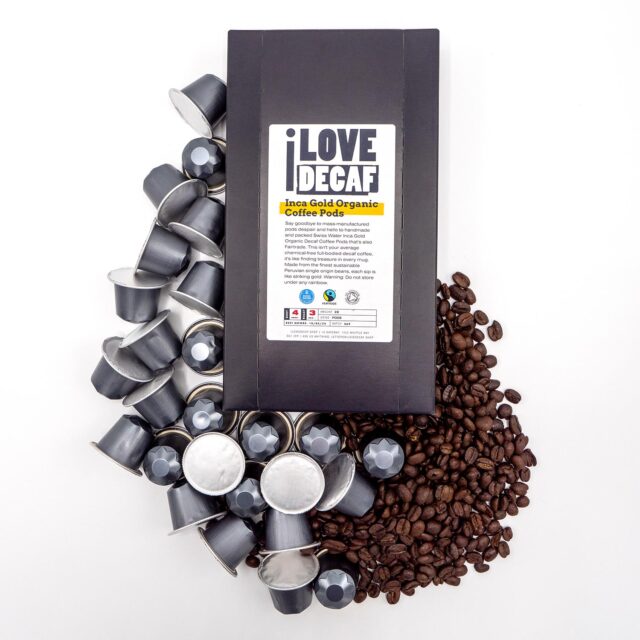
  1. Inca Gold Organic Decaf Coffee Pods (Swiss Water, Sustainable & Fairtrade) Rated 5.00 out of 5 based on 5 customer ratings (5 customer reviews) Say goodbye to mass-manufactured pods despair and hello to handmade and packed Swiss Water Inca Gold Organic Decaf Coffee Pods that are also Fairtrade. This isn’t your average chemical-free full-bodied decaf coffee; it’s like finding treasure in every mug. Made from the finest sustainable Peruvian single-origin beans, each sip is like striking gold. Warning: Do not store under any rainbow. Pack of 28.
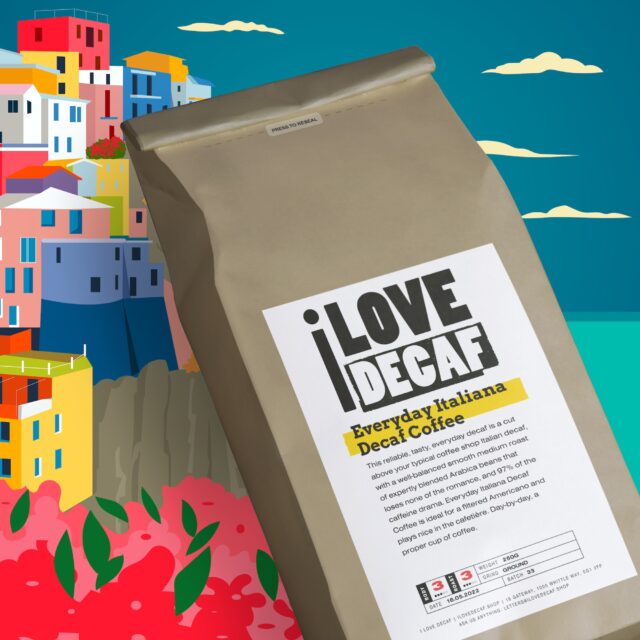
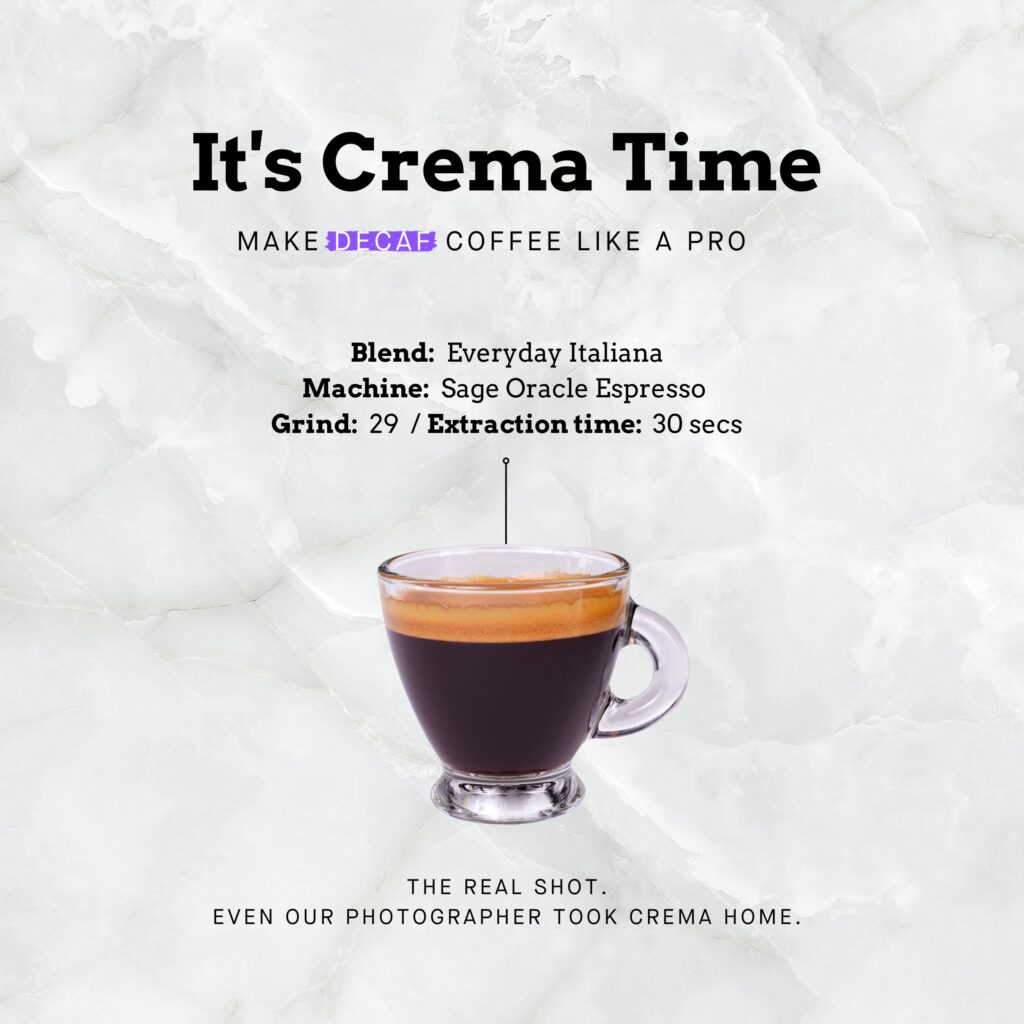
  2. Everyday Italiana Decaf Coffee: This reliable, tasty, everyday decaf is a cut above your typical coffee shop Italian decaf. With a well-balanced smooth medium roast of expertly blended Arabica beans, it retains the romance and flavor profile of traditional Italian decaf while reducing caffeine content. Everyday Italiana Decaf Coffee is ideal for a filtered Americano and plays nicely in a cafetière. Enjoy a proper cup of coffee day by day.
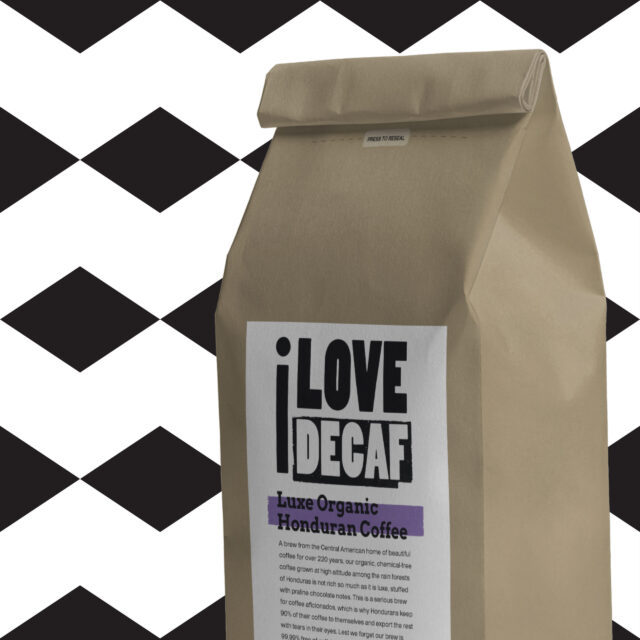
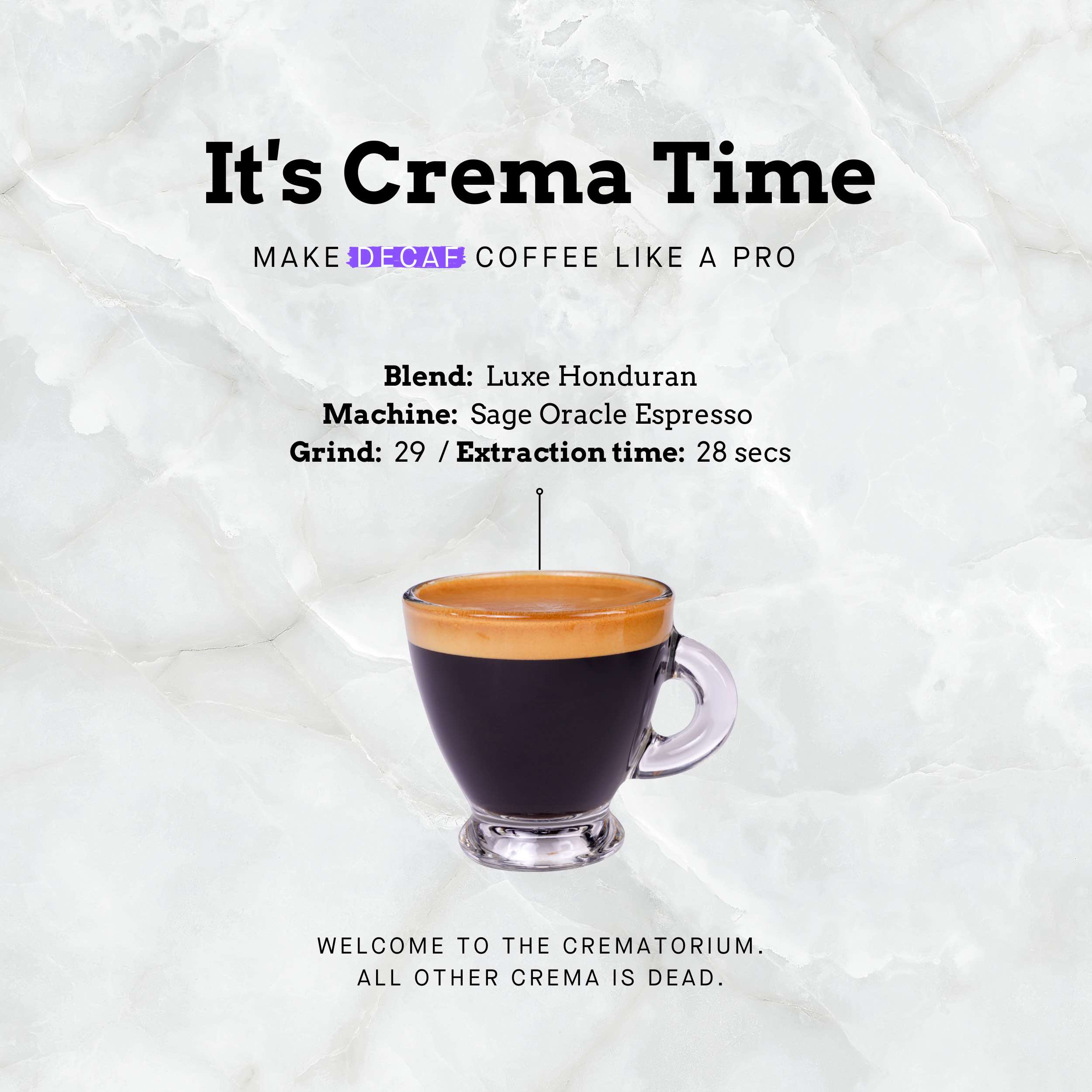
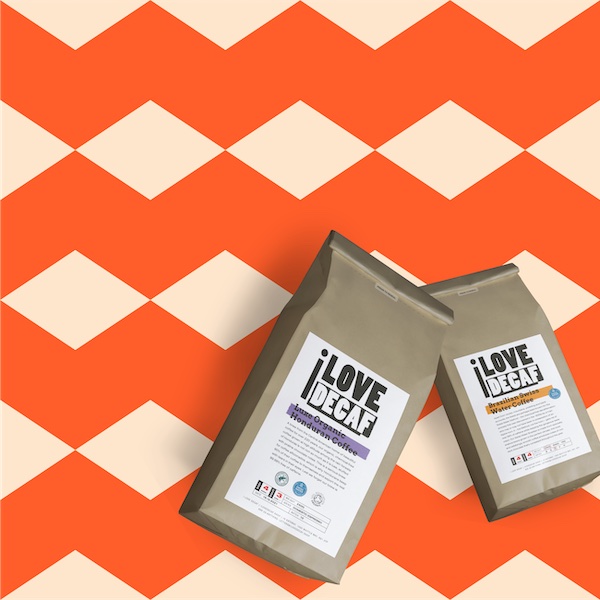
  3. Luxe Organic Swiss Water Honduran Decaf Coffee: Indulge in the luxury of Luxe Organic Swiss Water Honduran Decaf Coffee, a brew from the Central American home of beautiful coffee. Grown at high altitudes in the rainforests of Honduras, this organic, Fairtrade, and chemical-free Swiss Water decaf coffee offers a taste that is more than just rich; it’s an experience filled with praline chocolate notes. No wonder Hondurans keep 90% of it for themselves.
  4. Orizaba Mountain Water Decaf Coffee (Swiss Water Style): Discover a rare gem in the world of decaf coffees: Orizaba Mountain Water Decaf Coffee. This Mexican velvet-bodied coffee stands out from the crowd. Using crystal-clear spring water from Mexico’s highest peak, Pico de Orizaba, this coffee undergoes a high-quality organic decaffeination process. What remains is an authentic-tasting decaf with a complex flavor profile. Immerse yourself in the notes of fruits, chocolate, nuts, and honey.
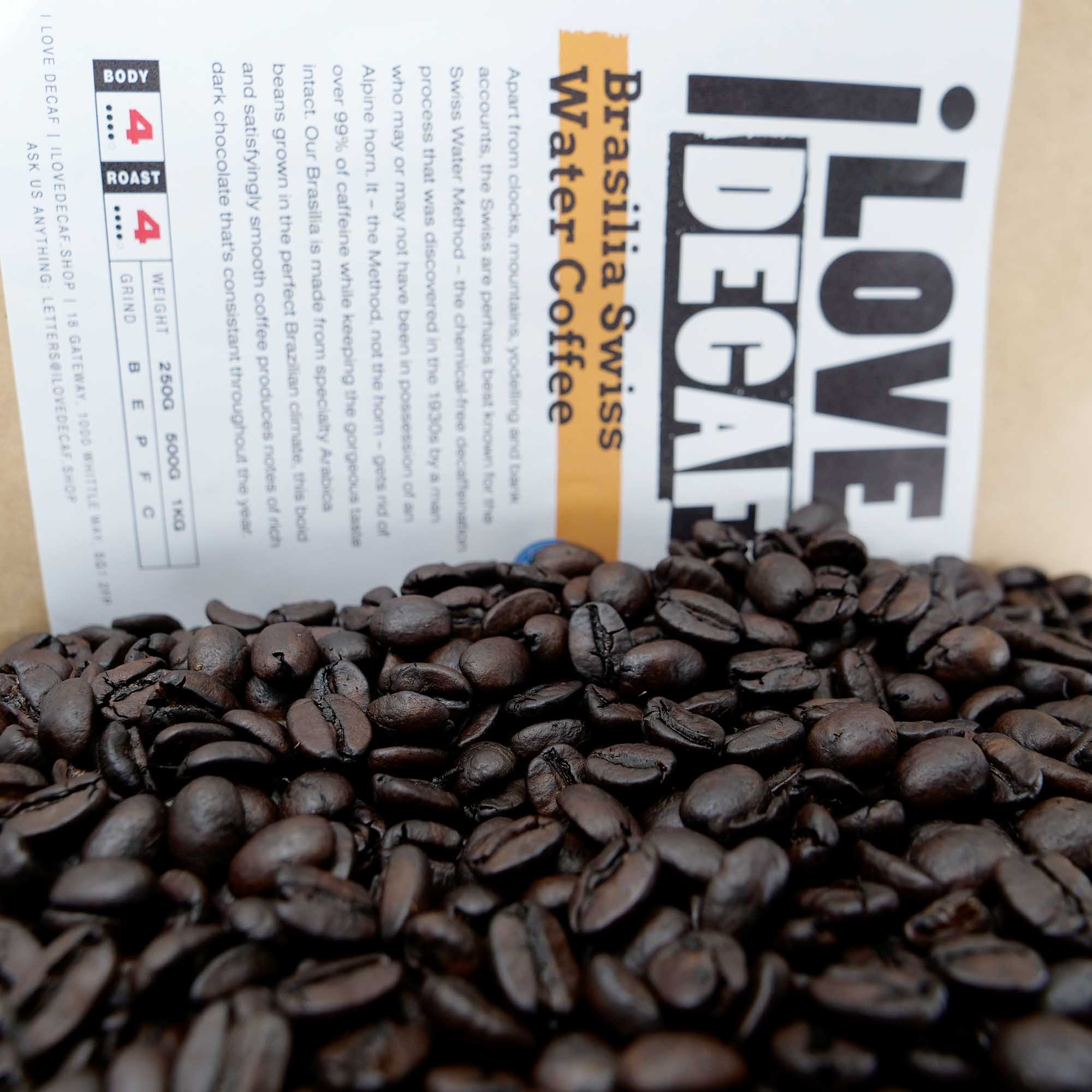
  5. Natural Brasilia Swiss Water Decaf Coffee: Apart from clocks, mountains, yodelling, and bank accounts, the Swiss are perhaps best known for the Swiss Water Method – the chemical-free decaffeination process discovered in the 1930s. Our Swiss Water Brasilia is made from specialty Arabica beans grown in the perfect climate, producing bold and satisfyingly smooth coffee with consistent notes of rich dark chocolate throughout the year.
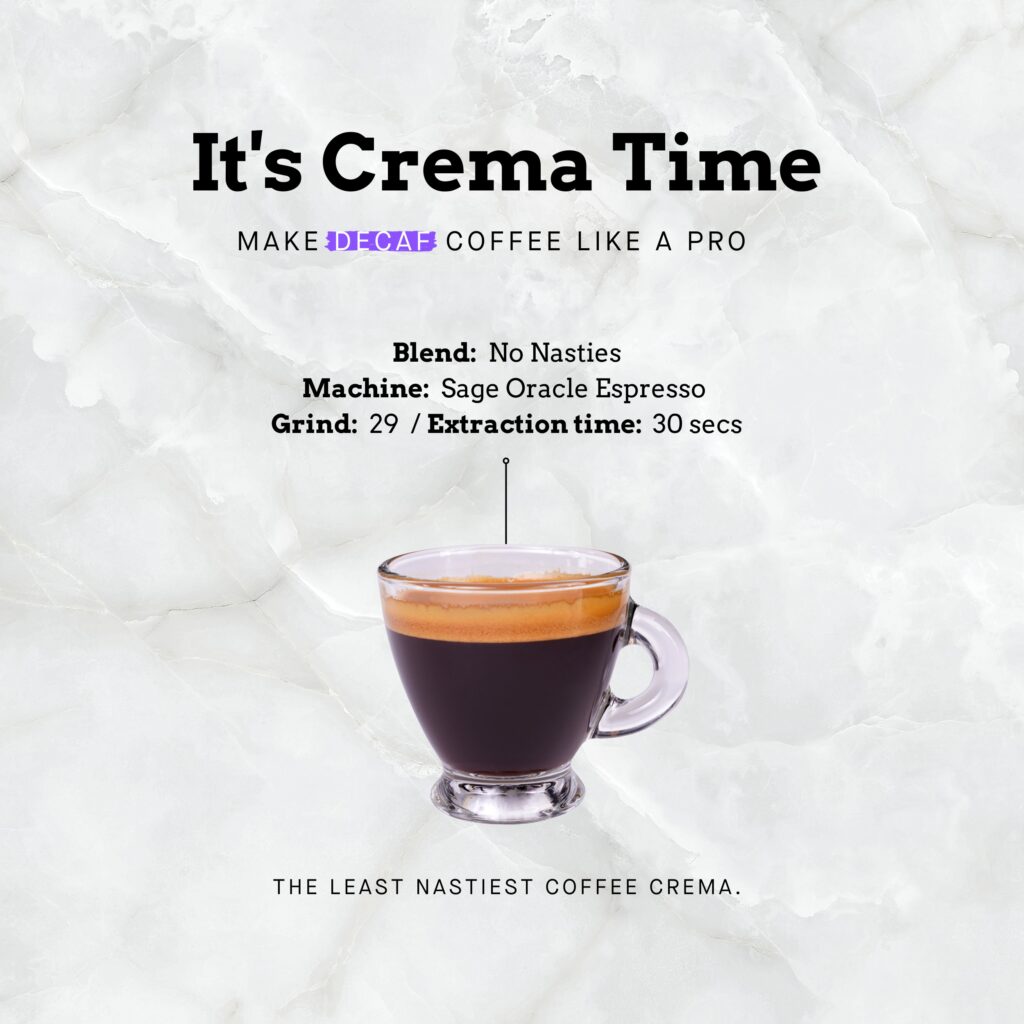
  6. No Nasties Half Decaf Organic Coffee: Inspiration without the comedown is what you’ll find in No Nasties Half Decaf Organic Coffee. Blending Honduran Organic and Fairtrade-certified Swiss Water decaf beans with handpicked single-origin Nicaraguan caffeinated luxury, this unique combination offers half the caffeine but all the taste. With cocoa praline and orange notes, it’s a delectable choice for those seeking a balanced option.
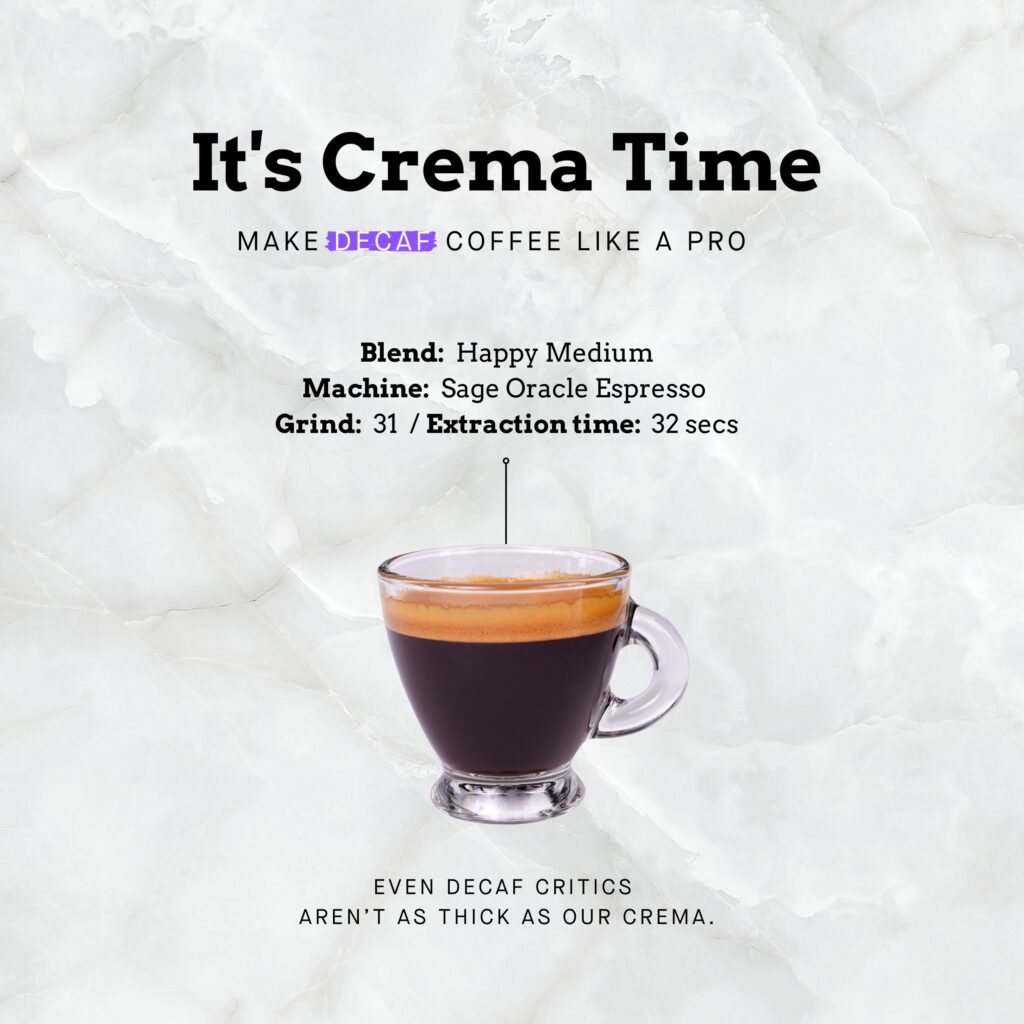
  7. Happy Medium Roasted Decaf Coffee: Indulge in the sumptuous and tasty cup of Happy Medium Roasted Decaf Coffee. Premium Brazilian Santos Arabica beans are medium roasted to perfection, resulting in a well-balanced blend with notes of cocoa and praline. As smooth as a waxed barrister, this expertly blended Arabica mix loses none of the conviction, offering a satisfying coffee experience. Ideal for filtered Americanos and a pleasant companion in a cafetière.

Gone are the days of lackluster decaf coffee options. With the wide range of decaf coffees available today, caffeine-free individuals can enjoy exceptional flavors without compromising taste. Whether you prefer organic, Swiss Water-treated, or unique blends, there is a decaf coffee that suits your palate. Embrace the world of decaf and savor each sip, knowing that great taste can be caffeine-free.

Decaf-ying the Buzz: The Surprising Benefits of Switching to Decaf Coffee

Are you tired of feeling jittery and restless after your morning coffee? Do you want to reduce your caffeine intake without sacrificing your daily cup of coffee? Switching to decaf coffee may be the solution you’ve been looking for.

A recent study published in the journal Nutrients found that decaf coffee can provide the same health benefits as regular coffee, without the negative side effects of caffeine. The study, which was conducted by researchers at the University of Navarra in Spain, involved 21 healthy adults who drank either regular or decaf coffee for one month. At the end of the study, the researchers found that both groups experienced similar improvements in cardiovascular function and cognitive performance.

So, what does this mean for coffee lovers who are looking to cut back on caffeine? According to Dr. Alejandro Junco, a board-certified internist at Ochsner Health, “if someone is drinking coffee for the health benefits, but they’re sensitive to caffeine or have trouble sleeping, switching to decaf is definitely worth considering.”

But what about the taste of decaf coffee? Isn’t it often criticized for being bland and boring? Not necessarily. In fact, many coffee connoisseurs prefer the taste of decaf coffee because it allows them to savor the rich, complex flavors of the beans without the overpowering effects of caffeine. And with the growing popularity of specialty decaf coffees, there’s never been a better time to make the switch.

Here at I LOVE DECAF, we offer a wide range of decaf coffees made from the finest beans and roasted to perfection. Whether you prefer light, medium, or dark roast, we have a decaf coffee that will satisfy your taste buds and help you feel your best. And with our commitment to sustainability and fair trade practices, you can feel good about your purchase too.

But how do you make the switch from regular to decaf coffee without sacrificing taste or quality? Here are a few tips from our coffee experts:

  1. Start slow. If you’re used to drinking several cups of regular coffee per day, it may be difficult to switch to decaf cold turkey. Instead, try replacing one cup of regular coffee with decaf each day until you’ve made the full transition.
  2. Experiment with different roasts. Just like regular coffee, decaf coffee comes in a variety of roasts and flavors. Try a few different options until you find one that you love.
  3. Use high-quality beans. The quality of your coffee beans will have a big impact on the taste and aroma of your decaf coffee. Look for beans that are freshly roasted and sourced from a reputable supplier.
  4. Brew it right. Whether you prefer a French press, drip coffee maker, or espresso machine, make sure you’re using the right brewing method for your decaf coffee to ensure the best flavor and quality.

In conclusion, switching to decaf coffee can be a delicious and healthy way to reduce your caffeine intake and improve your overall wellbeing. With the wide range of decaf coffees available today, there’s never been a better time to make the switch. So go ahead, pour yourself a cup of decaf, and enjoy all the benefits of coffee without the jitters.

Decaf Coffee: The Delightfully Easy Way to Beat Caffeine Cravings, According to Scientists

Do you rely on caffeine to get through the day, but find yourself struggling with caffeine cravings and sleep disturbances at night? A recent study suggests that switching to decaf coffee may be the answer to your problems.

The study, which was conducted by researchers at the University of Bristol in the UK, involved 126 participants who regularly consumed coffee. Over a four-week period, the participants were randomly assigned to one of three groups: one group was instructed to replace one cup of regular coffee per day with decaf coffee, one group was instructed to replace two cups of regular coffee per day with decaf coffee, and the third group was instructed to continue consuming regular coffee as usual.

At the end of the study, the researchers found that the participants who had replaced at least one cup of regular coffee per day with decaf coffee reported significantly lower caffeine cravings and better sleep quality than the participants who had continued consuming regular coffee. The participants who had replaced two cups of regular coffee per day with decaf coffee reported even greater improvements in caffeine cravings and sleep quality.

So, what does this mean for coffee lovers who are struggling with caffeine-related issues? According to the study’s lead author, Dr. Russell Johnson, “our results suggest that even moderate reductions in caffeine intake can have a positive effect on sleep quality and caffeine craving.”

But what about the taste of decaf coffee, which is often criticized for being bland and boring? Here at I LOVE DECAF, we believe that decaf coffee can be just as delicious and satisfying as regular coffee – if not more so. That’s why we offer a wide range of decaf coffees made from the finest beans and roasted to perfection, so you can enjoy the full-bodied flavor and aroma of coffee without the jitters.

So, if you’re looking for a way to beat caffeine cravings and improve your sleep quality, consider making the switch to decaf coffee. With I LOVE DECAF’s delicious range of decaf coffees, you won’t have to sacrifice taste for better health.

Coffee Grind: How to Find the Right Kind

Ground decaf coffee is available in a few different grades and there’s a great deal of confusion as to what the grind has to do with flavour, the kind of coffee-making equipment you have, and so on. It can be baffling for anyone but now, the guesswork is over, with our guide to the grind.

What coffee grind is best for me?

From fine ground to coarse, the grind of the coffee affects how it tastes in your cup. if you pay attention to what ground coffee you are putting into which piece of coffee-making equipment you will always get the best taste and aroma. If your coffee tastes bad, it is usually because you have over or under brewed your drink. 

It’s not surprising that with a myriad of kinds of coffee making machines, there are many ways of brewing, from the super-fast to the grindingly slow. Your chosen machine will require a specific size, grade, and grind of coffee to work properly.

How to find the perfect espresso grind

Espresso machines are fast because the hot water is in contact with the coffee for less than half a minute. This liquid extracts the flavour quickly, and a finer grind leads to a richer, more flavoursome cup. The science behind this is simple, a finer grind means more surface area in contact with the water, gram for gram. 

If you tried coarse ground in an espresso machine, you would find the flavour of your hot brown water sour and undeveloped.

The right ground coffee for your French press

A French press or cafetière takes much longer to work than an espresso machine. In a French press, the grinds float about in the water steeping for minutes on end and so brewing fine ground in a cafetière would allow serious over-extraction of the coffee’s flavour and turn it into a bitter-tasting brew.

For drip filter machines or pour over coffee makers of the kind that fill a carafe or jug, drip by drip, try a medium ground coffee

What kind of coffee grind is right for your kind of coffee machine?

Whenever you buy ground decaf, match the grind to the equipment you own. If you’re always disappointed with your machine’s coffee, it could be as simple a fix as buying different grinds for your machine.

Not only do we love decaf, but we also love keeping decaf simple. We sell coffee in different grinds for different machines. It can be difficult to tell what grind is suitable for each method, so we say what kind of machine it’s good for. Sometimes, to save space on the label, we use a letter instead on our Brasilia coffee and call it what it is for others. But what you will see is: Beans, Ground (cafetière) and Find Ground (espresso, moka and filter machines)

Unground, whole beans (CHOOSE BEANS)

Unground beans are perfect if you like complete control over your coffee, you own a bean-to-cup machine or, alternatively, have more than kind of coffee machine and need to vary the grind accordingly.

French Press or Cafetière (CHOOSE GROUND)

You fill a cafetière with very hot water and leave it to steep. When it is brewed, you compress all the grounds out of suspension behind a metal screen by pushing a plunger down.

E Espresso coffee (CHOOSE FINE GROUND)

An espresso machine at home can be very convenient and makes us all into a barista. But originally, people brewed coffee using a stove-top percolator called a Moka pot. This boils water under pressure, forcing steam and water through the coffee grinds. When the grinds are saturated with pressure from boiling water, the steam further forces the brewed coffee up a funnel and then into the top chamber. Once you hear the characteristic sound of gurgling, your coffee is ready.

P Coffee Pods and Capsules

Not all pod systems create environmentally responsible coffee. Many of these will be thrown away after one use and the environmental consequences will not be limited to a small area. However, it is best to find those that are refillable to avoid this dilemma. We sell one of these on ilovedecaf.com, but many other companies offer refillable pods as well.

F Filter Coffee and AeroPress (CHOOSE FINE GROUND)

The simplest way to make coffee is to drip feed or pour hot water over grounds sitting in a filter cone. From the pour-over to the new AeroPress machine, a medium grind works best.

The 5 Things You Don’t Believe Can Happen When You Cut Caffeine

I used to be one of those people who would drink not just coffee but energy drinks and colas on top, often throughout the day. I was under the impression that the caffeine spritzing through my veins from all different angles was necessary for living a happy and productive life in the city. But as it turns out, when you reduce your intake for a month or two (more like 3-4 months) you can experience some pretty wild changes to your health!

Decaf: How much do you need to go there?

When it comes to the benefits of decaf, there is no one-size-fits-all answer. The amount of caffeine you need depends on your individual tolerances and sensitivities. Some people can drink multiple cups of coffee a day without any negative effects. Others may start to feel jittery and anxious after just one cup.

If you’re thinking about reducing your caffeine intake, it’s important to pay attention to how your body responds. If you notice any negative changes, such as increased anxiety or difficulty sleeping, you may want to cut back on the amount of caffeine you’re consuming.

It’s also important to remember that caffeine is found in more than just coffee. Tea, soda, and energy drinks all contain caffeine. So, if you’re trying to reduce your intake, you’ll need to be mindful of all the sources of caffeine in your diet.

1.    Caffeine and adrenaline levels

  • Caffeine and adrenaline levels: When you reduce caffeine intake, your body no longer has the same level of adrenaline. This can lead to feelings of fatigue and low energy. This is a temporary thing.
  • Caffeine and blood pressure: Caffeine can also affect your blood pressure. When you reduce your caffeine intake, your blood pressure may drop. This is usually seen as a good thing as a first step to fight hypertension, but it can also cause dizziness.
  • Caffeine and anxiety: Another common effect of reducing caffeine intake is increased anxiety. This is because caffeine can help to improve focus and concentration. When you reduce your caffeine intake, you may find it more difficult to focus and concentrate on tasks. Again – this is a temporary effect.
  • Caffeine and sleep: finally, reducing caffeine intake can also disrupt your sleep patterns. This is because caffeine can make it difficult to fall and stay asleep. If you reduce caffeine intake, you may find yourself feeling more tired during the day. A temporary reduction in alertness is to be expected, but you will soon find your attention level improving without caffeine.

2.    The consequences of reducing caffeine intake

When you reduce your caffeine intake, you may experience some consequences.

  • One consequence of reducing your caffeine intake is that you may feel more tired during the day. Caffeine is a stimulant, so when you reduce your intake, you may find that you need to take more naps or sleep for longer periods of time. You may also find that you have trouble concentrating when you reduce your caffeine intake. Caffeine can help to improve focus and concentration, so without it, you may find it harder to stay on task.
  • You may also experience headaches when you reduce your caffeine intake. This is because caffeine can help to constrict blood vessels, and when you reduce your intake, those blood vessels may expand, leading to headaches.
  • Finally, you may find that your mood changes when you reduce your caffeine intake. Caffeine can help to improve mood and energy levels, so without it, you may feel more sluggish and down.

3.    Spring Cleaning to Reduce Caffeine Intake

Spring Cleaning to Reduce Caffeine Intake:

  • If you’re trying to reduce your caffeine intake, one thing you can do is spring clean your diet. This means getting rid of all the foods and drinks that contain caffeine. This includes coffee, tea, soda, energy drinks, chocolate, and even some medications. By getting rid of these things from your diet, you’ll be able to reduce your caffeine intake significantly.
  • Cutting Back Gradually: Another way to reduce your caffeine intake is to cut back gradually. If you’re used to drinking several cups of coffee per day, try reducing it to just one or two cups. You can also switch to decaf coffee or tea. Or, if you typically drink energy drinks, try switching to a non-caffeinated version. Cutting back gradually will help you reduce your caffeine intake without feeling too much withdrawal.
  • Avoiding Caffeine Triggers: In addition to cutting back on caffeine gradually, you can also avoid triggers that make you want to consume caffeine. For example, if you tend to drink coffee in the morning because you’re tired, try changing up your routine. Instead of drinking coffee, try walking or exercising to wake yourself up. Or, if drinking coffee before going to bed makes you feel more awake, treat your insomnia in another manner. Speak with a health professional about your insomnia and follow their advice for getting good sleep at night.

How to reduce caffeine intake

If you’re looking to reduce your caffeine intake, there are a few things you can do. First, try switching to decaf coffee or tea. You could also cut down on the amount of coffee or tea you’re drinking each day, but this usually only works for a while.

You can also try alternative beverages like herbal tea or water. Drinking plenty of water is always a good idea, and it can help to flush out the caffeine in your system.

Finally, be sure to eat a healthy diet and get plenty of exercise. Eating healthy foods and getting regular exercise will help to boost your energy levels and reduce your need for caffeine.

Do what?

If you’re used to drinking a lot of caffeine, reducing your intake can have some pretty unexpected effects. You might find yourself feeling more tired than usual or experiencing headaches and mood swings. But don’t worry, these side effects are only temporary as your body adjusts to its new caffeine level. In the long run, you’ll be glad you made the switch to a healthier lifestyle.