The Best Instant Decaf Coffee is the One You Don’t Have to Drink

Approximately half of the coffee grown in the world is produced to make instant coffee. It’s tempting to believe that this fact may be at the root of all the world’s misery, not least because instant coffee, decaf and caffeinated, is both an abomination and an affront to the senses. 

An early version of instant, known as Essence of Coffee, was produced briefly for soldiers during the American Civil War and was said to have had the consistency of axle grease. As the French – who can tell you a thing or two about coffee, often without being asked – would say plus ça change, plus c’est la même chose. The more that things change, the more they stay the same. Essence of Coffee was rapidly discontinued, owing to popular demand. It probably helped that its customers were heavily armed.

Less than a century later, during the Second World War, instant coffee had become ever-so-slightly less revolting, and it was American GIs who popularised it wherever they were stationed. The upshot is that, in Britain, instant accounts for three quarters of all coffee sold. That compares to 10% in the US and France and just 1% in Italy.

Fast forward another 80 years and you would think that, with all the advances in drinks tech over the decades, the best decaf instant coffee would at least be passable, but no.
Best decaf instant i love decaf

Instant decaffeinated is best avoided

When you consider the pains that the growers, the roasters and blenders go to in selecting varieties of beans to grow and methods of roasting, fine-balancing tastes and textures along the way, it does seem absurd to then throw all of that into an industrial process that values quantity over quality. The best instant decaf is bound to be a shadow of its former self. 

Another thing to consider is that instant coffee production is more carbon intensive than simple ground coffee, a fact that the multinational food companies that control almost all the instant coffee market, conveniently omit from their green-wash eco-babble. Ignore all the Aztec and Mayan imagery and sustainability messages printed on plasticized labels and just drink better coffee instead.

Kick the instant habit

In a world where everything seems to be on-demand and instant, we have got used to streaming music and entertainment almost instantly. We’ve gained a lot of convenience but lost some of what makes music and film so special. In the case of coffee, deferred gratification is always better. Serious academic papers have felled a few trees to conclude that the ability to delay gratification can improve a host of other positive outcomes, including academic success, physical health, psychological health, and social competence. It turns out that patience is a virtue, after all. In other words, a simple cafetiere or pour-over reusable filter is not only easy to use but gets you the best decaf coffee and gets it quick. It may not be instant, but considering the care, craft and ability of the growers, roasters and blenders, three minutes of brewing in your kitchen is not only more sustainable, better for your wellbeing and tastier, but also pretty damn quick.
Does Decaffeinating Your Life Make It Better?

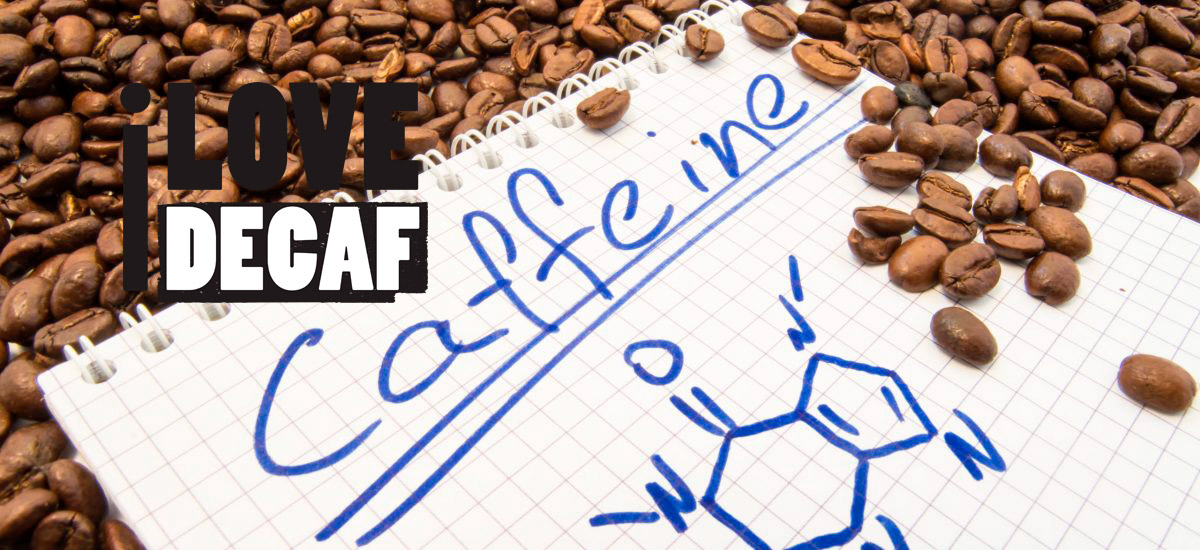
Decaffeinating your life is one of many approaches and strategies you can try on a journey to better health. Broadly, it’s an element of ‘detox’ – while caffeine is a mild stimulant in moderation, your body and brain still get used to it being in your blood stream. Your brain, in particular, does not tolerate chemical change well and this is where withdrawal comes in. Fortunately, the most common symptom of caffeine withdrawal is a minor tension headache, and the cravings are quick to subside.

With decaffeinated tea and coffee you can even mask some of the cravings and continue to enjoy the same tastes and aromas you have become accustomed to.

So: so far, a small amount of sacrifice to decaf your body, but can it make your life better in a meaningful way? 

The narrative of detox is intertwined with lifestyle woo-woo. That’s a term we just made up to describe a big wicker basket of good-intention ideas like veganism, holistic spirituality and Eastern systems of thought. Nothing wrong with any of it, but decaffeinating your life is about restoring a chemical, not spiritual, balance in your body.

You know us – we are hardly the type of people to go all yoga-crystal-dreamcatcher-mindful-woo-woo on you. As far as we are aware, we have no chakras and feng-shui is not so much a way of life but more of a storage solution. Neither do we store our socks to the west of a lucky rabbit’s foot. Think about that for a moment: It wasn’t so lucky for the rabbit, was it?

Trust us when we say, we have no woo-woo.

Your body doesn’t need caffeine

The best reason for drinking less or no caffeine is that your body doesn’t need it. Like nicotine, heroin and strong painkillers, your body has just got used to it being around. Caffeinistas claim that it helps attention and focus, and they are both right and wrong at the same time. Scientific trials have concluded that, at best, caffeine helps attention and focus get back to where it was before you became withdrawn. And that’s what caffeine withdrawal looks like – a craving for a big mug of coffee in the morning to escape the tug of withdrawal and restore the world to where it should have been. It’s not restoring the world; it’s restoring your brain chemistry. Your brain in this instance is acting like a wilful, truculent teenager. It’s refusing to get its act together until you do something nice for them. Your teen asks you for money, chocolate or the latest tech before they clean their room. Your brain won’t move until it gets a chemical leg-up. Like your teen, your brain is lazy and used to the good life of drip-fed feel-good. The good news is that the brain has its own feel-good chemistry, caffeine is a cheat code that robs it of achieving its own balance.

Your brain is the most complicated thing you own. Indeed, it is among the most complex things in the known universe. It is capable of extraordinary calculation and every minute of your waking day, it perceives, renders and constructs your entire world. Throwing additional stimulants into the sentient bucket of porridge that exists between your ears is like lighting a campfire in an art gallery.

Decaffeinating your life is one part of restoring the natural balance of this most sensitive instrument. Once the minor withdrawals are over it will make your life better simply by re-establishing its unaided potential.

Does Decaf Coffee Contain Caffeine?

While the answer to ‘Is decaf coffee free from caffeine?’ may seem obvious, the reality is more nuanced than that. The short answer is ‘yes’, the correct answer is ‘the absolute minimum’. In legal terms, to be considered decaf, at least 97% of the caffeine must be removed. Some decaf coffees, however, can improve on that and remove up to 99.99% of the original caffeine present like in one of our decaf coffees, Luxe Organic Honduran Decaf Coffee.

In short, you can’t change a leopard’s spots, but you can remove its teeth. The upshot is that you’ll be a lot calmer than either drinking a lot of caffeine or attempting dental work on a leopard.*

So, the answer is yes, decaf coffee does contain caffeine, albeit tiny amounts of the stuff.

Does decaf coffee contain caffeine?
The upshot is that you’ll be a lot calmer than either drinking a lot of caffeine or attempting dental work on a leopard.

Decaf, half-caf

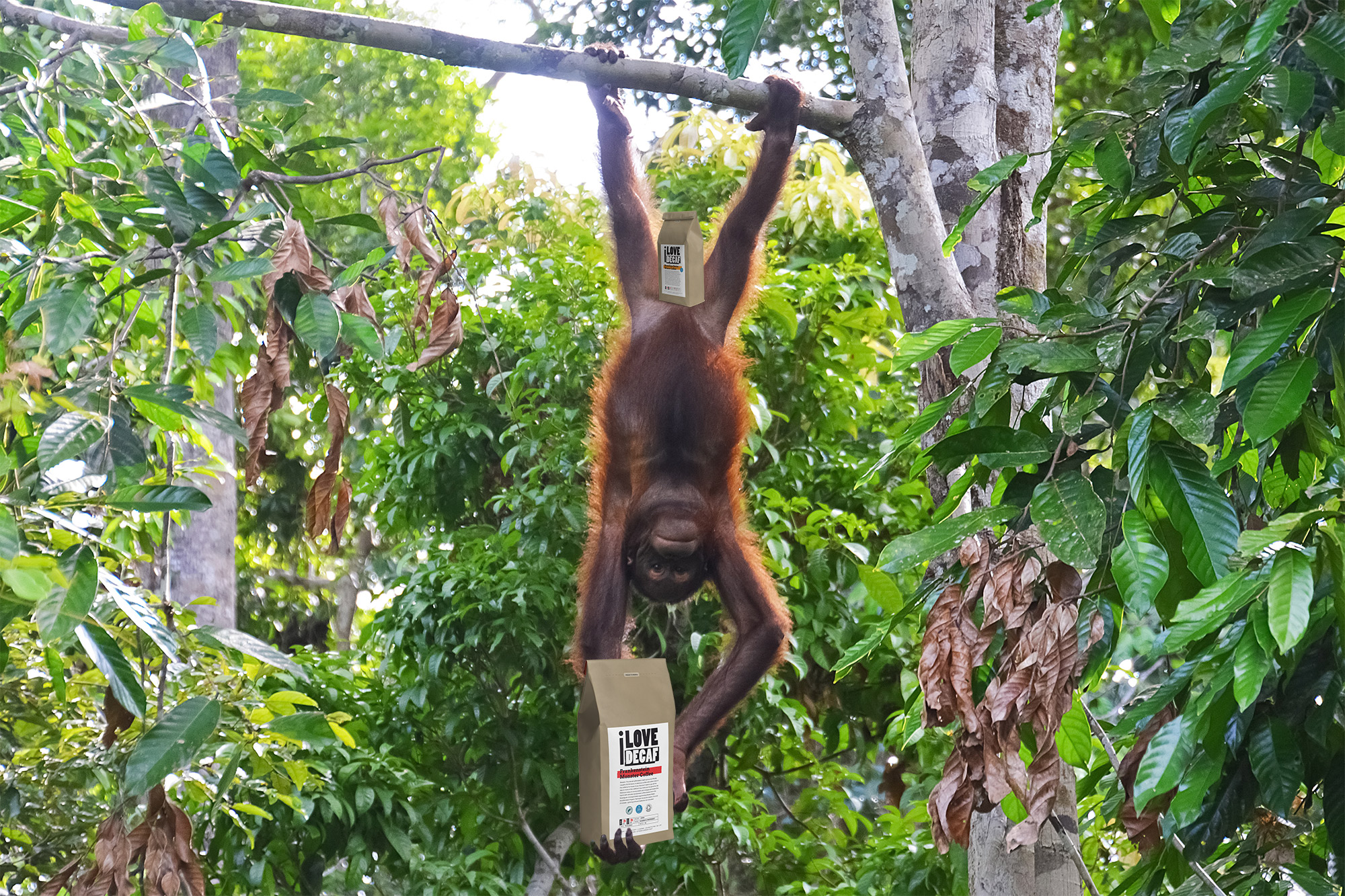
There are also coffee blends that contain reduced caffeine, like our Frankenstein Monster 50/50 blend of regular and decaf. Our monster blend is a bit of a beast, to be fair, so if you’re worried about just how much caffeine remains in decaf, it’s probably not for you. If you fancy a more gradual approach to decaffeinating yourself, it might suit you as a halfway house to 99% decaffeination. Our Frankenstein Monster 50/50 has delicious notes of cocoa, praline and orange that permeate its hybrid blend. Handpicked coffee beans from the Nicaraguan Jinotega estate augment Swiss Water decaffeinated Honduran beans. It’s a great coffee with either less of the caffeine for those of you that don’t want to go all the way or more of the caffeine if you think you’ve gone too far. 

This is all a long way from the very first decaffeination in history performed just over 200 years ago by German chemist Friedlieb Ferdinand Runge, after being challenged to do so by German poet Goethe. Runge did not take it to the next level and do anything productive, however, being content to note the caffeine’s potential for gardening. 

“After Goethe had expressed to me his greatest satisfaction regarding the account of the man whom I’d rescued … he handed me a carton of coffee beans, which a Greek had sent him as a delicacy. “You can also use these in your investigations,” said Goethe. He was right; for soon thereafter I discovered therein caffeine, which became so famous on account of its high nitrogen content.”

Friedlieb Ferdinand Runge

Germany: the world’s first decaffei-nation

Over 80 years later in 1906, a chance discovery of a decaffeination by another German – coffee merchant Ludwig Roselius – ended in a patent and the foundation of the world’s first decaffeinated coffee brand, Kaffee Hag, subsequently named Café Hag. Roselius was later implicated in a 1943 plot to blow up Hitler on his flight back to Berlin from the East. Once again, decaf is on the side of good, though we are not so sure about Café Hag.

*Please do not attempt at-home dentistry on a leopard or any other animal with a British Standards competency certificate in mauling people.