Introduction
Naturally caffeine-free coffee might not strike you as either a worthy subject for a toast or the perfect drink to charge a glass with, but the health benefits of managing the caffeine intake of you and yours could lead to better outcomes and long life. That’s something we can all raise a glass to.
So, with new discoveries in the world of caffeine awareness afoot, I Love Decaf, presents a guide to what’s going on now and in the near future.
Table of Contents
- The End of Decaf?
- New Species
- Charrier Coffee
- The Coffee Plant Perspective
- Half-Caffeinated or Half Decaf?
- Health benefits of going caffeine free
Caffeine-free coffee beans: do they mean the end of decaffeination?
Naturally, we are all used to decaffeinated coffee. We know that, given the right beans, grind, roast and decaffeination method, there’s no need to sacrifice the great taste when we ditch the caffeine.
But could the process of decaffeination be side-stepped altogether if a bean was cultivated that had no caffeine in it at all? Coffee cultivation, like all agricultural enterprises, draws heavily on scientific principles – geology, meteorology, horticultural science, biology and botany, but as it happens, there’s no need for all the boffin ‘ologies’. There are already a few half-caff and even some no-caff coffee beans out there in the wild.
Nature beat science to it and that sounds great to us. So, why are supermarket shelves not filling up with naturally caffeine-free coffee right now? Are these naturally caffeine-free beans not suitable in some way for the big time? Is it because of a global conspiracy? Is it the warped manifesto of ‘big coffee’? Perhaps it’s a shadowy Government cabal determined to keep us as busy, wired and panic-stricken as possible? Maybe it just tastes awful, you know, like Nescafé.
None of the above. If anything, its absence from the supermarket could be down to the natural properties of caffeine itself.
Just because you want to kick it out of your coffee, the plant itself doesn’t care about your twitching eyelids or what Kid Barista at Costabucks say, caffeine has a real purpose as far as the plant is concerned.
To find out what that might be, we should look at one the most recent discoveries of naturally caffeine free coffee plants.
Un-caffeinated: the answer to decaffeination?
In the wilder corners of the world, a surprising number of new species of plants and animals are discovered all the time. An average of 10,000 a year. In 2007, however, science busted the average wide open and formally identified over 18,500 plants and animals.
Among all those breakthrough species, described scientifically for the first time, was a previously unknown coffee plant. Between a Welsh, carnivorous, white slug, a bacterium that lives in hairspray and a species of palm that tries so hard for pollination it flowers itself to death, was a naturally caffeine-free species of coffee.
Charrier Coffee – Naturally Caffeine-Free
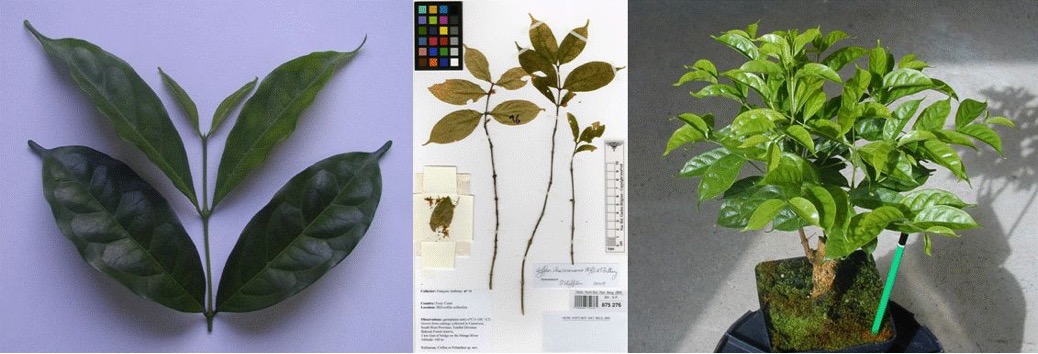
The naturally caffeine-free coffee plant, Coffea charrieriana or Charrier Coffee, was discovered in the Bakossi Forest Reserve in Western Cameroon and is the first of its kind in Central Africa. It joins an Ethiopian un-caffeinated variety of Arabica and a Kenyan coffee plant – both recently discovered – and 30 out of 47 Indian Ocean Island varieties that are known to contain very little or no caffeine.
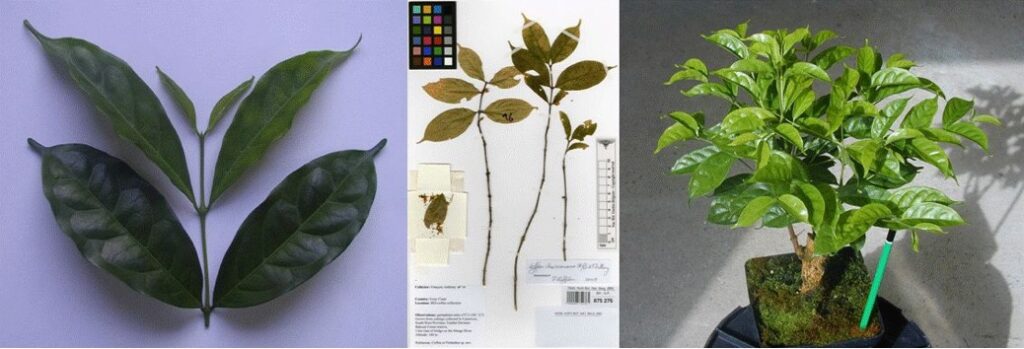
Royal Botanic Gardens listing of Charrier Coffee
Scientists say that the ancestors of Charrier Coffee – like most of its ilk – diverged from caffeinated coffees around 11 million years ago. So far, so good, but at its first listing millions of years down the line, wild Charrier Coffee was given a ‘red’ critically threatened conservation status. A conservation effort is underway, but seeds have also been collected and exported for commercial cultivation in Costa Rica and Brazil.
Those who have tasted Charrier Coffee report it has a much less thick texture than Arabica and has an almost tea-like quality.
What has caffeine ever done for the coffee plant?
Its endangered status might not be purely down to the usual suspects of forest clearance and habitat loss – there could be other factors at play and caffeine content might be just as important to Charrier Coffee as it is to you and me.
Some experts believe that caffeine-containing plants are safer from certain insects, vertebrates, bacteria and fungi, the caffeine acting as a kind of pesticide to protect the seeds. If caffeine has potential to safeguard the plant, caffeine-free varieties grown at scale might offer much lower yields unless they are cultivated higher up mountains beyond the range of insect pests.
Lower yields would mean much higher prices and, indeed, initial batches of cultivated naturally caffeine-free coffee sold at significant premiums.
Caffeine kills coffee plants
The jury is still out on whether caffeine’s pesticidal qualities are really all that, though other species – principally tea and cocoa – have both evolved caffeine content independently of coffee, even though that is apparently a high-stakes adaptation. Experts point to the fact that caffeine is not only a pesticide but also has the potential to kill the very plant that produces it. Caffeine produced in plants is a by-product of other processes and is physically isolated in special cell compartments called vacuoles. Ironically, concentrated caffeine is poisonous to plant cells. Even the coffee tree, it seems, doesn’t want the caffeine and operates a network of its own toxic waste dumps.
One last – and bizarre – theory for the presence of caffeine is that it is there for us and, like many other plants with psychoactive ingredients, part of their success comes from human cultivation. Like honeybees collecting nectar and pollinating flowers, we are in a symbiotic relationship with tea and coffee plants, only it’s us that gets the buzz, while they enjoy the comfort and care of the extraordinary lengths we go to in cultivation.
Half Caff Coffee
Long before Western science started going on species collection to exotic locations all over the globe (and South Wales; remember the slug?) the world knew of naturally low caffeine species of coffee plant. Liberian Coffee is one such species.
Coffea liberica or Liberian Coffee, as the name suggests, is a native of west and central Africa from Angola and Uganda in the south to Liberia at its northern range. It has also become naturalised in the Indian Ocean Islands and southeast Asia and can be found in the Philippines, Indonesia, the Seychelles, the Andaman & Nicobar Islands, and Malaysia.
Liberian is the third most popular bean in the world, but the dominance of Robusta and Arabica beans means it amounts only to around 1.5% of all cultivated coffee. Despite this, its caffeine content – around half of Robusta’s – means that it fetches premium prices on the coffee market. Unlike Charrier Coffee, it still does contain an appreciable dose of caffeine.
If you fancy a half-caff, I Love Decaf has a Halfway House half-caff offering if you’re not sure you want to go the whole hog right away or you just want a little bit of extra go in your juice. Its 50% decaf portion is even produced using the chemical solvent-free Swiss Water Process – another tick towards a healthy lifestyle.
Health benefits of lower caffeine
People who are sensitive to caffeine already have a reason to cut it out; it simply makes them feel unwell. They lose sleep, they have hand tremors, they might even have heart palpitations.
Almost all of us will experience some heart pounding after a coffee binge, so it’s no surprise that – almost to the exclusion of all other caffeine side effects – the heart and circulation are major concerns.
There is a lot of contradictory evidence on the effects of coffee generally on your health. Everyone seems to agree, however, that as a specific stimulant, caffeine does have real effects on your metabolism and by cutting it out, you still get to enjoy some of the positive effects of coffee without caffeine.
Nothing seems cut and dried on caffeine however – as this workshop clearly shows. Before reading that link, you might want to either complete a degree in biomedicine or be prepared to consume a few cups of strong joe to get to the end.
There are some easy takeaways though. It seems that caffeine use is safer sitting down than an hour before you go out for a run or hit the gym. Caffeine and exercise do not mix well with regards to circulation, blood pressure and heart health.
If you are looking after your health, especially if you are incorporating exercise and activity into a healthy lifestyle, the message is clear; it is probably best to keep off the caffeine. Also it’s clear that caffeine won’t help with high blood pressure or hypertension.
-
 Sugar, Sugar Decaf Coffee (Colombian)Price range: £9.19 through £27.89
 -
 The Only Trillionaire’s Decaf Coffee (in the known universe)Price range: £12.99 through £33.99
 -
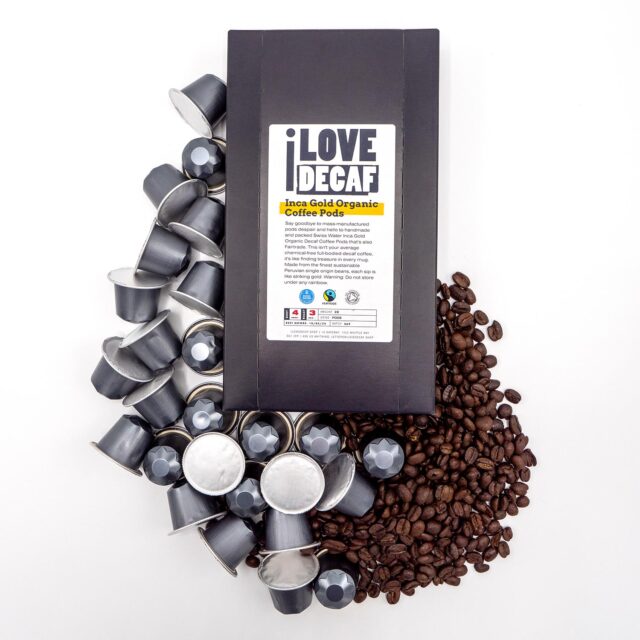 Inca Gold Organic Decaf Coffee Pods (Swiss Water, Sustainable & Fairtrade)£23.99
 -
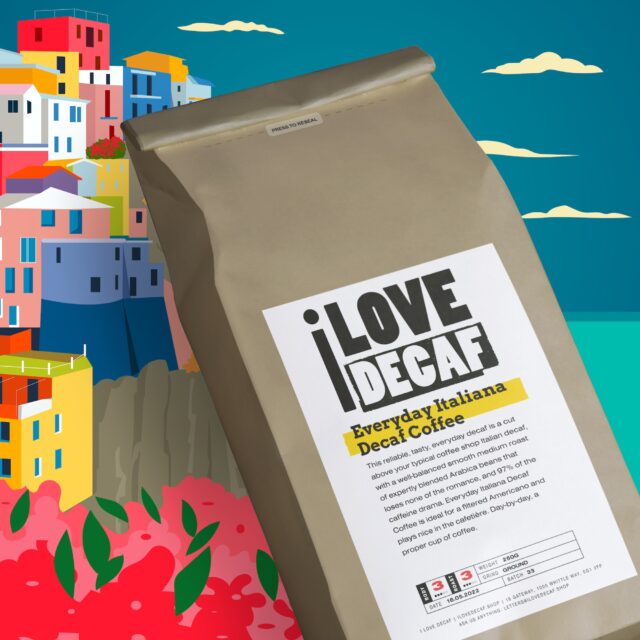 Everyday Italiana Decaf CoffeePrice range: £7.49 through £24.99
 -
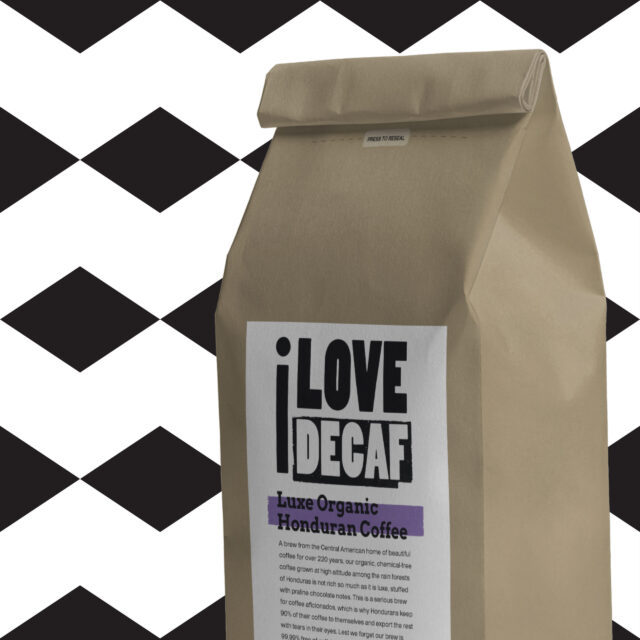 Luxe Organic Swiss Water Honduran Decaf CoffeePrice range: £8.99 through £27.49
 -
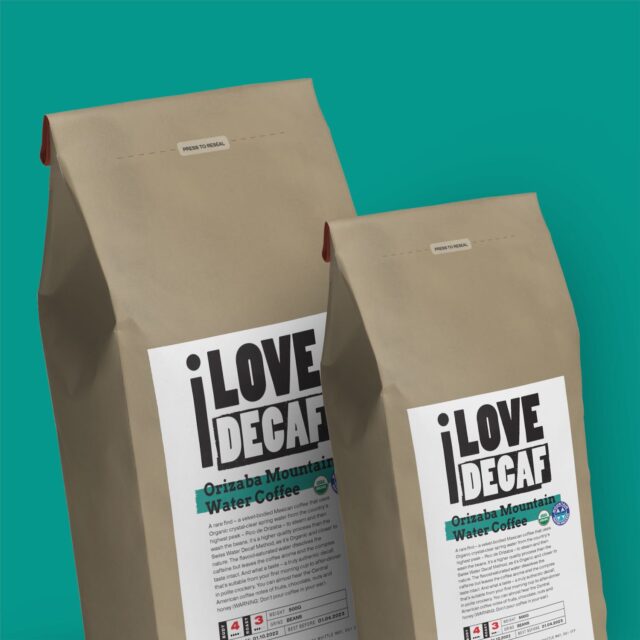 Orizaba Mountain Water Decaf Coffee (Swiss Water Style)Price range: £8.99 through £28.49
 -
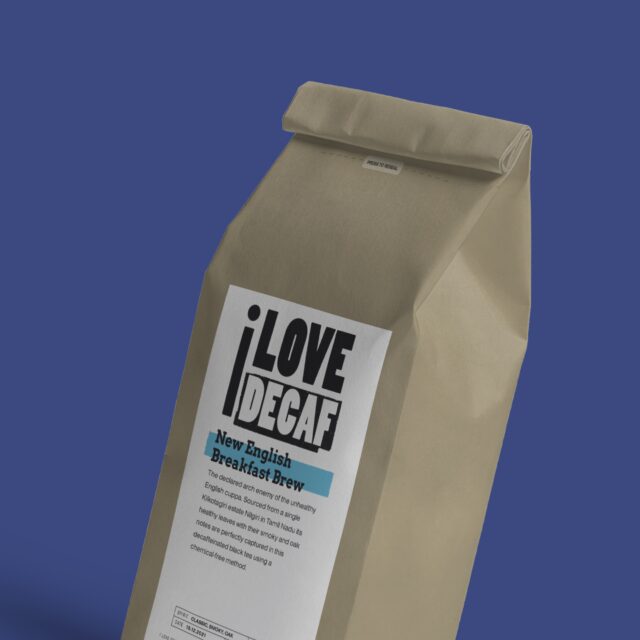 New English Breakfast Brew Decaf TeaPrice range: £12.00 through £37.00
 -
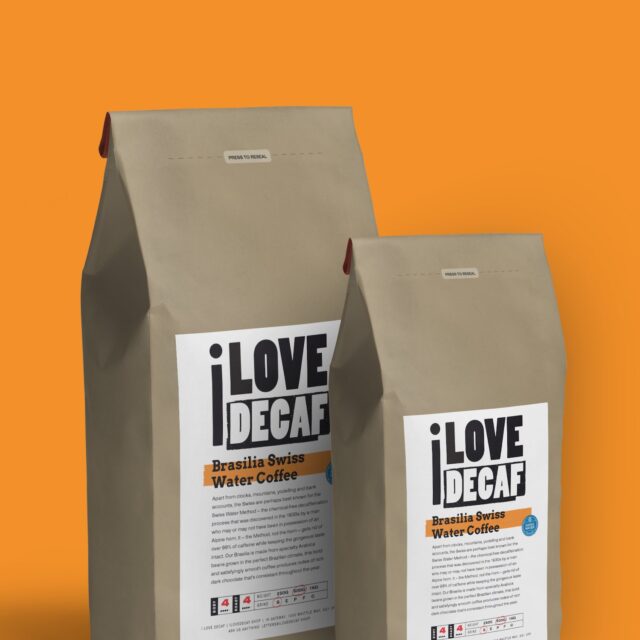 Natural Brasilia Swiss Water Decaf CoffeePrice range: £10.96 through £31.99
 -
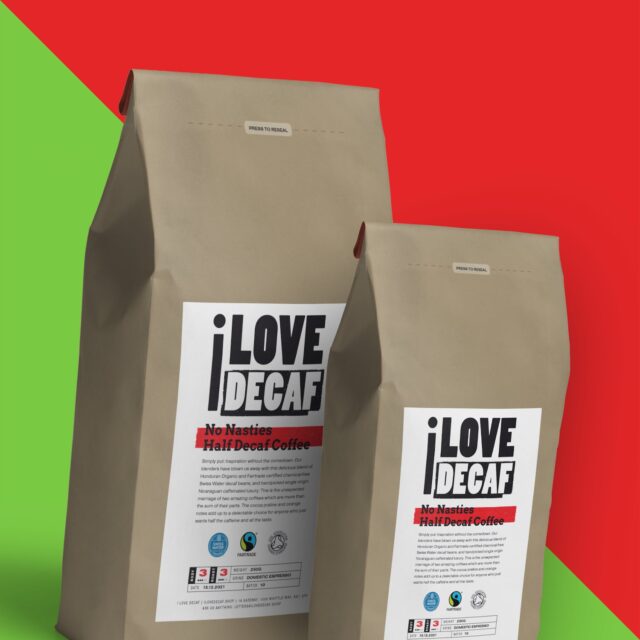 No Nasties Half Decaf Organic CoffeePrice range: £8.49 through £23.99