Imagine a coffee plant that grows beans with no caffeine to remove. It sounds like the sort of product idea a coffee scientist would invent after a long afternoon. Some wild coffee species do produce beans with very little caffeine, and a few have been described as naturally caffeine-free. But that does not mean your usual supermarket decaf came from such a plant.
Almost all ordinary commercial decaf is made by removing most caffeine from conventional coffee beans before roasting. The naturally low-caffeine species are mainly a botanical story, with interesting possibilities for breeding and research rather than a new shortcut for UK shoppers.
Is there a naturally caffeine-free coffee plant?
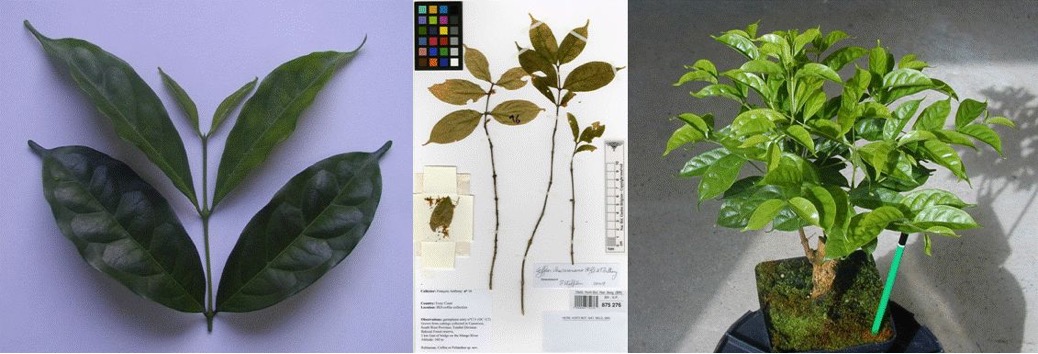
The plant literature describes Coffea charrieriana, a species from Cameroon, as naturally caffeine-free. This identification was discussed in botanical research on the genus Coffea, including a 2006 taxonomic review. It is a wild species, not a familiar commercial coffee variety available in ordinary UK bags.
The existence of a wild caffeine-free species is scientifically interesting. It does not mean that roasters can instantly replace all commercial Arabica production with it. Agricultural yield, flavour, plant health and the feasibility of cultivation also matter.
What about naturally low-caffeine species?
Coffea eugenioides is another species studied for its relatively low caffeine content. A species profile maintained by Plant Resources of Tropical Africa describes the beans as containing approximately 0.3–0.6g of caffeine per 100g dry matter, less than typical Arabica and Robusta measurements in its comparison.
These figures concern caffeine in dry plant material. They are not the milligrams of caffeine in a prepared cup sold in Britain. Bean processing, brewing and serving sizes would all change that calculation.
Is naturally low-caffeine coffee the same as decaf?
No. A naturally low-caffeine plant produces seeds with less caffeine to begin with. Decaf coffee is normally made from beans with a more typical original caffeine content, then processed to remove most of it. A half-caff blend is different again: it combines caffeinated and decaffeinated beans.
If a product uses a naturally lower-caffeine species, check that the label specifies the species and relevant measured information. A vague phrase such as ‘low buzz’ is not enough to know the finished cup’s caffeine content.
How is ordinary decaf actually produced?
Conventional methods remove caffeine from green beans before roasting. Swiss Water and Mountain Water use water-based processes, while carbon dioxide and some solvent-based processes are other options. They have distinct manufacturing details, and none automatically guarantees a particular flavour.
See how decaf coffee is made for the main methods. The resulting coffee can still have the body, sweetness and roasted flavours associated with the original beans.
Why is there scientific interest in caffeine-free coffee species?
Studying wild coffee species helps researchers understand the diversity of coffee plants and how caffeine production varies. Such work may be relevant to future breeding programmes. Turning those findings into commercially grown coffee takes much more than finding one unusual tree.
The research on wild species cannot justify claiming that all UK decaf is now naturally caffeine-free. It also cannot promise that a new species will be better for health, cheaper or superior in taste.
What should a UK shopper choose today?
- Choose conventional decaf when you want the familiar coffee formats with most caffeine removed
- Read the exact process where it matters to you
- Look for the origin, roast and grind your brewer needs
- Treat experimental or rare plant claims as botanical information until a real retail product is verified
- Remember that a decaf cup may still contain a small amount of caffeine
Our caffeine in decaf guide explains why no-caffeine and low-caffeine claims need care. For current buying choices, see best decaf coffee in the UK. An excellent coffee does not need a newly discovered plant to be worth drinking.
Sources and scope
Botanical references: Davis and colleagues, taxonomy of the genus Coffea, PROTA species description and a scientific paper on caffeine in low-caffeine coffee species. Published evidence about plants is distinguished from live UK retail availability. This is not advice about treating medical conditions.