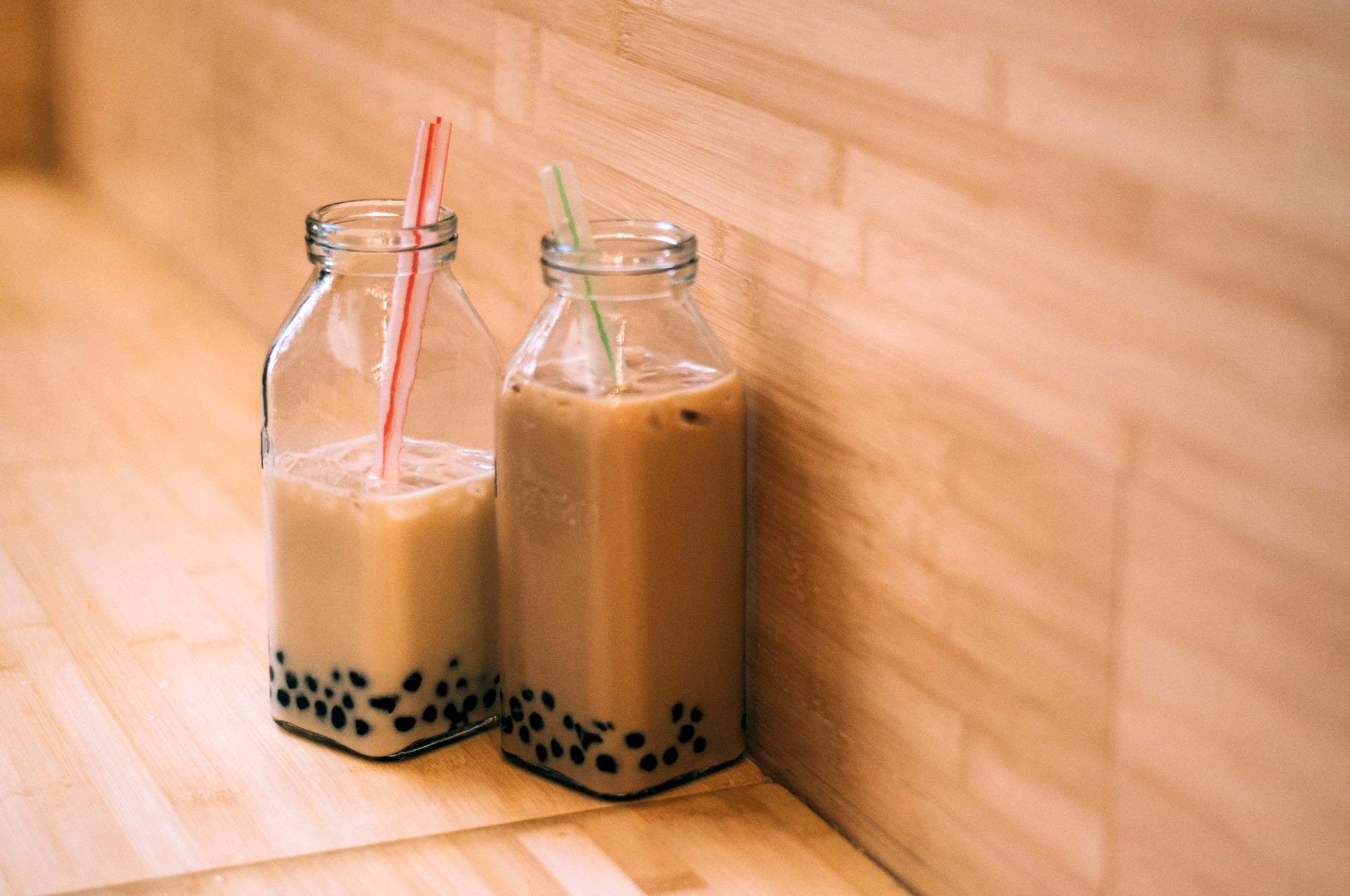
Bubble tea, also called boba, is an iced tea drink that often contains chewy tapioca pearls. You can make a lower-caffeine version using decaffeinated black tea, though decaf still may contain a small amount of caffeine. For a naturally caffeine-free variation, a suitable rooibos infusion offers a different flavour.
British high streets now have a broad choice of bubble tea shops. The Guardian covered the growth of UK bubble tea outlets in May 2024. If you want to try the drink at home without queuing, this is a simple recipe rather than a claim that I Love Decaf invented it.
What actually goes into bubble tea?
A classic milk tea typically combines brewed tea, milk or a suitable alternative, sweetener and prepared tapioca pearls. The pearls provide the characteristic chewy texture. Many modern varieties use fruit flavours, syrups or other toppings.
Bubble tea originated in Taiwan in the 1980s. Different tea shops have claimed a role in its invention, so it is more accurate to describe the origins as disputed than to credit a single market stall.
Ingredients for one decaf milk bubble tea
- One or two servings of decaf black tea, brewed according to the packet
- 150ml cold milk or suitable alternative
- Around 50g prepared tapioca pearls, or the portion specified on the pack
- Ice cubes
- Optional sugar syrup or sweetener, to taste
The amount of tea you use will affect the flavour and residual caffeine. For a stronger tea taste when milk is added, brew according to the manufacturer’s instructions and adjust your next cup rather than making up a caffeine figure.
How to prepare it
- Cook or prepare the tapioca pearls exactly as the packet instructs
- Brew the decaf black tea and allow it to cool safely
- Put the prepared pearls into a large serving glass
- Add the cooled tea, milk and ice
- Stir thoroughly and taste before adding extra sweetener
- Serve promptly using an appropriate wide straw or spoon
Tapioca products differ in cooking and storage requirements. Some require boiling, others use a quick preparation method. Follow the specific manufacturer’s food-safety and storage guidance and do not leave cooked pearls standing warm for hours.
Does decaf bubble tea contain caffeine?
Usually, yes, if made from decaffeinated black or green tea. Most caffeine is removed, but some can remain. The British Heart Foundation illustrates around 2mg in a typical 200ml decaf tea, with actual brands and strengths varying.
If you use pure rooibos instead, the infusion is naturally caffeine-free before other ingredients are added. That changes the flavour, so choose it because you enjoy the drink rather than expecting it to taste identical to black tea.
How to change the recipe
Try a red berry infusion for a fruitier version, or use rooibos with milk for a different body. Check the ingredients of all flavoured products because some have added sugar or caffeine-bearing tea. Tapioca pearls themselves are not a reason to assume the whole drink is suitable for everyone.
For UK tea choices see decaf black tea or herbal and fruit infusions.
Sources and recipe note
UK consumer context: The Guardian on UK bubble tea. History: National Geographic on Taiwan’s disputed origins. Caffeine: British Heart Foundation. This is a suggested home recipe, not a claim of original test results.