Is Decaf Safe for Kids

You’re a parent, right? You probably already know that caffeine is a nutritional desert. In terms of nourishment, there’s nothing there. We’ve all heard of sugary foods being empty calories, but caffeine doesn’t even have the calories.

Kids being kids, however, might be curious about that ritual you go through after the evening meal or over breakfast and ask if they can have some. You drink decaf, but you’re still not sure. Is decaf ok for kids?

The answer is: the tiny amounts of caffeine left in decaf is safe enough, but you should be aware, perhaps, of the other sources of caffeine kids have access to. Not cola drinks and the obvious culprits, you’re not an amateur. We’re talking about some hidden sources of caffeine here.

Over at ilovedecaf.shop, we stock some of the best decaf coffee and tea you can get. In fact, it’s so good that we think that you won’t be able to tell any difference in taste and aroma.

Highlighting hidden and not immediately obvious sources of caffeine will help you understand how their potential effects can derail your good intentions. Having said that, healthy habits start early. There is no need to worry about decaf tea or coffee when it comes to your kids.

A cup of decaf coffee or tea only has a small amount of caffeine, about the same as a chocolate milk drink. Decaf pales in comparison to coffee and tea. A cup of regular filter coffee might have 50 times the caffeine of decaf, while black tea can easily be 25 times more caffeinated than its decaf alternative. Regular or diet cola is about 35 times more caffeine than a cup of decaf and even a choc bar will give you 10 times as much caffeine as a decaffeinated coffee.

So, relax. Pour yourself a fresh cup of whatever you are all drinking. Be assured if your children do go kaboom at bedtime, you may be surprised that it was the cup of hot chocolate or choc bar they secretly rewarded themselves with on their way home from school that is the more likely culprit.

Why the Top 3 Decaf Teas at I Love Decaf are the Best You Can Get Anywhere

Introduction

When you’re looking for a great cup of decaf tea, there are many to choose from. We’ve sipped all sorts of decaf tea in our time, but it’s hard to find one that will refresh and energize without compromising on the taste.

In this article, we will take a look at three of our favourites, and give you tips on how to choose the perfect one for your needs. 

It turns out that choosing our favourite top 3 I Love Decaf decaf teas wasn’t as difficult as it could have been. Choosing the best three is simple when we only do the best three you can get.

1. Sheba’s Small and Large Leaf Best Decaf Tea

If you’re looking for a quality decaf tea that with excellent, malty notes that make it perfect for a refined breakfast tea experience, Sheba Large and Small Leaf Teas are the perfect option for you.

We offer our rich, powerful and golden brews in small and large leaf styles. And like all our decaf tea, we use only the finest quality leaves.

Our decaf teas are perfect for people who want to reduce their caffeine intake or for those who are trying to avoid caffeine altogether. Not only that, but we always insist that taste is the most important consideration with decaf tea.

Our teas are delicious and will leave you feeling refreshed and energized.

If you’re looking for the perfect decaf tea, look no further than Sheba’s Best. Choose from large leaf and small leaf variations.

2. Lancashire Black Decaf Tea

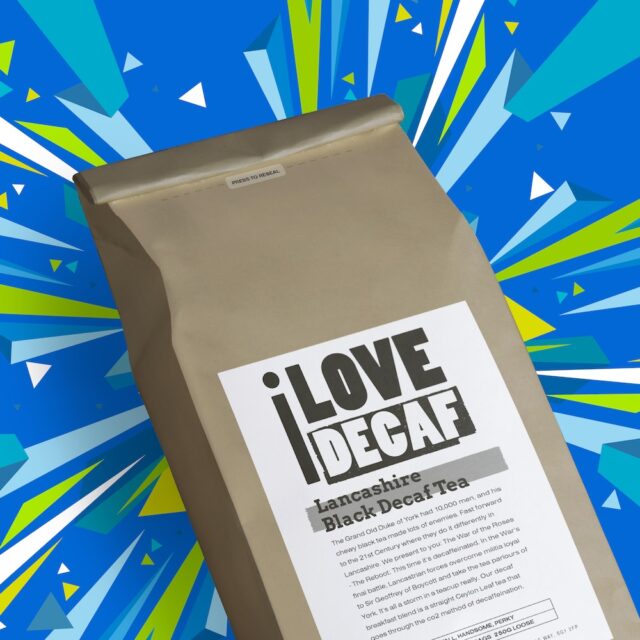
Lancashire Black Decaf Tea is a delicious black tea that is perfect for those who are looking for a decaf option. Its name is a nod to a famous brand from the county next door, but our decaf is better than theirs.

Lancashire Black Decaf Tea is a straight Ceylon Leaf  – the finest black tea from Sri Lanka and is decaffeinated using the high quality CO2 process. This decaf tea is great for those who want to enjoy a delicious cup of strong tea but don’t want the caffeine.

It is also perfect for people who are looking for an alternative to regular black tea.

If you are looking for a delicious decaf tea option, try our Lancashire Black.

3. New English Breakfast Brew Decaf Tea

If you’re looking for an excellent decaf tea, look no further than I Love Decaf. Our English Breakfast Brew Decaf Tea is the perfect choice for anyone who wants a delicious and healthy cup of decaf tea.

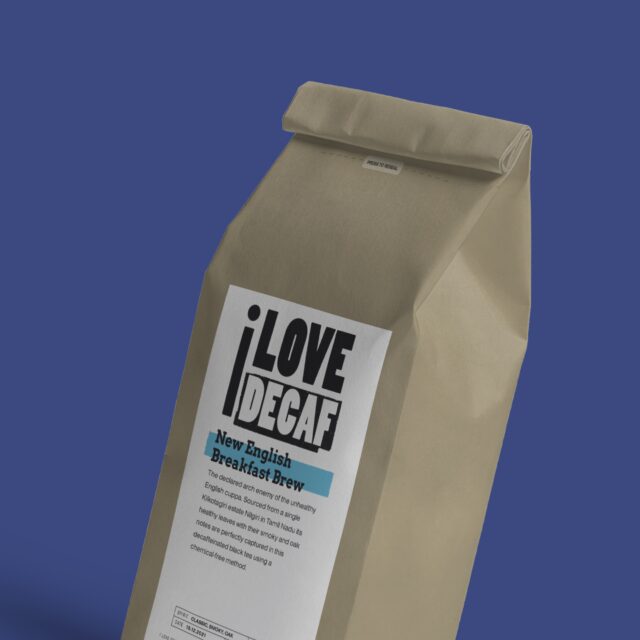
This decaf tea is sourced from a single Kilkotagiri estate Nilgiri black tea in Tamil Nadu, its healthy leaves, with their smoky and oak notes, are perfectly captured in this decaffeinated black tea using a chemical-free method.

It’s also ethically and sustainably sourced. It delivers the same great flavour and health benefits as a regular English Breakfast Brew, but it’s also much lower in caffeine so is therefore ideal for those who are concerned about their caffeine intake.

Our decaf teas are available in a variety of weights, so you can choose the perfect option for your needs. We also offer a variety of other great teas, so be sure to check out our website for more information.

I Love Decaf Tea Promise

At I Love Decaf, we know that decaf is a popular choice for many people. That’s why we make sure that our teas are top quality and the best decaf around. We like to think we put the Love into Decaf.

Our promise to you is this: If you’re not happy with the taste of your brew, get in touch and we will refund you or send you another tea to taste.

Every tea we sell at I Love Decaf is decaffeinated using the most advanced technology available. We take great care in ensuring that our teas are free from caffeine, not just as a health choice but also because it’s the right thing to do.

We hope you enjoy our selection of our top three decaf teas!

Decaf Coffee: The 3 Reasons Why You’ll Love Decaf Too.

Why Decaf Coffee is exactly what you need

We all know that coffee is packed with antioxidants and can help improve focus and concentration. But what about decaf coffee? Is it worth drinking, or is it just a waste of time and energy?

Introduction

In this article, we’ll explore 5 reasons why decaf coffee is exactly the drink you need. From its health benefits to its great taste and aroma and its ability to improve focus and concentration, decaf coffee has a lot to offer!

1. Decaf coffee is lower in acidity.

Decaf coffee is often thought of as being less tasty and weaker than regular coffee. But decaf coffee actually has a lower acidity than regular coffee. This makes it easier on the stomach for you if you have a sensitive stomach or want to try to avoid heartburn.

That’s a plus one for decaf coffee, but doesn’t regular coffee have quite a few health benefits? Does decaffeination take any of those away? The good news is that decaf coffee still has those self-same health benefits as a cup of regular coffee. Decaf is still a great source of antioxidants and can also help to improve brain function. 

I Love Decaf’s decaf coffees are roasted with the same skill and ground with the same care you’d exercise for regular beans, so our decaf coffee can be just as tasty and enjoyable as regular coffee. So, if you are looking for a way to enjoy the benefits of coffee without the caffeine, decaf coffee is a great option.

2. Decaf coffee has the same health benefits as regular coffee.

There are many reasons to switch to decaf coffee, even if you’re not trying to cut down on caffeine. As we already mentioned, decaf coffee has the same health benefits as regular coffee, including a reduced risk of diabetes, cancer, and Alzheimer’s disease.

Decaf coffee is also just as effective as regular coffee at improving mood and reducing stress levels. So if you’re looking for a way to relax and improve your mood, decaf coffee is a great choice.

And if you’re worried about the taste of decaf coffee, there’s no need to worry. With I Love Decaf’s brewing methods, decaf coffee can be just as full of flavour as regular coffee. So if you’re looking for a delicious and healthy beverage, decaf coffee, again, is the perfect choice.

3. Decaf coffee is a good source of antioxidants.

I Love Decaf’s decaf coffee is a brilliant source of antioxidants, which are important for many reasons. Antioxidants help to protect your cells from damage, and they also have been linked to lower risks of some chronic diseases, such as heart disease and cancer. Decaf coffee also contains other beneficial nutrients, such as vitamins and minerals.

Decaf coffee is available in many different roasts and grinds

There are many different types of decaf coffee available on I Love Decaf. You can find decaf coffee as whole beans or a variety of grinds tailor-made to different kinds of coffee-masking equipment and in medium, and dark roasts. This means that you can find a decaf coffee that suits your taste preferences.

If you find that regular coffee makes you feel jittery or anxious, decaf coffee is the way to go. It has the same flavour and aroma as regular coffee, but without the caffeine. This means that you can enjoy your coffee without having to worry about the side effects of caffeine.

Decaf coffee is available in many different roasts and grinds, so there’s bound to be one that suits your taste. If you’re looking for a decaf coffee that tastes great and doesn’t sacrifice flavour, try one of these.

Orizaba Mountain Coffee (Swiss Water Style)

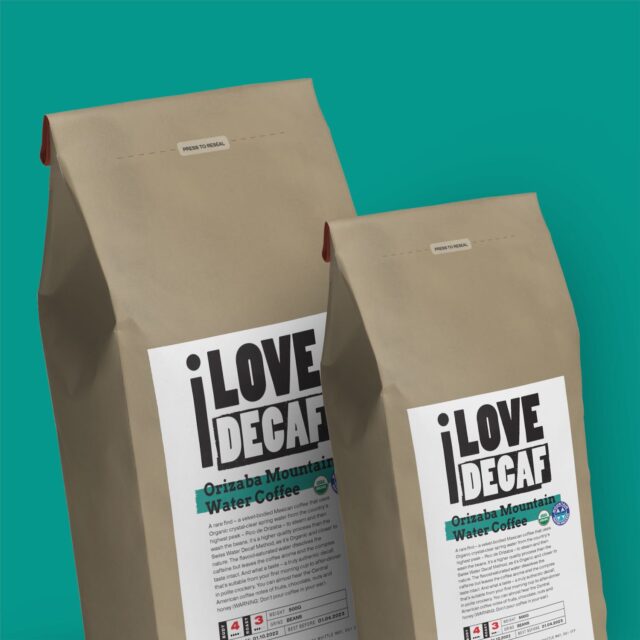
A full bodied with well-developed texture and sweetness, this exceptional Mexican coffee uses the crystal-clear spring water from the country’s highest mountain – Pico de Orizaba – to first steam the green coffee beans, then wash them free of caffeine. 

Luxe Organic Swiss Water Honduran Decaf Coffee

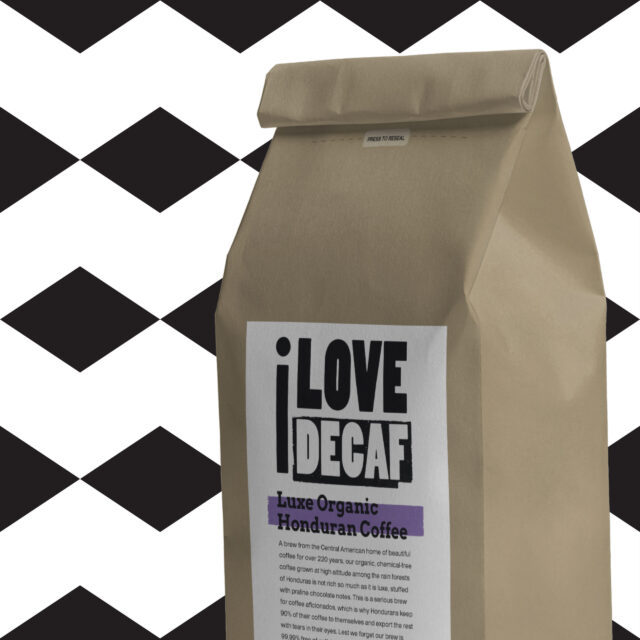
Medium sweet, nutty roast with a fuller body, this brew from the Central American home of beautiful coffee is organic, Fairtrade and decaffeinated usibng the chemical-free Swiss Water decaf method. The coffee itself is grown at high altitude in the rain forests of Honduras. 

Happy Medium Roasted Decaf Coffee and Everyday Italiana Decaf Coffee

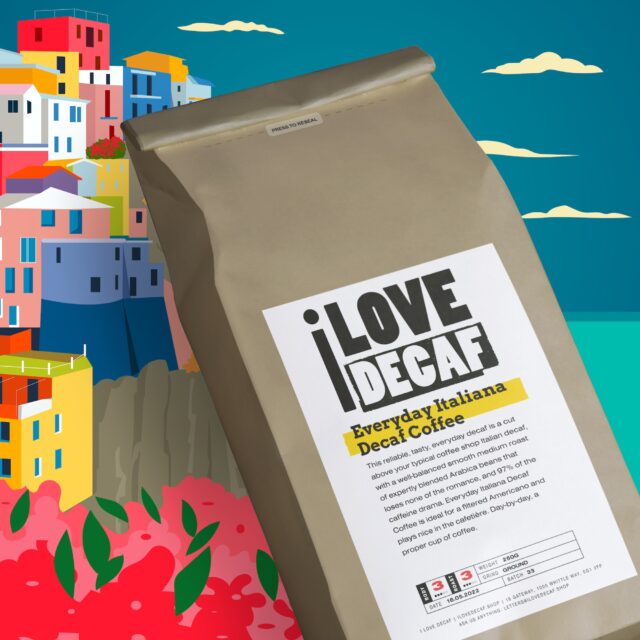
Our two great everyday decaf coffee blends are perfect brews from first thing to late night (remember: they won’t keep you awake).

Brasilia Swiss Water Decaf Coffee

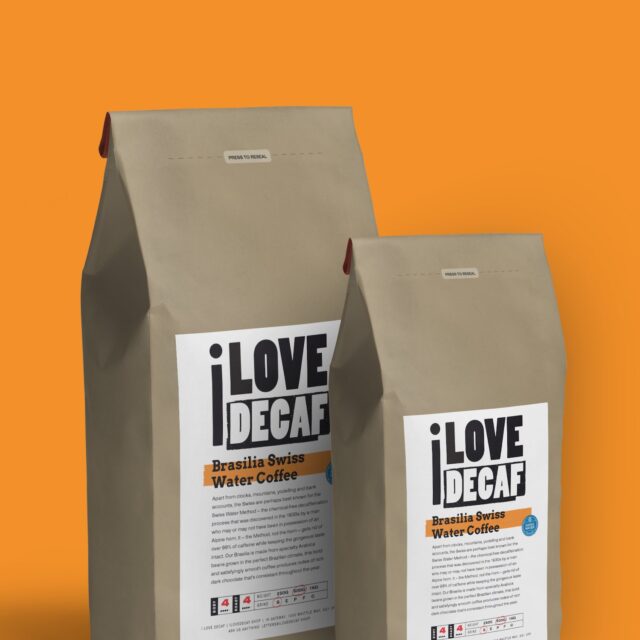
Our Swiss Water Brazilian is made from the best arabica beans grown in the perfect climate. A bold and satisfyingly smooth coffee with notes of rich dark chocolate.

Time and energy

While some people might think decaf coffee is a waste of time and energy, there are actually quite a few reasons to give it a try. For one, decaf coffee still has many of the same health benefits as regular coffee, so you can enjoy those without having to worry about the caffeine jitters. Additionally, decaf coffee is more forgiving on your stomach and won’t keep you up at night the way regular coffee can. And lastly, with the right preparation, decaf coffee can be just as delicious as its caffeinated counterpart. So if you’re looking to cut back on your caffeine intake or simply want to mix things up, be sure to give I Love Decaf’s decaf coffee a chance!


Top 10 ways to recycle decaf coffee grounds

If you’re like most people, you probably throw away coffee grounds after each cup or every pot. It is smarter, after all, than your natural inclination, which is to throw it down the sink.

But did you know that you can use those grounds to improve your life in a number of ways? Here is our top ten of the best: 

1. Use them as an organic fertiliser. 

Coffee is a good plant food because it’s high in nitrogen and provides a boost to the growth of plants. Add some ground coffee to your soil before planting your plants and watch them grow more vigorously than usual.

2. Clean your windows with coffee grounds. 

Not only does this get rid of dirt and dust, but the grounds also have a cleaning effect on glass. Simply sprinkle some of those grounds on a cloth and wipe the glass clean.

3. Make natural ant-infestation killers with coffee grounds. 

Coffee is a natural flea killer, and its acidic properties help deter ants from establishing colonies. Just place some ground coffee inside small bowls or cups and place them near areas where ants are active.

4. Add grounds to your compost. 

Coffee grounds are high in nitrogen and electrolytes, which help promote microbial growth in compostable materials. 

5. Use your coffee grounds as mulch. 

Back out in the garden with summers getting hotter and drier, a layer of mulch in your flower or vegetable beds saves what water you can use in the garden from evaporating away. Coffee grounds are an excellent mulch and full of nutrients as well.

6. Use the decaf grounds to scrub pots and pans. 

Coffee Grounds work well as a scrubber because they are abrasive and have a ridged texture. 

7. Keep your path clear of snow.

Coffee grounds can be spread on icy paths and pavements, melting the ice and snow. The gritty texture of the grounds will also guard against slipping up by providing some traction. Coffee’s chemical make-up will prevent it from freezing in a similar way to road grit.

8. Getting rid of nasty smells.

Coffee grounds work as well as baking soda to get rid of pongs in your fridge. The same nitrogen that is good for your garden soil has an ability to absorb the foul smell of sulphur, among other dodgy scents. 

9. As an exfoliant you will never see in a TV advert for £150 face-cream.

Coffee grounds are similar to sand in texture and can be used as a natural skin scrubber. You can use them directly on your skin as an exfoliant and to clean clogged pores or make them into a loose exfoliating bar with water. Because you’re worth it.

10. As a kitchen condiment.

Coffee could be considered as a staple for most kitchens, but it also has a number of culinary applications, including in cooking. For instance, coffee grounds are often used as a smoky topping for meats like brisket or steak. Coffee grounds are also required ingredients for barbecue sauces and for rubbing meat. What is more, coffee is acidic, which tenderizes meat and breaks down nutrients.

Orizaba Mountain Water or Swiss Water Decaf Coffee: Which Tastes Best?

OK: A taste retest of two similar-sounding coffees on an over-warm day at the nub end of a July heatwave? Are you kidding me?

It’s one of the privileges of being a minion of a coffee company that you get to try out the goods. But you know what happens, right? You pour cup after cup of the Everyday Italiana Decaf and it’s so good it becomes the first, last and always cup of the day. A satisfying, amenable, comfy coffee that weaves itself into the afternoon as much as it unzipped the morning.

But what’s this? Word comes down from the top, El DeCaffito himself, that customers have asked him about our Brasilia Swiss Water and Orizaba Mountain Water Decafs. What are the differences? Which tastes nicest when? 

Your stash of Everyday Italiana Decaf is confiscated, and you are ordered on an expedition of discovery. To scale and survey the rainforests of Brazil, the mountain scenery of Switzerland and Mexico and come back with an explorer’s account of your findings. For Decaf. For humanity.

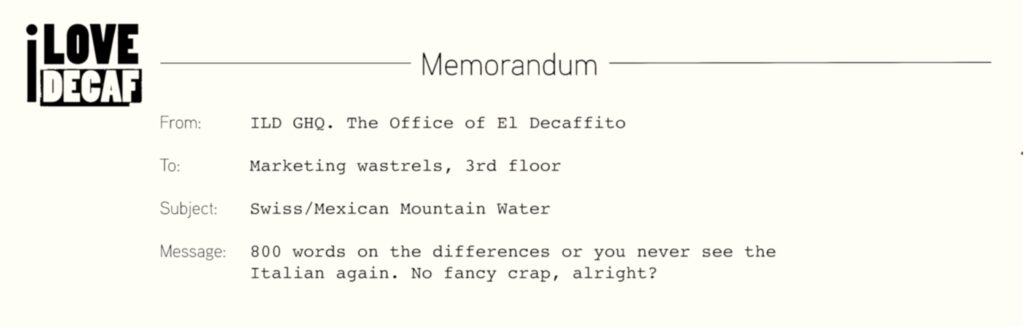
Actually, the memo looked like this.

Swiss water coffee memo

It’s pointless telling you that drinking coffee for a living holds any high drama or jeopardy, so we’ll take off our hiking boots, straw Panamas, put down the machetes and get on with it. 

Brasilia Swiss Water Decaf vs Orizaba Mountain Water Decaf: The rules. 

We hand-ground both Brasilia Swiss Water Decaf beans and Orizaba Mountain Water Decaf Coffee beans in two separate grinds. A medium grind for a French press and a fine grind for an espresso-style from a moka pot. We had to be sure not to overgrind the French press in case it over brewed in the cafetière and, likewise, sufficiently grind the espresso so its brief rendezvous with super-heated steam water in the moka pot would develop the brew enough. There’s a whole art to grinding, detailed right here on the Ground Zero blog

Brasilia Swiss Water Decaf Coffee

This should be the bolder of our two beans and it scored well, particularly from the Moka pot. It has a slightly richer roast with that caramelised chocolate note running right through the liquid. It produced a nice crema, and we would challenge anyone to call this a decaf in a blind tasting. It has enough body to make it taste full and substantial, with the flavour oils front and centre of the brew.

The French press cup was more laid back, but had equally delicious notes, not so much caramelised but still dark enough to make a satisfying drink.

No mistake, this is everything promised by Swiss Water decaffeination – all the original flavour is still there, everything except over 99% of the caffeine.

Orizaba Mountain Water Decaf Coffee

On paper – as it is on the packaging – Orizaba Mountain Water Decaf Coffee is a slightly lighter roast than the Brasilia Swiss Water Decaf coffee. The water in this case comes from the glacial meltwater streams on Mexico’s highest mountain, Pico de Orizaba. Other than that, the origin of the beans and the difference in roast, the process is very similar to Swiss Water. Once again, then, we expect great things from our Orizaba Mountain Water Decaf Coffee.

It did not disappoint us. Even after the truly excellent Brasilia Swiss Water decaf, our Orizaba Mountain Water Decaf shone in the Moka pot brew review. It’s lighter and has some of that chocolate goodness, but also fruit and a honey-like nutty sweetness. This is less bold than the Brazilian Swiss Water decaf, but rounder and just as satisfying.

The French press gave us cause for thought though. Steeped for a few minutes in the cafetière, we found a subtly more developed fruit and nut note than we had from the Moka pot, as if the chocolatey-ness had moved over and let it through. We went back for more from the French press but, as Sheryl Crow and Cat Stevens might sing, the first cup was the deepest.

Brasilia Swiss Water Decaf vs Orizaba Mountain Water Decaf: The result.

Both coffees are magnificent, but as there can only be one winner…

No, scrub that. 

What surprised us was the Orizaba Mountain Water Decaf Coffee’s performance in the French press. This reviewer prefers espresso style, but the cafetière version of Orizaba Mountain Water Decaf revealed a lot of hidden nuances in the flavour, so Orizaba Mountain Water Decaf gets the vote for the French press. Brasilia was not far behind, however.

The bolder roast of the Brasilia Swiss Water Decaf did very well in the frankly terrifying environs of the Moka pot and came out in one piece, so to speak, with its trousers on. After all the gurgling and percolating, it delivered a satisfying full punch of flavour.

Going Decaf and Fighting the 3pm Slump

One of the over-touted benefits of caffeine is as a pick-me-up – a stimulant that sharpens the mind and gets stuff done. While caffeine consumption revolves around these ‘accepted facts’, caffeine’s superpowers in the war on snoozing turns out to be over-played at best and completely fictitious at worst

Going decaf and fighting the 3pm slump

So, now you’ve gone decaf, how do you overcome the mid-afternoon mountain of doom that is the 3pm slump? The answer is all in the mind or, rather, the brain.

The brain is a brat. Your brain, my brain, your bosses’ brains are all self-obsessed, entitled, lazy bags of porridge comfortable with the high-life and quick fixes. You wouldn’t vote for your brain in a ballot if the only alternative was a brown paper sack of self-aware mashed potatoes. 

The brain’s biggest character defect is that it knows its own mind and is very uncomfortable changing it. All those gallons of caffeine it’s been swimming in your whole life, along with the sugar, the processed carbs and all the other quick hits, are what it’s used to. And it wants more. Your craving brain demands you run it a warm bath of cosy slop to hang around in every day. 

But you can challenge it. The brat can be changed. You already did by going decaf. A day or so of brain ache and things soon got better. Now it’s halfway through the afternoon and you’re feeling a bit limp, your brain wants you to run the bath as usual. Just once, for old time’s sake.

How to Avoid the Mid-Afternoon Slump Without Caffeine

As obstinate and lazy as a brain is, it’s also easy to out-wit. The best way out of the 3pm slump is a distraction, a change of pace, a new focus. Making your brain work in a different way means it will start making its own good time chemistry without all those artificial quick fixes. 

  • Get out of the office for a breath of fresh air, a bit of exercise. Exercise improves blood flow, helps brain chemistry and is more effective than caffeine at improving your alertness and focus.
  • Take a break. Sounds straightforward enough, but we don’t mean a sandwich at your desk, take a proper break away from your work environment, take in a view
  • Fire up your music player with high energy sounds or something you can completely shift your focus onto. We know at least one CEO who goes even further and takes his cello into his office. That’s probably not suitable for a cubicle worker but if you’re remote working, something similar might be the ticket to get away from the grind.
  • Give in. Surrendering to a crafty nap might be the best thing. We are programmed for the mid-afternoon siesta,and you will definitely feel better and the longer you sleep, the longer it will last. The so-called ‘power nap’ of 10-15 minutes can recharge you for a few hours, while getting in 90 minutes of sleep will allow your brain to experience all phases of light, REM and deep sleep. Deep sleep is where our brains consolidate memory, experience and learning. No wonder that a NASA study found a 26-minute nap improved productivity by over 30%.

Prevention is Better than the Cure

Bad sleep habits like late nights, evening snacking, and staring at screens into the evening can disrupt a night’s rest and can make us tired before we even get into work. Look after the nights and the days will look after themselves.

One last way to avoid hitting the caffeine in the afternoon is to play to your body and brain’s strengths and structure your day accordingly. We are much more mentally alert in the morning and much better at taking decisions, leaving the afternoon to practical matters and dexterity.

Decaf Deconstructed – Different Methods of Decaffeination

There are five ways to decaffeinate, which one works for you?

There is a problem with tea and coffee packaging. It is stricken with an unsightly rash of trademarks and logos erupting from every available surface like zits on a pizza-faced teenager. The blemishes speak of a virtuous product; Organic, Fair Trade, Rainforest Alliance, sustainable, green. Separate info boxes impart details such as strength, bean, roast, blend, grind, carbon footprint and, possibly, USB compatibility. It has made shopping for hot drinks as complex and nuanced as a conference on geopolitical ethics.

We call these little reassuring information panels LoV – Logos of Virtue. They make us feel all warm and fuzzy inside.

This is one detail you should pay attention to, because how your tea or coffee is decaffeinated is arguably more important

There’s still room on the label – just – so why not add one more detail, the method of decaffeination? This is one detail you should pay attention to, because how your tea or coffee is decaffeinated is arguably more important than many of the other LoVs. For example, with the amount of decaf the world is consuming, how that caffeine is removed has measurable consequences for the environment. Differences in decaffeination can also affect taste and aroma. And the big one; effectiveness of decaffeination varies with each process and if you are buying decaf, it makes sense that you will want it to be as caffeine-free as possible.

The truth is that decaffeinated tea and coffee comes in a bewildering variety of forms but not all are created equal. With a decaf tea or coffee, a lot hinges on the method of its decaffeination. Which one should you choose and why does it matter?

Here comes the science bit

There are five known methods of decaffeination. The original method, which used salt water and benzene is no longer legal because of, well, benzene. In 1906, a chance discovery by German coffee merchant Ludwig Roselius resulted in the world’s first mass produced decaffeinated coffee. Although his coffee later turned out to be carcinogenic, Roselius made up for it all by his involvement in a 1943 plot to blow up Hitler. You win some, you lose some.

Which leaves us four ways of taking caffeine out of tea and coffee. 

1. Methylene Chloride Decaffeination 

Methylene chloride is bonded to caffeine molecule by molecule by soaking the tea leaves or green coffee beans. There are two methods of achieving this, directly on the beans or leaves in hot water and indirectly, where the beans or leaves are soaked in hot water to remove the caffeine and the solvent is added to the water after the beans are removed. Although ‘solvent’ and the names of most solvents sound quite scary, only the tiniest trace residue will remain on the decaf product and even that will evaporate completely over 38°C/100°F.

2. Ethyl Acetate Decaffeination 

Although ethyl acetate hardly sounds much better than the previous method, decaf produced using ethyl acetate as a solvent is sometimes touted as ‘naturally decaffeinated’ because ethyl acetate is a chemical found naturally not only in tea, but also in many fruits. The process is otherwise identical to the direct and indirect methods that use methylene chloride as a solvent. Sometimes, according to learned decafficionados, ethyl acetate decaf leaves a slight chemical taste

3. Swiss Water Decaffeination 

This non-solvent alternative decaf process extracts caffeine by a long soak in hot water, followed by filtering though activated carbon to remove the caffeine. The now-decaf water is added back to the drained beans or leaves so that they can reabsorb the oils and flavours. There are a few teas that use the Swiss Water decaf method, but it is most often used for coffee.

4. Carbon Dioxide (co2) Decaffeination 

This is the space age version of decaf. This was probably invented when boffins meant to be working on something very clever were momentarily appalled by the state of their decaf and filled whiteboards with obscure formulae and Greek symbols to come up with a solution to the second most important problem before them. We probably won’t have interstellar space travel because of this, but who cares when the decaf tastes this good?

Having said all that, it’s not that complicated. Beans or leaves are pressure cooked with carbon dioxide. In such pressure and temperature environments, carbon dioxide (co2) goes supercritical and becomes a solvent that attracts the small caffeine molecules, leaving the larger flavour molecules intact.

5. Mountain Water Method

Similar in many respects to the Swiss Water decaffeination method and widely regarded as a cut above all other decafs, the Mountain Water Process (MWP) is also sometimes called the Mexican Water Process as it uses water from that country’s highest mountain – Pico de Orizaba.

The process starts with steaming the green coffee beans which are then soaked in a water solution, which removes the caffeine along with the flavour compounds. The water is removed from the seeds and run through a carbon filter that captures caffeine molecules to strain them from the solution. The green coffee is then soaked in all the flavour compounds and reabsorb them without the caffeine.

Can’t Find Decaf Coffee Beans in Tesco? Here Are Some Alternatives

You’ve come to right place:

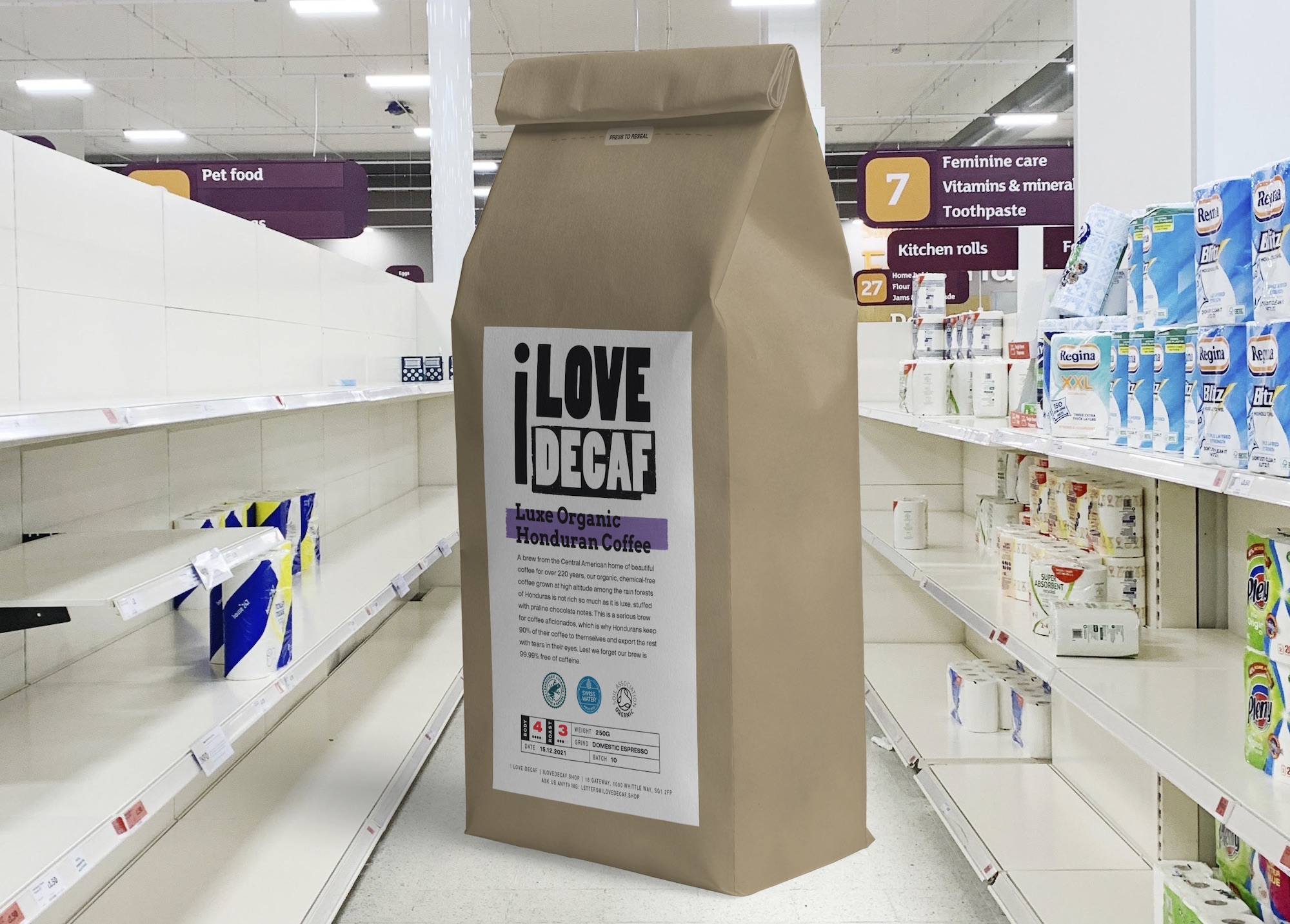
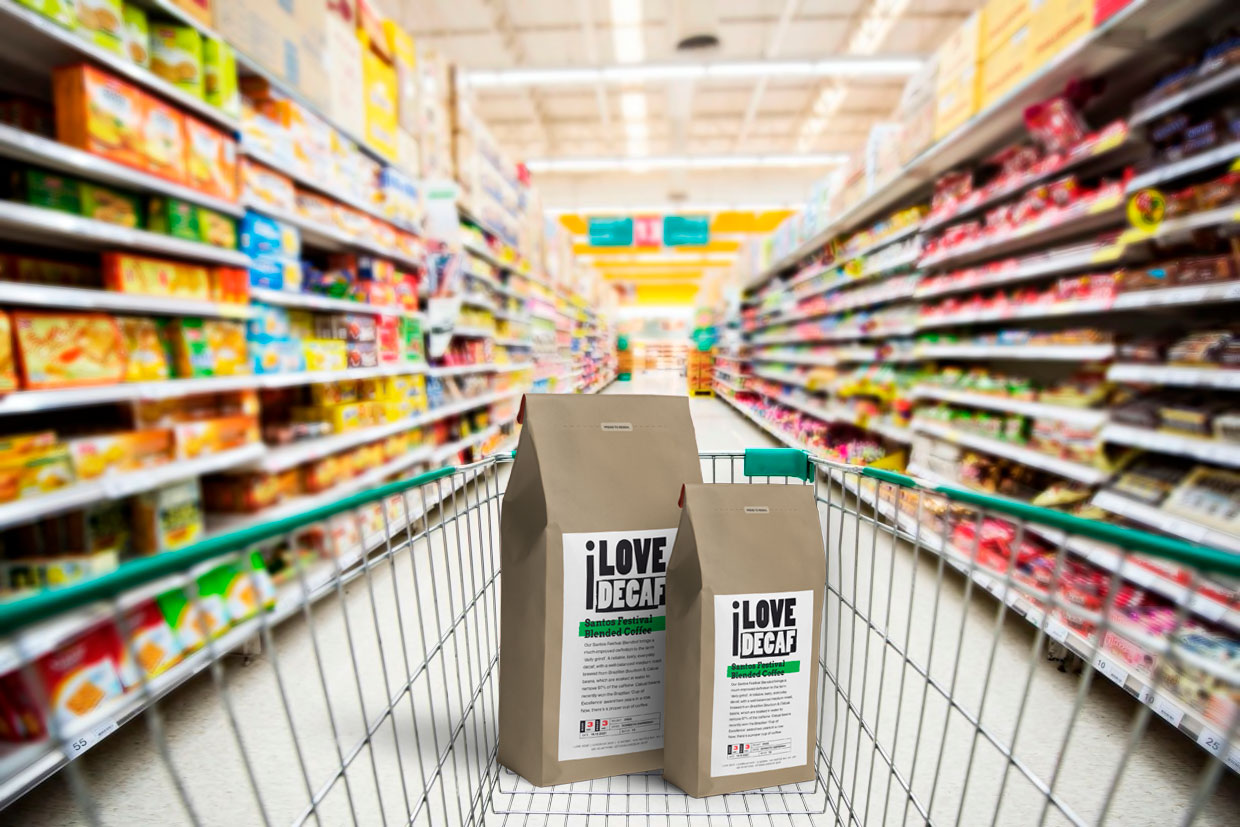
If you’re looking for decaf coffee beans in Tesco, you’re out of luck. Supermarkets don’t tend to stock good decaf coffee. But that doesn’t mean you have to give up on your caffeine-free dreams! I Love Decaf have a range of delicious decaf coffees that will make your taste buds happy.

1. Why you can’t find decaf coffee beans in Tesco

Supermarkets like Tesco don’t typically stock good decaf coffee beans. This is because there is a lower demand for decaf coffee, so it’s not as profitable for supermarkets to carry them. That’s not to say that you can’t find decaf coffee beans anywhere – you just might have to look a little harder. Specialty coffee shops and online retailers are more likely to carry a wider variety of decaf coffee beans. If you’re looking for a good cup of decaf coffee, your best bet is to search for a small, independent cafe or store that specializes in selling high-quality coffee beans.

2. What are your options when it comes to decaf in Tesco

Supermarket chains like Tesco do not stock good decaf coffee. If you are looking for a good cup of decaf, your best option is to go to a specialty coffee shop. These shops usually have a wider selection of decaf coffees, and they are roasted in-house, which means they will taste fresher. You can also order decaf coffee beans online. There are a number of online retailers that sell high-quality decaf beans, and many of them offer free shipping.

3. Where you can find decaf coffee online

If you’re looking for a good decaf coffee, your best bet is to go online. There are a lot of great websites that sell decaf coffee beans, and you’re sure to find a flavor that you love. Some of our favourites include I Love Decaf and… I Love Decaf. We have a lovely selection of decaf beans, and we offer great prices and quick shipping within the UK. So if you’re looking for a great cup of decaf coffee, be sure to check us out.

4. Flavoursome decaf and non-caff drinks

At I Love Decaf, we understand that not everyone wants to drink caffeinated drinks. That’s why we’ve created a range of superior decaffeinated and non-caffeinated drinks that are full of flavour. Whether you’re looking for a decaf coffee that tastes just like the real thing, or a non-caff tea that still has all the flavour of your favourite blend, we’ve got you covered. Our Mexican Holy Water Decaf Coffee is one of our most popular drinks, and it’s sure to become your new favourite too!

5. Why choosing decaf doesn’t mean sacrificing taste

Decaf coffee lovers, rejoice! You don’t have to sacrifice taste when choosing to cut down on caffeine. In fact, I Love Decaf offers a wide range of delicious decaf drinks that taste just as good as their caffeinated counterparts. From smooth Mexican Holy Water Decaf Coffee to our flagship Luxe Organic Honduran Decaf Coffee, there’s something for everyone. So don’t despair if you can’t find decaf beans in your local Tesco, here are some great alternatives that will make you feel right at home.

What Kind of Coffee Grind Do I Need?

Ground decaf coffee comes in such a broad range of different forms, the labels display a hot barrow-load of information from decaf method to body, roast and origin. You’re willing to believe the coffee ‘does exactly what it says on the packet’, if only you could work out exactly what it does say on the packet. As well as body and roast, one of the most important bits of information is how fine or coarse the grind is. 

How does grind affect my coffee?

Grind is a measurement of how ground the coffee is. That wasn’t a surprise, was it? What might be new information is how much grind affects the taste of the coffee you drink. As well as the coffee you absolutely refuse to drink because it came out with notes of battery acid, warning claxons and flashing lights. If you’ve had one of those cups of decaf recently, you’ve either just come out of Costabucks, or you have got your brew all wrong and that may have something to do with putting the wrong grind in your coffee-making equipment.

Different coffee-making machines and makers make coffee in different ways and at different speeds. To work its magic, your chosen weapon of decaffeination needs a specific size and grade of ground coffee. 

Espresso fine grind

Espresso machines, for example, extract all of that yummy super quick – in usually less than 30 seconds. The same goes for pods and capsules. The hot water is in contact with the coffee for such a short time, it needs to extract flavour quickly. A fine grind presents more surface area than a coarse grind and the high-pressure water squeezes more of the flavour out. Using a coarse ground in an espresso machine will lead to a sour cup of under-extracted decaf.

French press coarse grind

French press, by comparison has minutes to work its magic as you steep the grounds for much longer. Brewing fine grounds in a cafetière for minutes on end will over-extract flavour and lead to a bitter brew.

Between the two extremes, you’ll find that medium ground works best with auto-drip filter machines or pour-over coffee makers, like those that come with a jug or carafe.

Match your machine with grind

It is very important to match the decaf grind you buy with the coffee-making gear you already have. If you suffer from disappointing cups of home-brewed decaf, it could be something as simple as buying the right coffee for your machine.

We try to make this as straightforward as possible at I Love Decaf. Our coffees come in different grinds for different methods of coffee-making. Rather than tell you on the bag the grind is medium-fine, we state what kind of machine the grind is suitable for. Sometimes, to save label space, we use a letter instead.

B Beans (not ground at all)

These are unground beans – perfect if you own a bean-to-cup coffee machine or you grind your own beans separately (perhaps you have a Moka pot and a French press and want to control the grind for optimum results in each piece of equipment). 

C Cafetiere/French Press

A cafetiere or French press is a tall jug with a plunger that holds back the grounds from your brewed coffee. You fill it with very hot (not boiling) water and let it steep. When the brew is done you push the plunger slowly down to compress all the grounds out of suspension behind a metal screen.

E Espresso

Espresso machines in the barista-style have become more popular over time, but espresso was originally brewed in Moka pots – stove-top percolators in which you boil water under pressure forcing steam and water through coffee grinds. When the grinds are saturated, the pressure forces brewed coffee up a funnel through a filter to the top chamber. When you hear the characteristic gurgling your coffee is ready. Whatever kind of espresso making equipment you have, this grind is the optimum for brewing your coffee.

P Pods/Capsules

Some modern coffee machines use a sealed pod system to make your coffee. The idea is you throw away each pod after you have used it once and the environmental cost gets picked up in a third world country steadily filling up with aluminium and plastic capsules. Not good enough. Fortunately, you can get refillable pods and systems for most of the proprietary coffee makers. We sell one of these on ilovedecaf, but others are available elsewhere.

F Filter/Aeropress

The simplest method of making coffee is to drip feed or pour very hot water over ground coffee which sits in a cone of filter paper held over a large jug. There are many variations of this technique from pour-over to the new Aeropress machine which can even make espresso-like coffee on the go.

Why the Best Supermarket Decaf Coffee is not as Good as Ours (I Love Decaf)

You know how it is; every time you go to the supermarket, you look at the decaf coffee on offer and feel enthusiasm being sucked from your soul. If that sounds like you, then you have tried most of the own-brand decafs already and have come to the conclusion, as we have, that really good decaf is really hard to find in a supermarket. 

Many people – cofficianados and consumers alike – criticize own-brand decaf coffee for its lack of flavour, but the real problem is that it has lots of flavours, just not necessarily any pleasant ones. Even the packets remind us of that bloated feeling you get after bad coffee with its flavour notes of cat piddle and warm tyres. 

There isn’t a superstore decaf that doesn’t call to mind a warm evening in a fertiliser silo – not one that we’ve discovered yet, anyway.

In fact, if we were supermarket coffee buyers, we wouldn’t go to extreme lengths to preserve the taste. We wouldn’t stick it in foiled bags with re-sealable strips. Why bother maintaining a vacuum when leaving it on the porch in an open jar would at least let the fumes escape?

Our decaf is best

We started I Love Decaf to make the best decaf coffee you can’t buy in a supermarket. We believe that some kinds of decaffeinated coffee are less like a pleasing drink and more like a punishment and we wanted to do something to set it straight. It’s not just the supermarket own-brands either; many major brand coffees miss the mark on their decaffeinated spin-offs.

That’s why asking for the best supermarket decaf coffee is like asking for the most comfortable barbed wire shirt. Just because it’s the only shirt on offer doesn’t mean you should buy it.

Why the best supermarket decaf coffee is not as good as ours
Our decaf is best. We started i love decaf to make the best decaf coffee you can’t buy in a supermarket.

You can’t get I Love Decaf in the supermarket

To be honest, we can’t imagine even having a meeting at any of the big supermarket chains, and that’s not just because our MD Mr Roy Bosch (he is also a part-time alligator wrestler and balloon entertainer of some note) has anger management issues with idiots, it’s because we don’t want to sit in their soulless offices drinking their horrible supermarket decaf. It’s best for all concerned if we don’t. That’s not the kind of publicity we need.

Check out these superior decafs from the I Love Decaf range.