Are you tired of feeling jittery and restless after your morning coffee? Do you want to reduce your caffeine intake without sacrificing your daily cup of coffee? Switching to decaf coffee may be the solution you’ve been looking for.
A recent study published in the journal Nutrients found that decaf coffee can provide the same health benefits as regular coffee, without the negative side effects of caffeine. The study, which was conducted by researchers at the University of Navarra in Spain, involved 21 healthy adults who drank either regular or decaf coffee for one month. At the end of the study, the researchers found that both groups experienced similar improvements in cardiovascular function and cognitive performance.
So, what does this mean for coffee lovers who are looking to cut back on caffeine? According to Dr. Alejandro Junco, a board-certified internist at Ochsner Health, “if someone is drinking coffee for the health benefits, but they’re sensitive to caffeine or have trouble sleeping, switching to decaf is definitely worth considering.”
But what about the taste of decaf coffee? Isn’t it often criticized for being bland and boring? Not necessarily. In fact, many coffee connoisseurs prefer the taste of decaf coffee because it allows them to savor the rich, complex flavors of the beans without the overpowering effects of caffeine. And with the growing popularity of specialty decaf coffees, there’s never been a better time to make the switch.
Here at I LOVE DECAF, we offer a wide range of decaf coffees made from the finest beans and roasted to perfection. Whether you prefer light, medium, or dark roast, we have a decaf coffee that will satisfy your taste buds and help you feel your best. And with our commitment to sustainability and fair trade practices, you can feel good about your purchase too.
But how do you make the switch from regular to decaf coffee without sacrificing taste or quality? Here are a few tips from our coffee experts:
Start slow. If you’re used to drinking several cups of regular coffee per day, it may be difficult to switch to decaf cold turkey. Instead, try replacing one cup of regular coffee with decaf each day until you’ve made the full transition.
Experiment with different roasts. Just like regular coffee, decaf coffee comes in a variety of roasts and flavors. Try a few different options until you find one that you love.
Use high-quality beans. The quality of your coffee beans will have a big impact on the taste and aroma of your decaf coffee. Look for beans that are freshly roasted and sourced from a reputable supplier.
Brew it right. Whether you prefer a French press, drip coffee maker, or espresso machine, make sure you’re using the right brewing method for your decaf coffee to ensure the best flavor and quality.
In conclusion, switching to decaf coffee can be a delicious and healthy way to reduce your caffeine intake and improve your overall wellbeing. With the wide range of decaf coffees available today, there’s never been a better time to make the switch. So go ahead, pour yourself a cup of decaf, and enjoy all the benefits of coffee without the jitters.
Ground decaf coffee is available in a few different grades and there’s a great deal of confusion as to what the grind has to do with flavour, the kind of coffee-making equipment you have, and so on. It can be baffling for anyone but now, the guesswork is over, with our guide to the grind.
What coffee grind is best for me?
From fine ground to coarse, the grind of the coffee affects how it tastes in your cup. if you pay attention to what ground coffee you are putting into which piece of coffee-making equipment you will always get the best taste and aroma. If your coffee tastes bad, it is usually because you have over or under brewed your drink.
It’s not surprising that with a myriad of kinds of coffee making machines, there are many ways of brewing, from the super-fast to the grindingly slow. Your chosen machine will require a specific size, grade, and grind of coffee to work properly.
How to find the perfect espresso grind
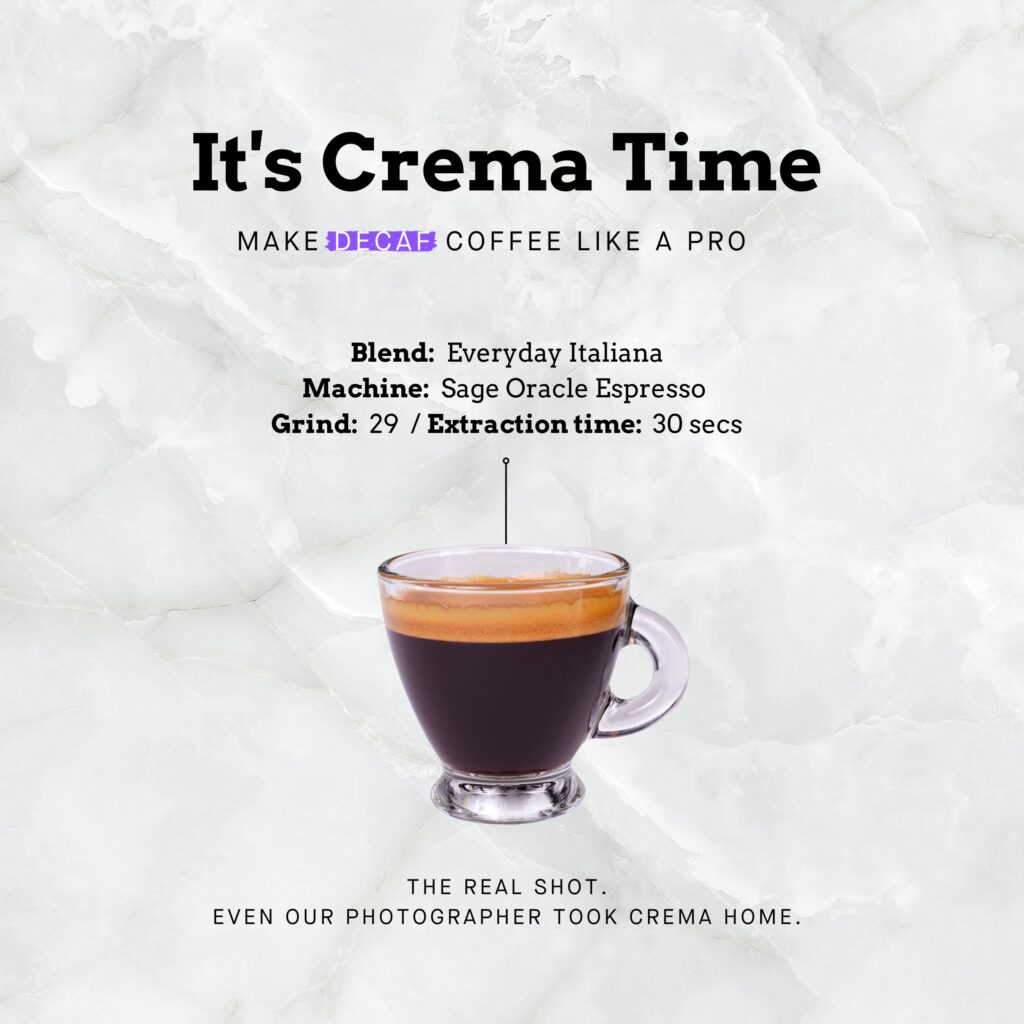
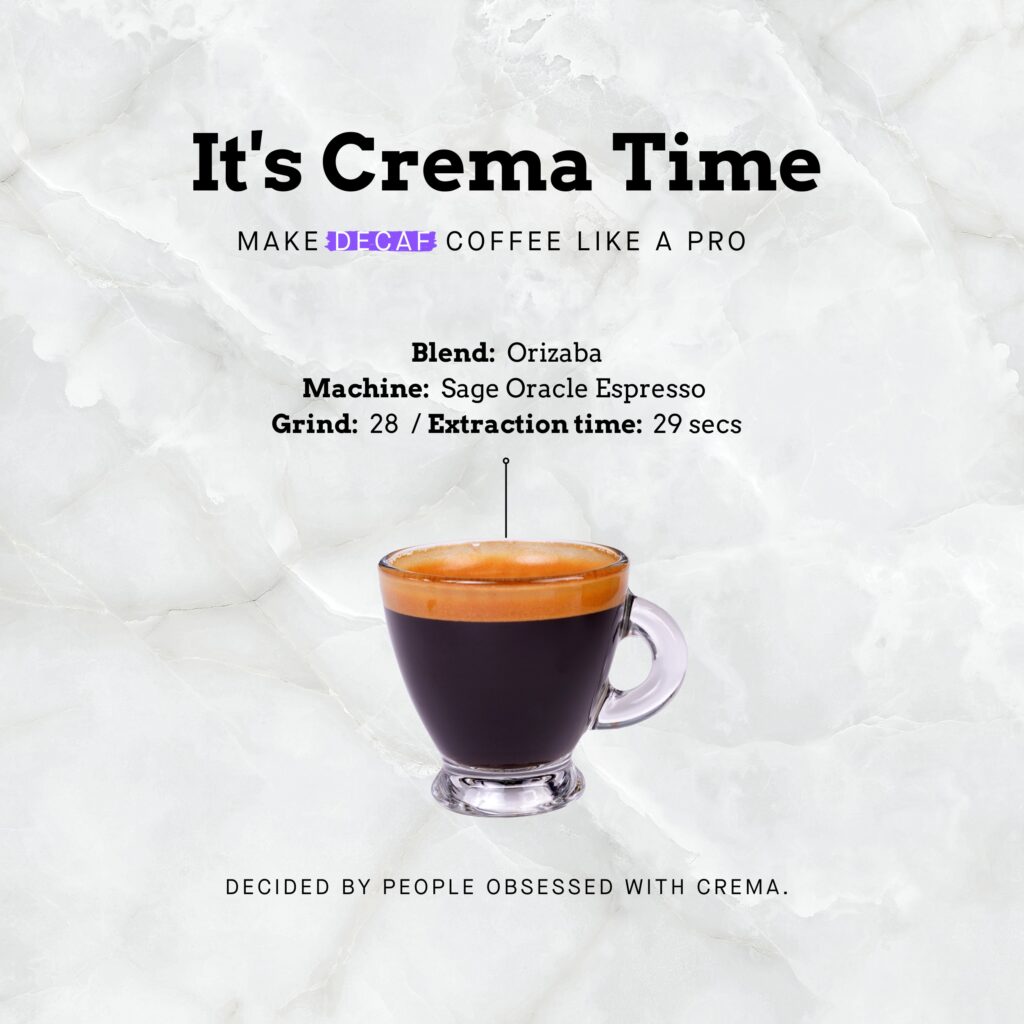
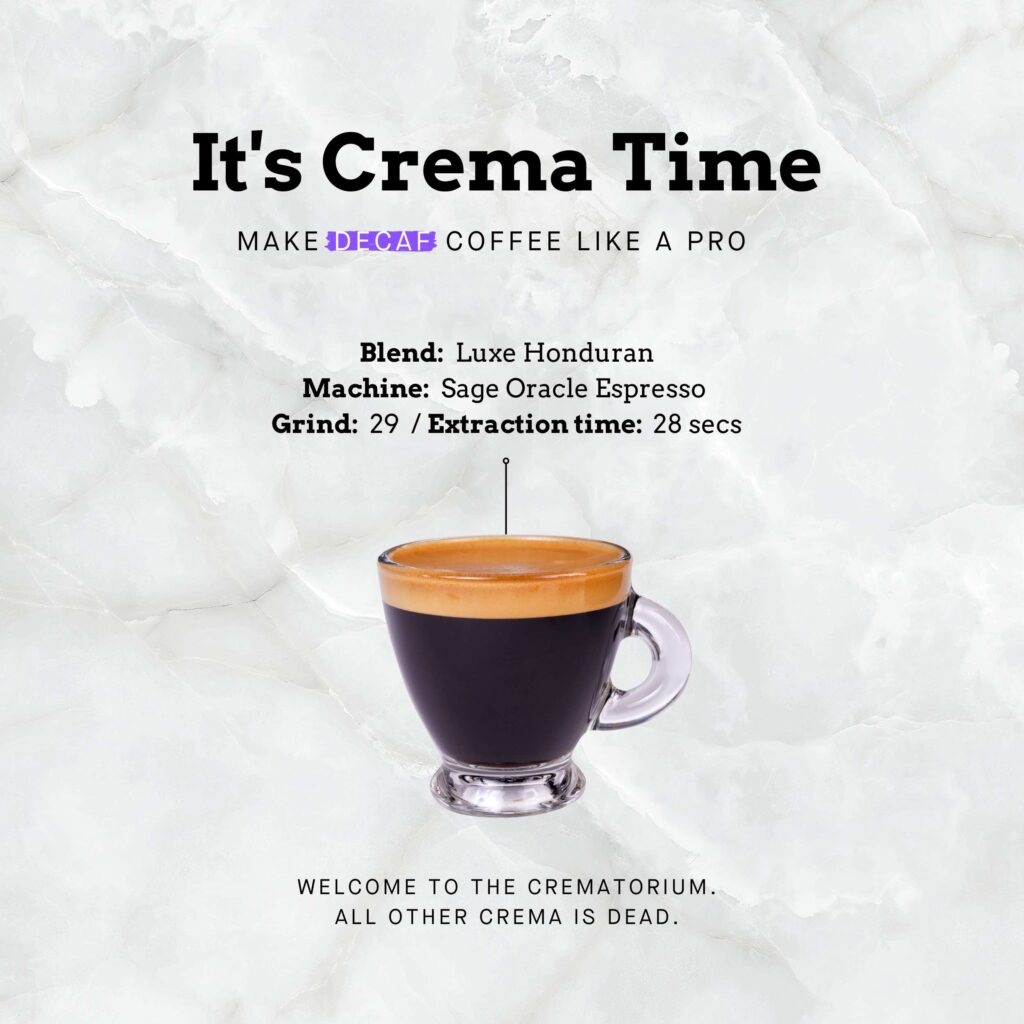
Espresso machines are fast because the hot water is in contact with the coffee for less than half a minute. This liquid extracts the flavour quickly, and a finer grind leads to a richer, more flavoursome cup. The science behind this is simple, a finer grind means more surface area in contact with the water, gram for gram.
If you tried coarse ground in an espresso machine, you would find the flavour of your hot brown water sour and undeveloped.
The right ground coffee for your French press
A French press or cafetière takes much longer to work than an espresso machine. In a French press, the grinds float about in the water steeping for minutes on end and so brewing fine ground in a cafetière would allow serious over-extraction of the coffee’s flavour and turn it into a bitter-tasting brew.
For drip filter machines or pour over coffee makers of the kind that fill a carafe or jug, drip by drip, try a medium ground coffee
What kind of coffee grind is right for your kind of coffee machine?
Whenever you buy ground decaf, match the grind to the equipment you own. If you’re always disappointed with your machine’s coffee, it could be as simple a fix as buying different grinds for your machine.
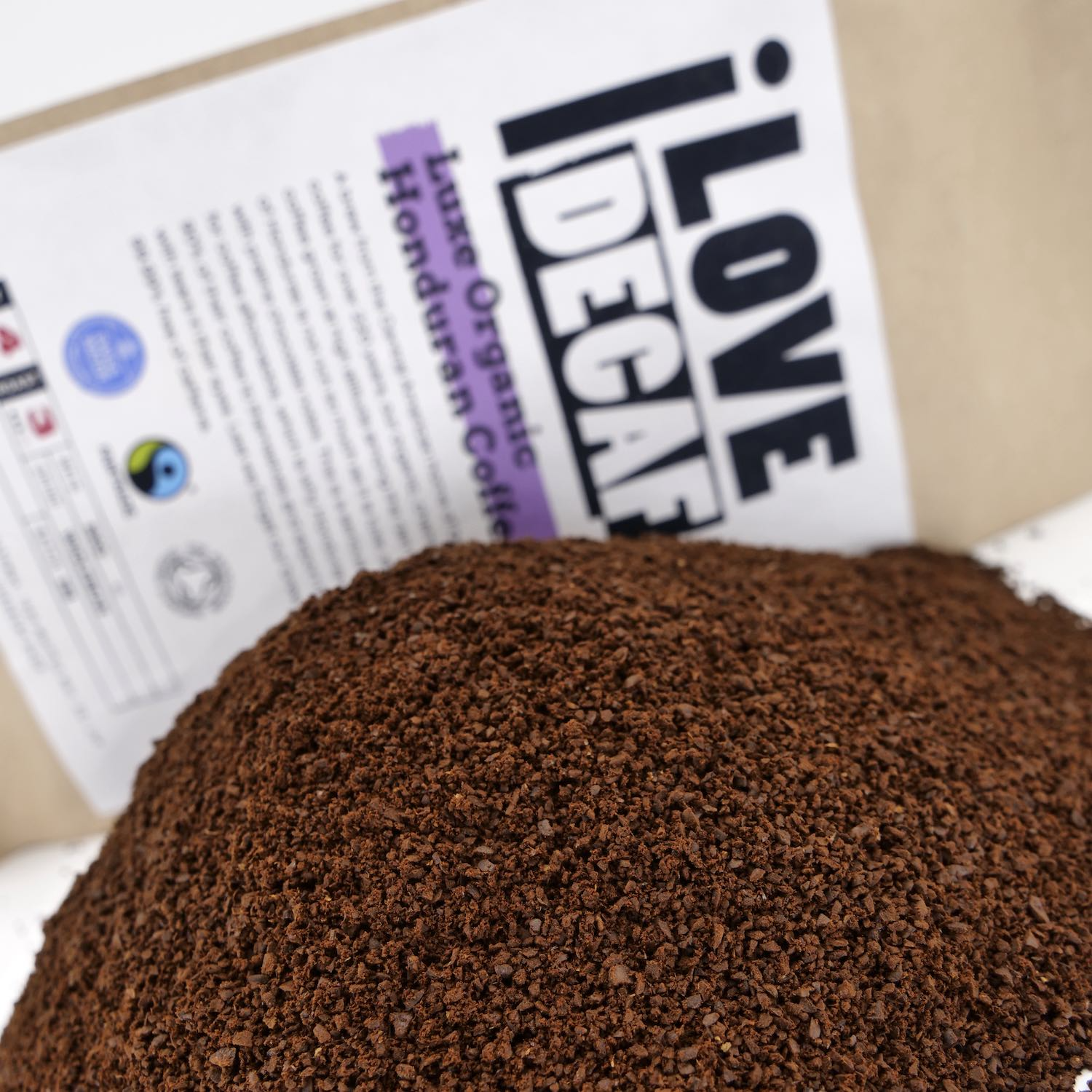
Not only do we love decaf, but we also love keeping decaf simple. We sell coffee in different grinds for different machines. It can be difficult to tell what grind is suitable for each method, so we say what kind of machine it’s good for. Sometimes, to save space on the label, we use a letter instead on our Brasilia coffee and call it what it is for others. But what you will see is: Beans, Ground (cafetière) and Find Ground (espresso, moka and filter machines)
Unground beans are perfect if you like complete control over your coffee, you own a bean-to-cup machine or, alternatively, have more than kind of coffee machine and need to vary the grind accordingly.
You fill a cafetière with very hot water and leave it to steep. When it is brewed, you compress all the grounds out of suspension behind a metal screen by pushing a plunger down.
E Espresso coffee (CHOOSE FINE GROUND)
An espresso machine at home can be very convenient and makes us all into a barista. But originally, people brewed coffee using a stove-top percolator called a Moka pot. This boils water under pressure, forcing steam and water through the coffee grinds. When the grinds are saturated with pressure from boiling water, the steam further forces the brewed coffee up a funnel and then into the top chamber. Once you hear the characteristic sound of gurgling, your coffee is ready.
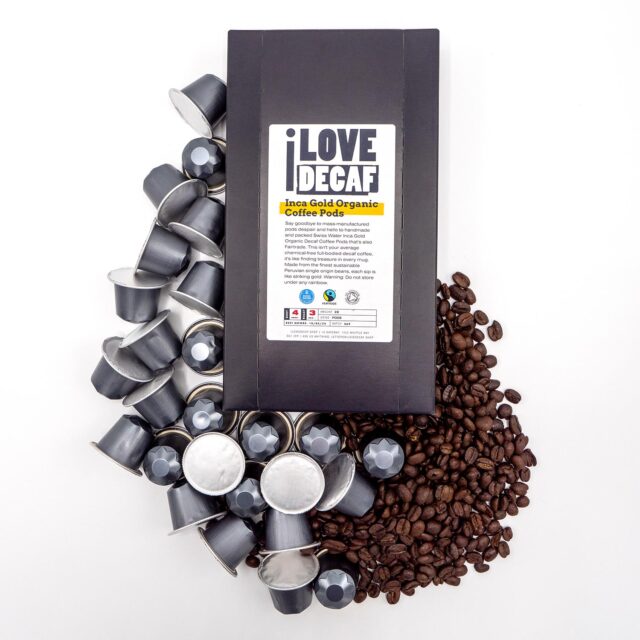
P Coffee Pods and Capsules
Not all pod systems create environmentally responsible coffee. Many of these will be thrown away after one use and the environmental consequences will not be limited to a small area. However, it is best to find those that are refillable to avoid this dilemma. We sell one of these on ilovedecaf.com, but many other companies offer refillable pods as well.
F Filter Coffee and AeroPress (CHOOSE FINE GROUND)
The simplest way to make coffee is to drip feed or pour hot water over grounds sitting in a filter cone. From the pour-over to the new AeroPress machine, a medium grind works best.
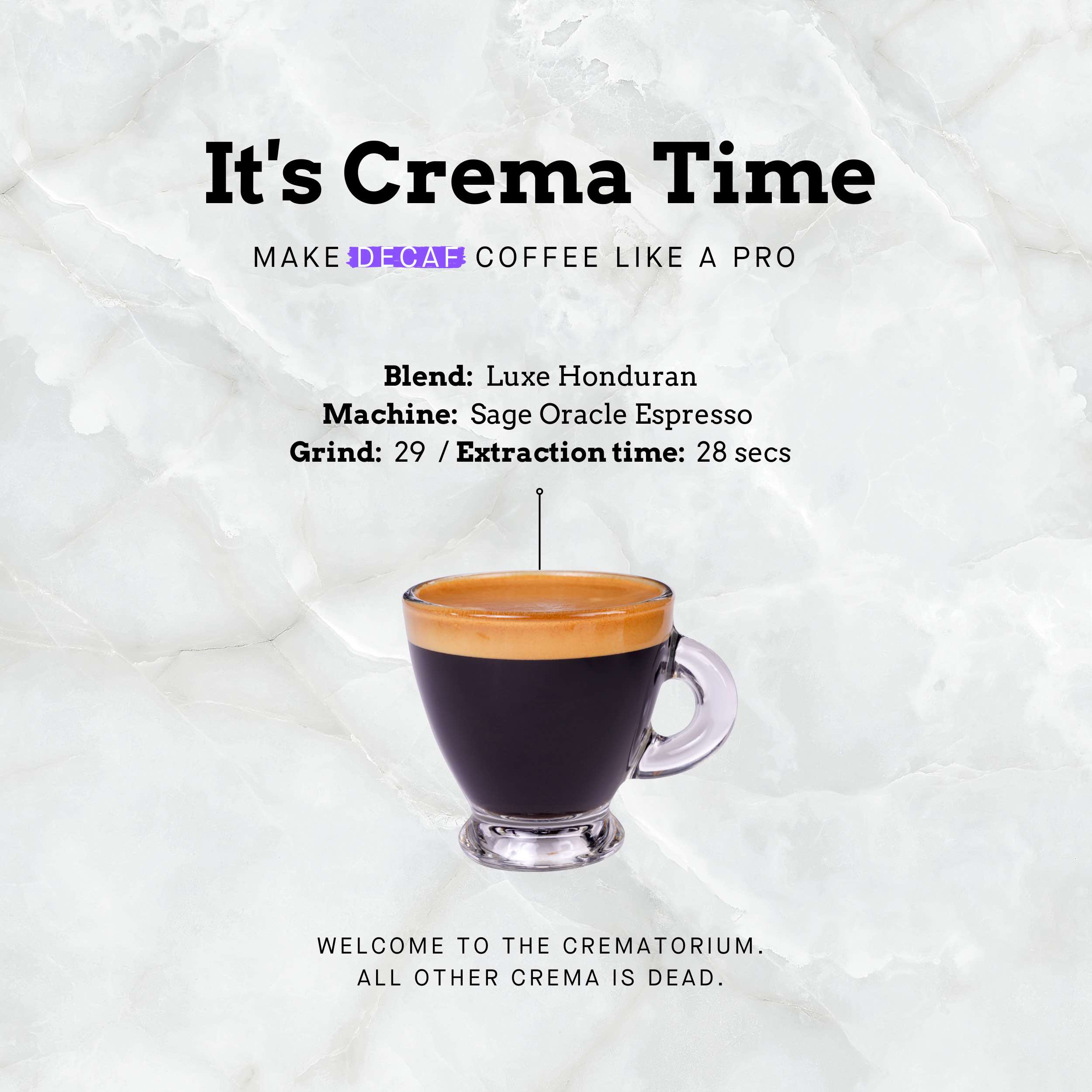
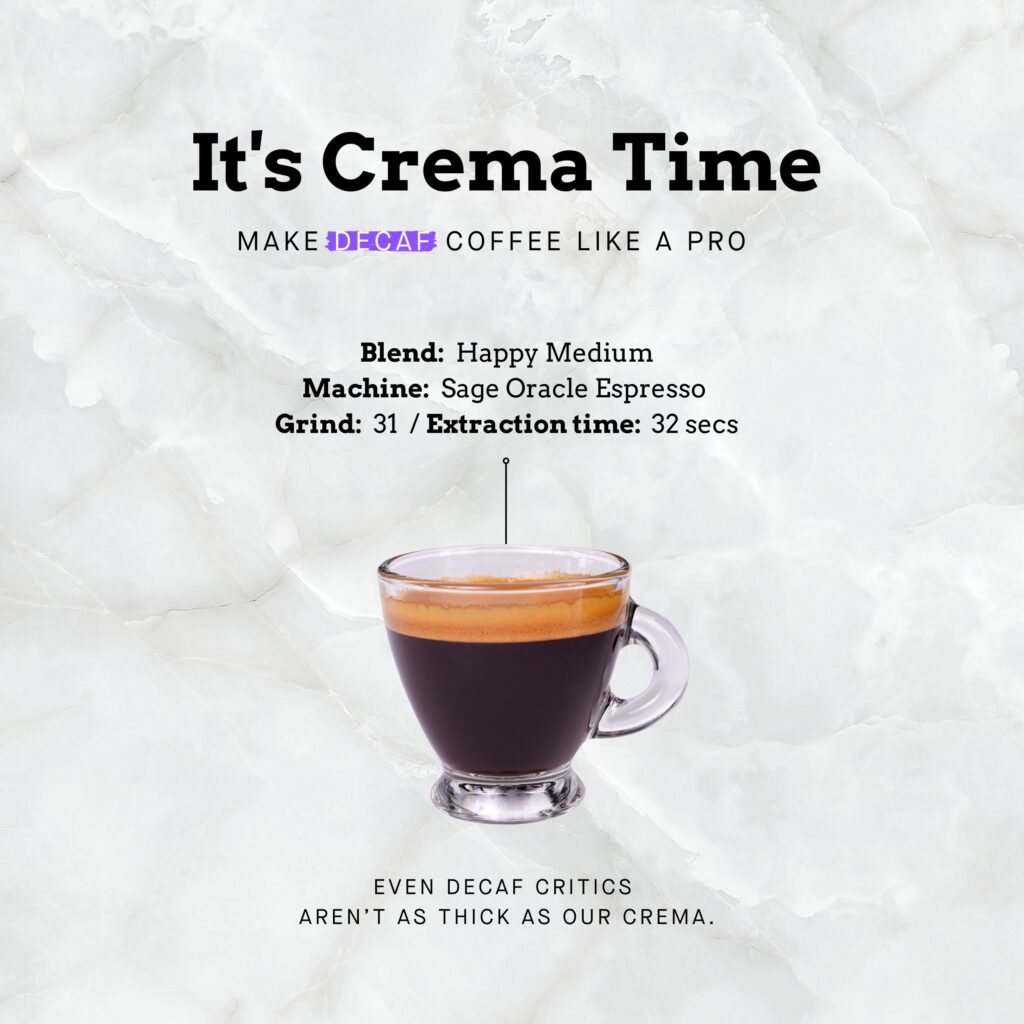
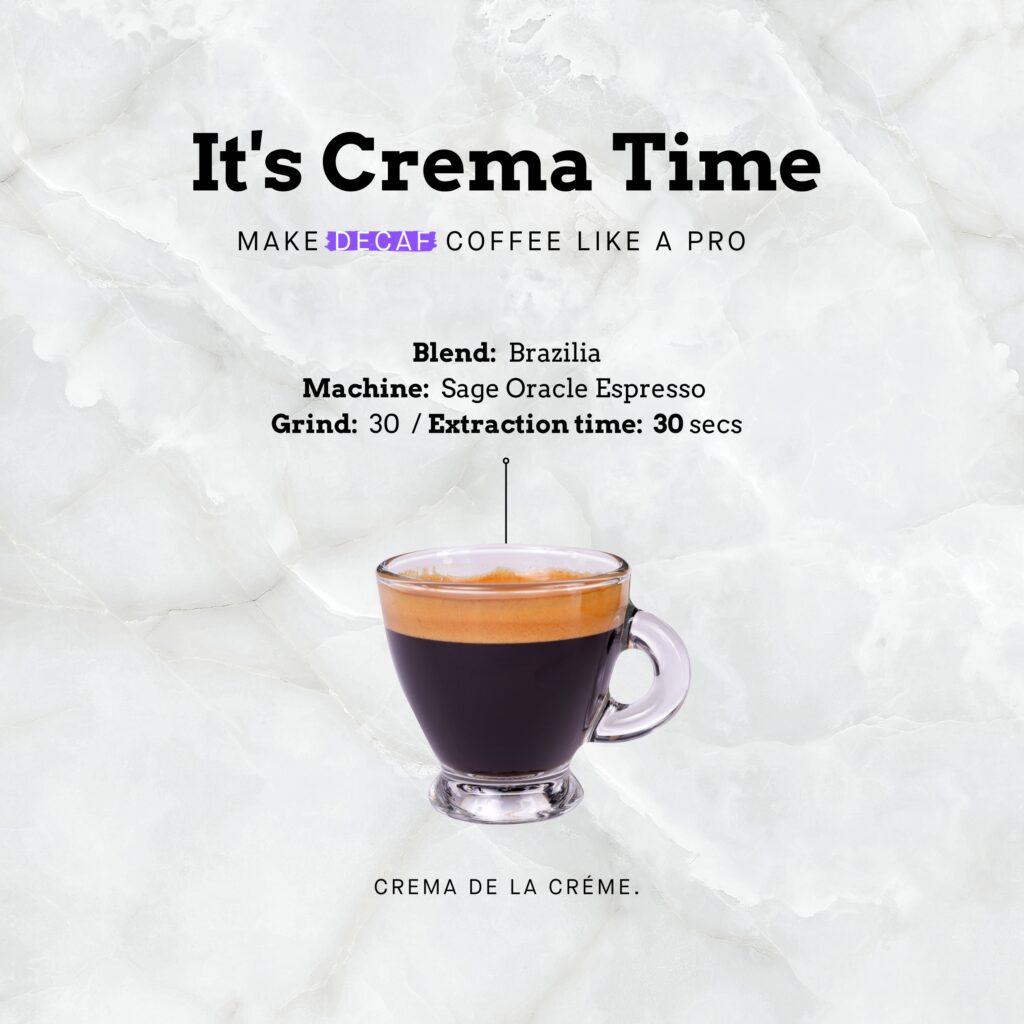
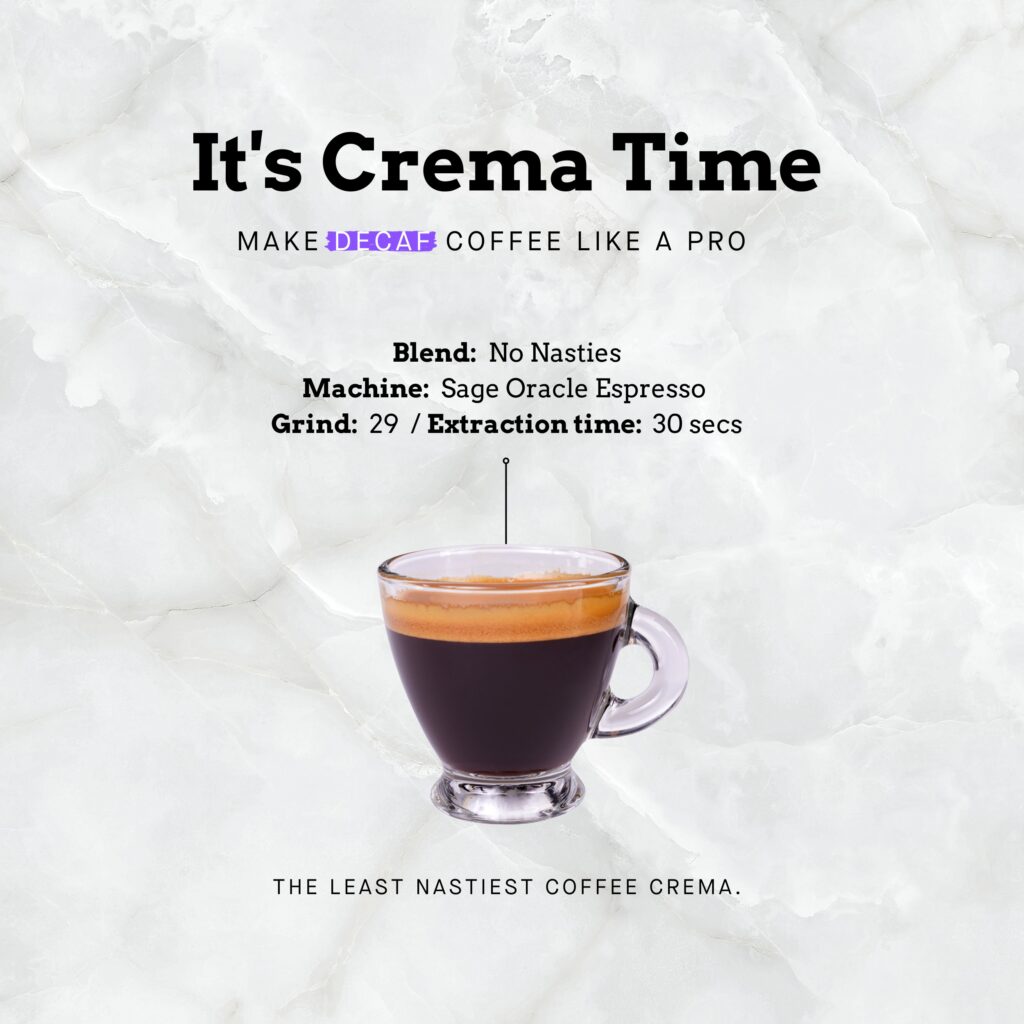
Medium roast decaf coffee crema and grind adviceDark roast decaf coffee crema and grind advice50% decaf coffee crema and grind adviceCoffee shop style decaf coffee crema and grind adviceRich swiss water style decaf coffee crema and grind adviceOrganic swiss water full bodied decaf coffee crema and grind advice
Decaf coffee
I Love Decaf is the only UK destination for the best decaf coffee. We supply decaf coffee beans, pods, filter and ground decaf coffee for those who love the taste of decaf coffee.
When looking for a dark roast decaf coffee, you may find yourself asking: “What is the best dark roast decaf coffee?” or “Which brand of dark roast decaf is best?” If that is you, then have a quiet word with yourself, because normal people don’t talk like that. However, if you really are looking for our most popular, range of dark roast decaf coffees, full of rich flavour, then you’ve come to the right place – look no further than the I Love Decaf shop for satisfying dark roast decaf.
The beauty of dark roast decaf
Sometimes, a dark roast decaf coffee is the only answer to whatever the day might be throwing at you; bickering kids, boredom at work, line manager with a personality bypass – we’ve seen it all, too. We have what you are looking for, right here, and we consider it to be the best of the best when it comes to dark roast decaf coffee.
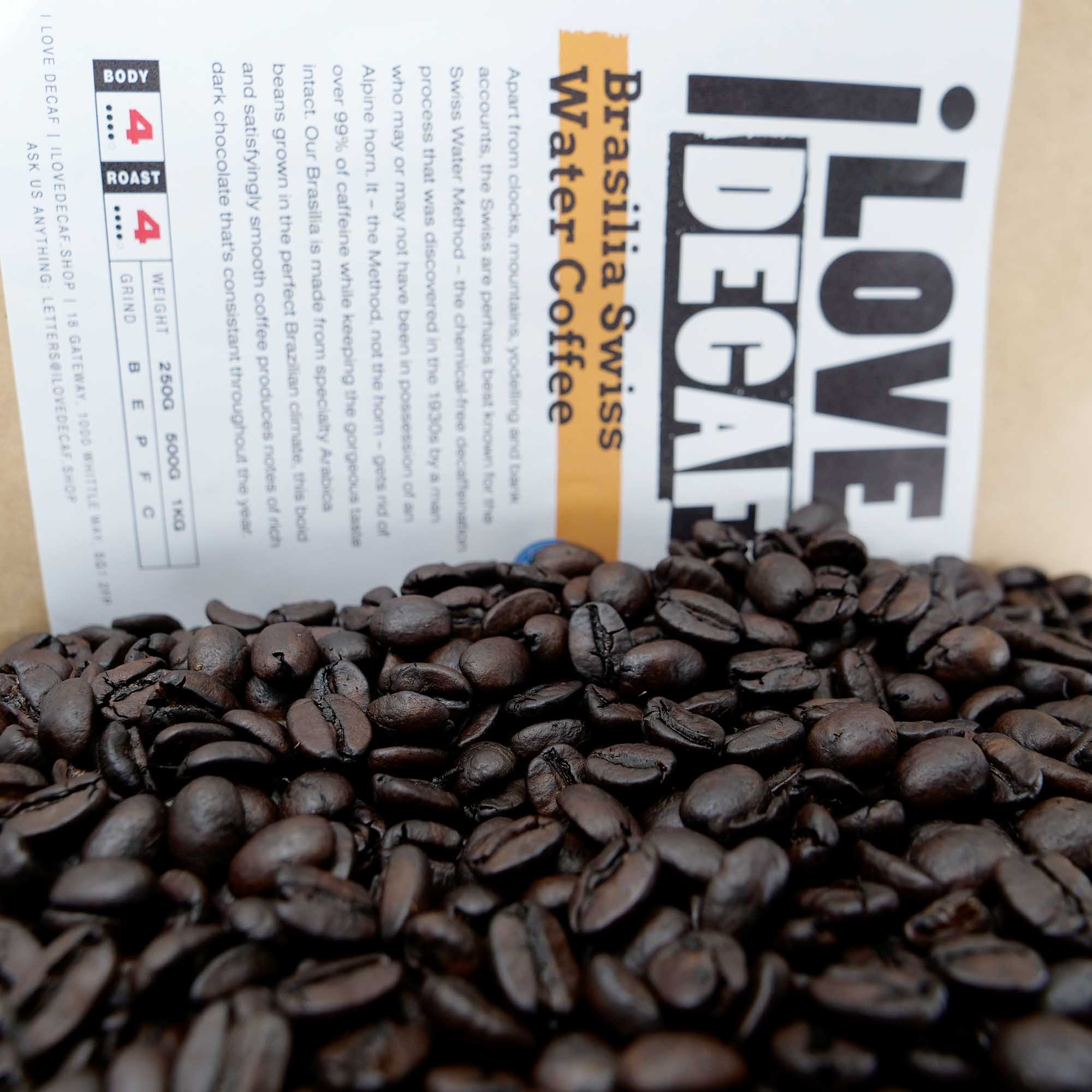
If you’re looking for a dark roast decaf coffee that packs a punch, our Brazilian Swiss Water Dark Roast Decaf Coffee is for you. This coffee is made with 100% Arabica beans and is roasted to perfection, giving it a bold and robust flavour that coffee lovers crave. Brazilian Swiss Water Decaf Coffee is decaffeinated using the Swiss water process, so you enjoy all the flavour without any trace of chemical solvents.
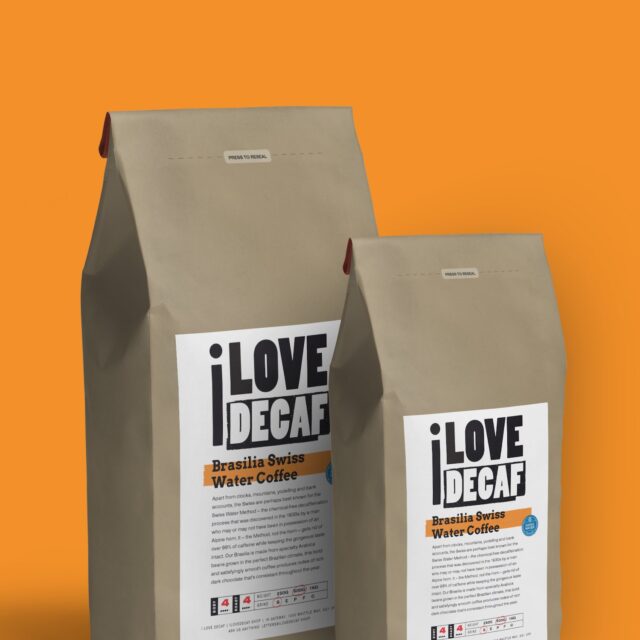
After clocks, mountains and bank accounts, the Swiss are perhaps best known for the Swiss Water Method – a chemical-free decaffeination process discovered in the 1930s by a man who may or may not has been in possession of an Alpine horn. The Swiss Water Method gets rid of over 99% of caffeine while keeping all the gorgeous taste intact. Perfect for dark roast decaf, the specialty Arabica beans our Brazilian Swiss Water dark roast decaf are from are grown in the perfect climate. This bold and satisfying velvet smooth coffee produces notes of rich dark chocolate that’s consistent throughout the year.
The benefits of dark roast decaf
We all know that coffee is packed with antioxidants and has health benefits, but did you know that decaf dark roast coffee is also good for you? Studies have shown that decaf dark roast coffee can help improve cardiovascular health, reduce the risk of stroke, and even lower the risk of cancer.
What’s certain is that dark roast decaf coffee is a fantastic source of antioxidants.
Antioxidants, found in the rich brown colours of a dark roast decaf as much as regular coffee, fight free radical chemicals that harm cells and which are linked to your risk of cancer. Drinking dark roast decaf every day not only lowers risk of developing multiple forms of tumour, but also avoids the effects of excess caffeine.
Your liver also likes a cup of dark roast decaf, lowering your risk of cirrhosis development. As the body’s manufacturing facility, the liver helps filter blood, produce digestive juices and regulates many body processes.
Dark roast decaf is also rich in:
Riboflavin (Vitamin B2). Healthy cell development
Pantothenic acid (Vitamin B5). Helps convert food to energy
Niacin (Vitamin B3)
Thiamine (Vitamin B3). The thiamine in dark roast decaf helps fetal development and breast feeding in nursing mothers
Potassium
Magnesium
Something that tastes so good as dark roast decaf is not always or often good for you. So, if you’re looking for a healthy cup of joe, opt for a dark roast decaf. Your body will thank you!
What is so good about dark roast decaf?
There are many things that make dark roast decaf coffee the best choice for coffee lovers. First of all, it has a rich, full-bodied flavour that is perfect for those who enjoy the taste of coffee. Additionally, dark roast decaf coffee is lower in acidity than lighter roasts, which means that dark roast decaf is so easier on the stomach. It is also decaffeinated, so you can enjoy it without having to worry about the effects of caffeine.
Our Brazilian Swiss Water dark roast decaf is a great example – it is a bold and satisfyingly smooth coffee that produces notes of rich dark chocolate that’s consistent throughout the year
So, if you are looking for a delicious and healthy coffee option, our Brazilian Swiss Water dark roast decaf is a great choice. I Love Decaf’s number one recommendation!
How to buy dark roast decaf at Ilovedecaf.shop
If you want the best dark roast decaf coffee, look no further than the I Love Decaf shop. We offer a wide variety of medium and dark roast decaf coffees from all over the world, so you’re sure to find one that suits your taste. Plus, we have a number of handy guides, like this one, on our website to help you choose the right coffee for you.
Decaf coffee
I Love Decaf is the only UK destination for the best decaf coffee. We supply decaf coffee beans, pods, filter and ground decaf coffee for those who love the taste of decaf coffee.
We get it – you’re as health-conscious as the rest of us and want to make sure that everything you’re putting into your body is doing you good. This has no doubt led you down some puzzling paths of inquiry. For example, is decaf coffee bad for you?
The answer to this question, frustratingly enough, is that it depends. After all, “health” is a topic where the lines are far blurrier than first meets the eye. How much are you drinking daily? Just how was your morning brew decaffeinated in the first place? What decaf coffee benefits are you trying to reap or which ailments are you looking to avoid?
We’ll explore all this and more below. We’ll cover whether decaf coffee is bad for you, the benefits of decaf coffee, and how to make a decision that’s right for you.
TLDR – Is Decaf Coffee Bad For You?
No, it isn’t.
Not to be anti-climactic, but the vast majority of people don’t need to worry about drinking a few cups of decaf coffee a day. We’ll dive into the nuances of decaf’s safety profile further down this page. Suffice it to say, however, that decaf coffee is perfectly safe, often delicious, and offers most of the same health benefits as “regular” coffee.
Even coffees that have been decaffeinated using a direct or indirect solvent process are considered perfectly safe by the FDA and other health organisations. If you’ve found yourself asking “is decaf worse for you than regular coffee?”, relax. Enjoy each sip knowing you’re getting all of the health benefits without the jitters!
Why People Ask “Is Decaf Coffee Bad for You?”
If you’re huge coffee nerds like us, you’ll know that decaf coffee benefits far outweigh the cons for most people. However, there’s one key reason that so many people ask “is decaf coffee bad for you?” The decaffeination process for commercial coffee leads some people to believe that dangerous chemicals must be at play.
Most people don’t know how coffee is decaffeinated. This leads some people to the wrong conclusion: that decaf coffee must be more harmful. In general, this isn’t true at all. There are some minor things to keep in mind when shopping for decaf beans, though. The specific caveats to watch out for are largely determined by the decaffeination process that was used for the coffee you’re considering.
Coffee is made up of literally hundreds of different compounds. In fact, up to 800 compounds make up that characteristic coffee flavour. Removing just caffeine from this equation can be challenging to say the least. Most commercial sellers of decaf coffee use one of four methods:
Each of these methods can have varying impacts on the resulting flavour of your morning cup – the Swiss water method is generally considered the best at preserving flavour – but what about their impact on your health?
How Much Caffeine is Left Behind?
The amount of caffeine that’s left lingering in your favourite decaf blend depends on a number of factors. In general, however, between 97 and 99% of caffeine is removed from every single bean. Our Swiss Water method beans have had over 99.9% of their caffeine removed.
We know we’re biased, but we think that’s pretty impressive.
Is Decaf Coffee Bad For You if it Was Made Using Solvents?
The two most common solvents used to decaffeinate coffee are methylene chloride and ethyl acetate (they sound delicious, right?). Don’t get us wrong, these don’t exactly sound like healthy ingredients to have fraternising with your daily dose, but it’s important to maintain perspective here.
Some people raise concerns over the potentially carcinogenic nature of both of these solvents. Surely if there’s even a chance that your decaf beans could cause cancer, you’d want to keep it at several arm’s length?
Let’s assume for the sake of argument that these decaffeination processes leave tonnes of residual solvent behind in your coffee beans (they don’t). In this imagined scenario, would your average Joe have to worry about exposure and cancer risk?
Let’s see what the Environmental Protection Agency has to say about methylene chloride:
“Human data are inconclusive regarding methylene chloride and cancer.”
This might quell most people’s fears, but what about the hyper-health-conscious among you?
The reality is that the amount of solvent that’s left behind when decaffeinating coffee is negligible at best. The miniscule amounts left behind are orders of magnitude smaller than anything that could even begin to cause harm. Even if these solvents were found in higher quantities, there really isn’t anything conclusive to suggest that they’re carcinogenic in the first place.
So, is decaf coffee bad for you if it was made using solvents? Decaf coffee isn’t bad for you and that’s simply the truth of the matter.
How Do You Avoid Solvents in Your Decaf Coffee?
The idea of even a small amount of solvent in your coffee can leave a sour taste in the mouth (in more ways than one; solvents can tarnish coffee flavour if you’re not careful!). So then, how do you get yourself the ultimate peace of mind when shopping?
The Swiss water method is a decaffeination process that uses just water, carbon filters, heat, and time. It’s the go-to option for those who want to guarantee there aren’t any nasties floating around in their brew of choice. A huge bonus to choosing this kind of decaf coffee is that it’s absolutely delicious.
Is Decaf Coffee Bad For You? The Caffeine-Craze Myths
Coffee snobbery sucks – there’s no two ways about it. Taking the time to prepare something delicious each morning doesn’t mean we have to start disparaging others for their personal preferences. Unfortunately, this holier-than-thou attitude often extends to caffeine.
Caffeine snobs and health nuts alike often harbour a ton of misconceptions about the benefits of decaf coffee. We slash through three of these caffeine-craze myths below.
Myth One – Only Caffeinated Coffee is Good For Your Liver
Coffee is quite well documented as helping to reduce the chances of liver disease and even fighting against some forms of liver cancer. While this is excellent news all round, these accolades shouldn’t be reserved for “regular” coffee alone. So, is decaf coffee good for your liver?
Myth Two – Only Caffeinated Coffee Has Antioxidants
Ah yes, “antioxidants” – a word that most of us know about without truly understanding what it means. In short, antioxidants help to “mop up” harm-causing elements in our body known as “free radicals”. The fewer free radicals you have knocking about your system, the better.
Coffee has long been lauded for its exemplary antioxidant profile, so why the hate when it comes to decaf coffee? Remember earlier when we discussed the different decaffeination processes that exist? Solvent and C02-based methods can have some negative effects on the number of antioxidants found in your decaf beans.
Swiss water decaffeination, however, can be a far gentler process that takes only caffeine and leaves the rest. The result is a brew that’s every bit as healthy for you as “regular” coffee. Is decaf coffee bad for you? Its antioxidant profile doesn’t think so!
Myth Three – Only Caffeinated Coffee Helps Your Kidneys
Okay fine, kidney function is hardly a glamorous subject, but it is a super important one. One of the oft-cited benefits to drinking “normal” coffee is that it can help keep your kidneys in tip-top condition. If you’re a decaf drinker, we have great news for you. Decaf coffee also seems to give your kidneys a welcome boost. Is decaf coffee bad for you? Your kidneys don’t think so!
Okay, But is Decaf Worse for You Than Regular Coffee?
So it might still be “healthy”, but is decaf worse for you than regular coffee? If you’re looking for something that caffeine can give you (i.e an increased feeling of alertness), then decaf coffee doesn’t have what you’re looking for.
However, if you’re concerned about the other myriad health benefits that coffee promises, you have nothing to worry about if decaf is your poison of choice. Coffee that has been gently decaffeinated still has all of those same compounds that make your morning brew so amazing.
Once you factor in the added benefits like increased sleep quality and the potential for less anxiety, decaf coffee is definitely not worse for you than regular coffee.
Benefits of Decaf Coffee – What You Still Get With a Decaf Brew
So, we’ve trudged through the doom and gloom, dispelling countless decaf coffee myths along the way, but what are the benefits of decaf coffee? In this section, we’ll explore just some of the things that make decaf so great.
The long-and-short of it is that decaf coffee benefits are similar to those of their caffeinated counterparts, with a few decaf-only benefits thrown in for good measure.
Similar Antioxidant Profile to Caffeinated Brews
Want to kick free radicals in the teeth and improve your overall health? Antioxidants are what you need. A decaf ground that has been decaffeinated properly will still offer the wealth of antioxidants that your regular coffee has.
Diabetes and Cancer Risk
Did you know that consuming coffee can lead to a 40% lower risk of developing type-2 diabetes? Now you do. While caffeine does have a relationship with blood glucose levels, many other compounds found in coffee also help to mitigate your risk. In fact, people already living with diabetes are advised to stick with decaf brews.
But what about protection from cancer? Check out this quote from the American Institute for cancer research:
“Most human studies show a similar reduction in cancer risk when looking at regular and decaf coffee”
If you struggle to get a good night’s sleep, caffeine might just be the culprit. Reducing your caffeine intake, especially in the afternoon, can dramatically improve the length and quality of your sleep. Good sleep is foundational for practically all aspects of our health and general wellbeing.
In this sense, decaf can be considered as a key to better health overall.
Fewer Heart Complications
Some people experience some pretty nasty heart palpitations when drinking regular coffee. While this isn’t an issue for everyone, many people prefer to avoid caffeine as a result. Decaf blends are an excellent option for those who want that coffee kick without the… kick.
Is Decaf Coffee Bad for You – FAQ
Is decaf coffee bad for you? How can you be sure? Which further questions are burning on your lips? In this section, we’ll clear up a few more decaf-myth FAQs.
Is Decaf Coffee Safe During Pregnancy?
Caffeine isn’t a good idea when pregnant, but is decaf coffee safe during pregnancy? It’s considered safe to drink decaffeinated coffee while pregnant, but it’s definitely worth practising moderation. Just one cup of regular coffee a day can double the chances of a stillbirth.
If you’re pregnant and still want to enjoy the taste of coffee, we recommend picking up some beans that have had more than 99.9% of their caffeine removed.
Is Decaf Coffee Bad for Your Kidneys?
So, is decaf coffee bad for your kidneys? Absolutely not, no. In fact, there’s evidence to suggest that decaf coffee can actually improve kidney excretion function. Unless you’re living with kidney disease, you shouldn’t have to worry about your coffee consumption, caffeinated or not.
In fact, those with chronic issues are often advised to forgo caffeine altogether and opt for decaf versions of their favourite drinks instead.
Is Decaf Coffee a Diuretic?
The answer to “is decaf coffee a diuretic” is “no”. Caffeine is what causes the diuretic properties of regular coffee. If you remove the caffeine, you remove the diuretic effect. If you’re hyper-sensitive to caffeine, you might want to make sure you’re drinking a decaf brand that removes 99%+ of the caffeine in each bean (some brands leave as much as 3% behind).
Does Decaf Raise Blood Pressure?
Drinking 4 or more cups of regular coffee a day can lead to hypertension (high blood pressure), but does decaf raise blood pressure? It doesn’t appear to, no. The main compound in coffee that can leadto a higher blood pressure is caffeine. Decrease your caffeine intake, and you ease that pressure!
Is Decaf Coffee Bad for You?
The answer to this question is a resounding no. High-quality decaf coffee offers many of the same health benefits as regular coffee and even comes with some of its own unique benefits. Decaf coffee benefits far outweigh any cons and healthy people can safely enjoy several cups a day.
Is Decaf Coffee Bad For You? Conclusion
We hope you’ll agree that this page has pretty exhaustively answered the question “is decaf coffee bad for you?”. Just in case you weren’t paying attention: decaf coffee is not bad for you.
In fact, a well-decaffeinated coffee offers most of the same benefits as a regular cup. Want to get started on your decaf journey? We’ve poured countless hours into our range of high-quality decaf coffees. We use only the best decaffeination methods and each cup is truly delicious – we promise.
So, you’re a coffee connoisseur like the best of us but you’re looking for a new jitters-free brew. When first starting out in this caffeine-free world, you’d be forgiven for asking the following question: “does decaf taste different?”. The answer, surprisingly enough, is “it depends”.
Gone are the days when decaf was a dirty word, but that doesn’t mean you can buy just anything. There are tonnes of downright delicious options out there if you know where to look. But, buyer beware – it’s important to wrap your head around which factors are at play.
If you don’t know which decaffeination process or beans have been used for your grounds, you can end up with a brew that leaves a lot to be desired.
TLDR – Does Decaf Taste Different?
Don’t have time to read through a whole article? We get it. The long-and-short of it is that decaf coffee can taste different if certain decaffeination processes have been used.
However, high-quality decaf coffee that has been treated properly can taste practically indistinguishable from a regular cup. Factors such as the beans you’re using, how they’ve been roasted/ ground, how you extract your coffee, and even the quality of your water can all have orders of magnitude more impact than caffeine content alone.
What Does Decaf Taste Like? The Factors at Play
When asking “does decaf taste different?” it’s worth reflecting on the myriad other factors that can impact the flavour of your favourite morning ritual. The decaffeination process can indeed impact the end result of your brew, but this can pale in comparison to the variables we discuss below.
Does Decaf Taste Like Regular Coffee – The Factors Affecting All Coffee
It’s almost redundant to ask “what does decaf taste like?”. It’s like asking what a sandwich tastes like – what ingredients and cooking methods have gone into it? We explore the important factors below:
The Beans You Use
So, does decaf taste different? Different from other beans you’ve tried before? Potentially. Different just because it’s decaf? Not necessarily, no. The beans you’re using have a huge impact on the final flavour of your coffee. Coffee around the world is bred and grown with a variety of different preferences in mind.
Some demographics prefer a sour, tart taste. Others search for mellower pastures. While the roast and brew method are also critical, the actual beans you’re using count for a lot.
The Roast of Those Beans
Replace the question “does decaf taste different?” with “what does a steak taste like?” and you start to see why this line of questioning is difficult to answer. A steak will taste wildly different depending on how long you’ve cooked it for, the temperature you cooked it at, and the cut of meat you’re using.
The same is true for coffee! Darker roasts of coffee usually have a stronger, one-note flavour. They’ve been left on the roasting machine for longer and therefore contain less moisture and often less caffeine. They taste like a quintessential cup of stereotypical coffee – strong, slightly bitter, and without much complexity.
Lighter roasts tend to have a richer, more nuanced flavour. Thanks to their shorter stint in the roasting machine, they maintain more moisture and are a denser, higher-caffeine option. These coffees often come with tasting notes of toasted nuts, chocolates, summer fruits, and much more.
Your Extraction Method
Last but certainly not least is the way you actually brew your coffee. How long have you left it for? If you’re using an espresso machine, how long was the water running through your portafilter? Did you bloom the grounds beforehand? Speaking of your grounds, how finely or coarsely did you grind them? You get the point.
There’s a dizzyingly long list of factors that can change how your coffee tastes and decaffeination is only one of them.
So, does decaf taste different? Yes! But not in the way you think. The same flavour-influencing factors that impact the taste of caffeinated cups can change the way you enjoy your decaf brews. A roast being decaf in and of itself isn’t necessarily an issue. That’s determined by the specific decaffeination process used.
Does Decaf Taste Different? The Factors Impacting Decaf Brews
So when does decaf taste different? If a bag of coffee beans has been decaffeinated using the “wrong” method, they can indeed end up tasting significantly different from a regular cup.
What Does Decaf Taste Like? It Depends on The Decaffeination Process Used
The following decaffeination methods are still used around the world today:
The C02 method (okay for coffee flavour but not perfect)
The direct-solvent method (cheap and scalable but not great for flavour preservation)
The indirect-solvent method (tastier than the direct method but unideal)
“Traditional” methods of removing caffeine from a cup of joe involve the use of solvents. While this can be perfectly safe – and for some people perfectly adequate in terms of flavour – it definitely does tarnish the final result.
Coffee is relatively delicate and these solvents can also remove some of the all-important compounds that comprise its remarkable flavour.
Coffee that’s been decaffeinated using the Swiss Water method can be every bit as delicious as regular coffee. Call us biased, but we’re also right! This method uses just water, heat, carbon filters, and time to delicately remove up to 99.9% of caffeine from your morning cup.
This way, you get all of the taste with none of the jitters!
Does Decaf Taste Different Than Regular Coffee? Not if You do Things Right!
When does decaf taste like regular coffee? When you’ve sourced and brewed it correctly! Our range of high-quality decaf coffee has been brewed with the utmost care and attention. No, really – we take this stuff very seriously.
Each sip will taste exactly like regular coffee, just without the jitters.
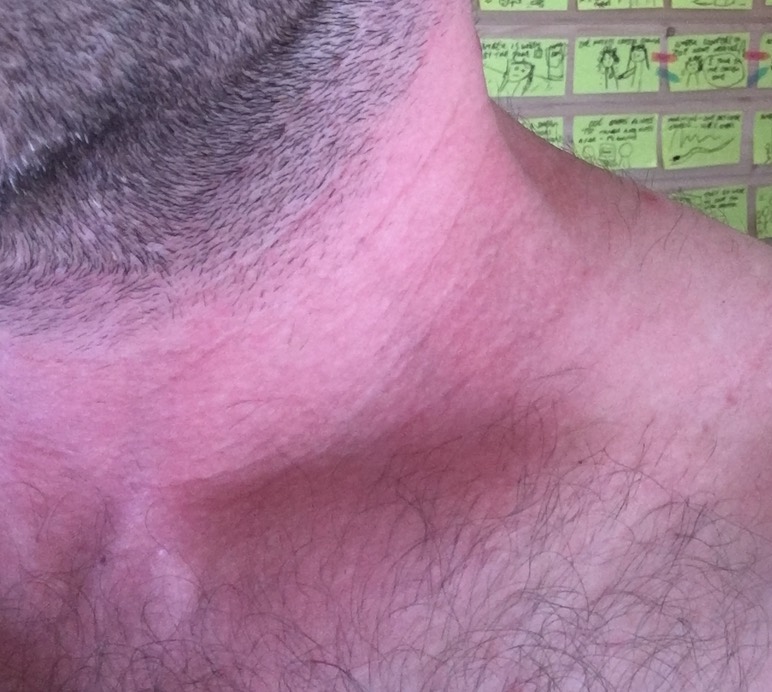
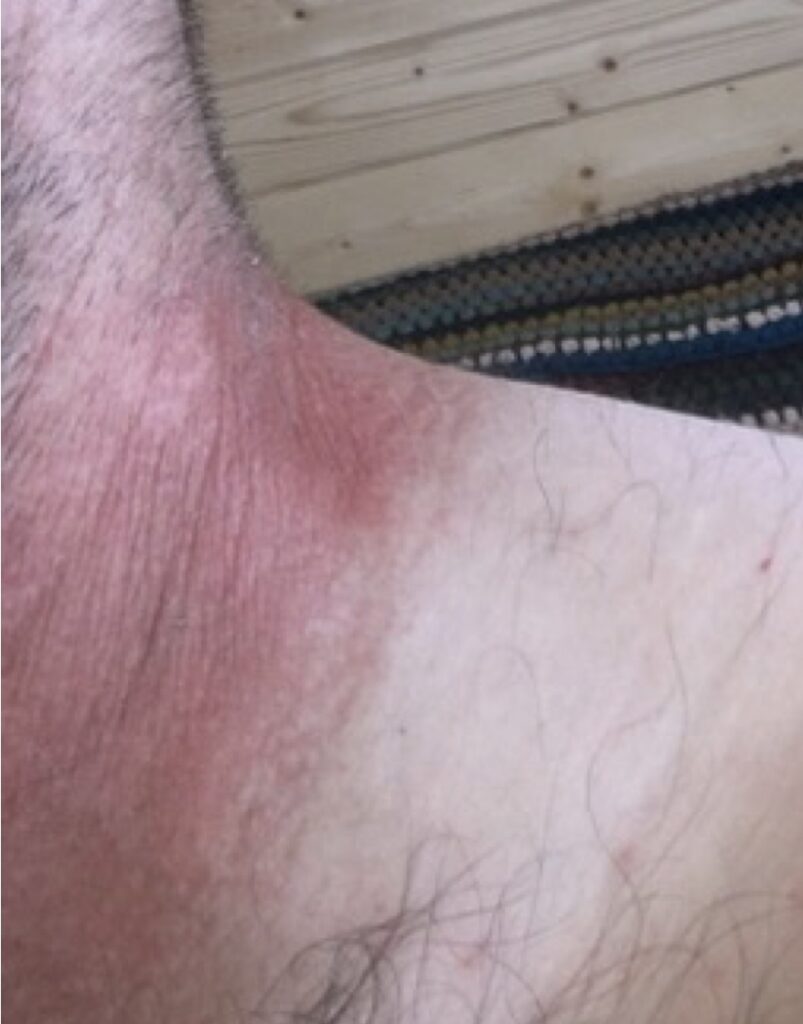
Hey, coffee drinker – what do you imagine when you picture the side effects of caffeine? An increased heart rate? A touch more energy, perhaps? A gnarly neck rash that persists like a proverbial red flag? Yeah, that last one was news to me too. As the owner of iDL and an avid coffee drinker myself, realising this unexpected “caffeine red face” was something of a disappointment.
How do you know when you’re putting too much caffeine into your system? This post serves as my account of my caffeine crashing journey. I’ll cover what I noticed, how I addressed the situation, and some other effects caffeine consumers should probably be looking out for.
Side Effects of Caffeine – The Backstory
The first thing to mention is that I’ve been something of a human guinea pig with caffeine and coffee for a good few years now. By around 2018, I’d become very particular with which extravagant and rare coffees I deemed as “good enough.”
Not only did I love the energy kick that caffeine would bring, but I also found immense joy in the ritual of that morning cup (or three). Choice, variety, the flavour – these were what made drinking coffee an essential in my book.
Just around the corner, however, those unexpected side effects of caffeine were lying in wait.
Can too Much Caffeine Cause Skin Rash? What I Noticed
Not to sound dramatic, but the culmination of my caffeine craze was a rollercoaster of pain and inconvenience that I hope never to repeat. I wouldn’t wish it on my worst enemy. It all started with a skin flare-up that came and went. Some days it would be bugging me constantly, others it would be pretty manageable.
I was spinning a lot of plates at the time – running this business, raising my children, countless meetings, and dealing with a laundry list of fires that needed putting out each day. I couldn’t commit the time to addressing what amounted to an annoying inconvenience. I picked up a cream that helped fairly well and just got used to sometimes having unhappy skin behind my ears.
All the while, my caffeine connoisseurship continued and the side effects of caffeine kept bubbling away.
Remember the hottest day of the year in the summer of 2022? Slathered in my cream and sunblock, I ran six miles that day. The exercise was a cinch, but it contributed to the perfect storm. The next day at the beach, the pain I felt on the skin of my neck can only be described as agony.
We’re talking eye-watering, excruciating pain here. This happened a second time during a sunny visit to a car show and I finally concluded that enough was enough. I simply had to get to the bottom of this…
Identifying the Effects Caffeine Was Causing
At the time, I wasn’t sure what the culprit of this pain might be. As mentioned above, I was under a fair bit of stress at the time. Bodies are wonderful, but they’re also weird. Undue pressure, a lack of sleep, nutrition – these could all have been causing what I later realised was “caffeine red face” (or “neck”) for that matter.
Before pinpointing the effects caffeine was causing, I stripped back anything in my diet that might be causing issues. I addressed my sleep and also monitored / methodically removed anything that I thought might be adding to my woes.
After a painstaking process of trial and error, all that was left was my excess of coffee drinking in the morning and a high-caffeine tea leaf that I enjoyed each afternoon.
All it took was five days. After five days of switching to a decaf brew, my skin felt better than it had for ages. The side effects of caffeine had subsided. So, can too much coffee cause skin rash? The answer, in my not-so-ill-informed opinion, is a resounding yes. While I can’t prove to you with a double-blind study that caffeine was the direct cause, I’m very confident that it was the main source of my issues.
Goodbye Caffeine Red Face, Hello Decaf Glory
So there we have it, the side effects of caffeine are much more than first meets the eye, at least in my personal experience. I’m not here to give medical advice, but I do think it’s important that I share my story. Reducing my caffeine intake cleared up far more than just a painful rash.
The other effects caffeine abstinence helped with included:
My energy levels became far more predictable with fewer spikes and crashes.
My irritability improved tonnes.
My sleep quality got a welcome boost too.
I don’t deal with heart palpitations any more.
Side Effects of Caffeine – Final Thoughts
So, am I saying that everyone everywhere should give up caffeine immediately? Obviously not. All I’m saying is that my excess consumption was causing me way more grief than I ever could have imagined. The side effects of caffeine can be surprising – that’s all I’m saying.
I Love coffee with a capital ‘L’ and whether your brew of choice is caffeinated or not, I think you should enjoy it in whatever way works for you. That said, if the time comes where you feel you might like to cut back, I Love Decaf offers a range that I couldn’t be prouder of.
There’s one thing I was unwilling to give up with my coffee – the ritual. Choosing different beans, preparing them just how I like them, and savouring every last sip are things that I don’t have to give up anymore. I’m passionate about iLoveDecaf as a brand and have spent countless hours perfecting what we offer here.
We use the Swiss Water Method to gently remove caffeine without compromising on flavour or quality.
Try it today; I sincerely believe you’ll be glad you did.
One of the things that puts newcomers off decaf coffee blends is the enigma surrounding their creation. What exactly are we dealing with here? Sinister synthesis? Chemical concoctions? Just how is decaf coffee made?
Call us biased – the name of our brand might be a dead giveaway here – but we think decaf coffee gets a bad rap. When sourced, decaffeinated, and brewed correctly, it can be every bit as delicious as its caffeinated counterpart. Don’t believe us?
In this post, we’ll be diving into the various methods of decaffeination. By cutting through the mystery surrounding decaffeination, our hope is that you’ll leave with a better understanding that the word “decaf” needn’t be a dirty one.
So, How is Decaf Coffee Made?
How long is a ball of string? (sorry!). There are several methods of decaffeination, each with their own merits and cons. We’ll explore the four primary decaffeination processes further down this page. Suffice it to say, however, that decaf coffee is usually made in one of three ways:
The beans are processed using solvents.
The beans are processed using carbon dioxide.
The beans are processed using pure, filtered water.
Which option you spring for as a consumer all comes down to your budget, taste preference, and where you are in the world. It’s worth noting at this juncture that not all methods of decaffeination are created equal. Some harsher approaches can tarnish the flavour of the much-loved bean. We explore this below.
Your Decaffeination Process for Coffee and its Consequences
So, you’re desperate to ride the decaf wagon and just want to pick up something now. While it can be tempting to just grab the first thing you find, it’s important to remember that there’s plenty of snake (or is it coffee?) oil out there. Even expensive brands can use methods of decaffeination that leave a bitter taste in the mouth, in more ways than one.
The reality is that this stuff isn’t rocket science, but it’s not basic arithmetic either. Let’s explore why.
Coffee is Complex
There’s a lot going on in most coffee beans. Up to 800 volatile and hundreds more non-volatile compounds make up the composition, aroma, and flavour of the world’s morning ritual. If you’re asking “how is decaf coffee made?”, it’s just as important to ask “which method did this company use to decaffeinate these beans?”.
Not as catchy, we get that, but we’re right. You want as few of these compounds to be affected by the decaffeination process as possible.
Decaffeinating Gently is a Challenge
It should come as no surprise that removing just one compound, caffeine, from a cacophony of thousands isn’t exactly a simple process. Imagine searching for a needle in a haystack… in a field of haystacks. While science has come a long way from the coffee shops of yore, it’s still harder than we might like to preserve coffee’s greatest asset – its taste.
Coffee is, Well, Delicious
Coffee’s caffeine kick is certainly one of its most popular features, but we think it’s trumped by its flavour. Call us snobs, but once you’ve tasted coffee that’s truly delicious, it’s very hard to go back.
It’s Frustratingly Subjective
What sends your tastebuds soaring might have someone else doubling over. While a harsher decaffeination process for coffee is likely to yield less palatable results, there’s no guarantee that you’ll like the taste of a ground just because other people have positive things to say about it.
It might take some trial and error before you know which kind of decaf coffee is right for you.
How is Decaf Coffee Made – The Methods of Decaffeination
We’ve waxed lyrical about why the method you choose matters. Let’s now explore the main options that exist today. So, how is decaf coffee made?
The C02 Method
Developed by the German chemist, Kurt Zosel, the C02 method of decaffeinating coffee beans is very popular. This is largely down to the fact that it’s cheap and very easy to scale. Zosel favoured carbon dioxide over solvents to eliminate caffeine from his coffee.
The result is a process that’s still widely used today. Got a huge volume of coffee that you need to decaffeinate for supermarket shelves? Simply pump in some liquid C02 and you’re sorted.
The larger compounds of coffee are mostly left behind by this impressive process, but some of the more delicate molecules can also be picked up by the injected C02. Once the liquid C02 returns to its gaseous state in this method, it can then be repressurised and used again countless times – not bad when it comes to sustainability and environmental impact!
Some consumers find that C02 coffee has an overly bitter taste that isn’t always desirable.
The C02 Method at a Glance:
Cheap.
Used to decaffeinate large quantities of coffee for supermarkets.
Effective, but not great for gourmet or exotic coffee.
Coffee beans are soaked in water before treatment.
They’re then sealed in a stainless steel container called an extraction vessel.
Liquid C02 is then injected into the vessel at very high pressures, absorbing the caffeine molecules.
The “caffeinated” C02 is now transferred to an “absorption chamber” where the pressure and caffeine are released.
The Direct-Solvent Process
Germany deserves props for being a huge pioneer of decaf developments; the German merchant, Ludwig Roselius, first used the direct-solvent decaffeination method in 1905. At the time, Roselius used a chemical called benzine to achieve his jitters-free brew. With hindsight, it’s easy to see why this wasn’t the best move – benzene is now known to be pretty toxic to humans.
These days, ethyl acetate and methylene chloride are used as alternatives. Both compounds are currently considered to be safe to humans. The direct-solvent method involves first steaming green beans and then soaking them in a solvent solution.
This absorbs the majority of the coffee’s caffeine content. Unfortunately, this all-too-heavy-handed approach also eliminates a bunch of the compounds that make coffee so delicious in the first place. After their soak, beans are steamed, dried, and roasted to eliminate any signs of the solvent.
Green coffee beans are steamed to open their pores.
They’re then soaked in a solvent which absorbs the caffeine.
However, this also absorbs a number of other delicious coffee compounds.
The Indirect-Solvent Process
Café HAG, a coffee brand developed by the very same Ludwig Roselius we discussed above, later developed a solvent decaffeination process that was indirect. Instead of soaking the beans directly in a solvent, the caffeine (and other compounds) are released into hot water and the beans are removed. The solvent is then added to work its magic on the caffeine within.
Once the solvent has been safely removed from this solution, the beans are added back to reabsorb some of their vital flavour compounds. While the results of this method can be hit and miss for some, it’s certainly a better option than a direct method if the flavour of your coffee matters to you.
The Indirect-Solvent Method at a Glance:
Preserves more coffee flavour.
Similarly cheap and effective.
Similar to the direct-solvent process, except the green beans are soaked in hot water first.
The beans are then removed from the water and the solvent is added.
The solvent is then removed and the beans added back, helping them reabsorb some flavour.
4th Time’s the Charm – The Swiss Water Method
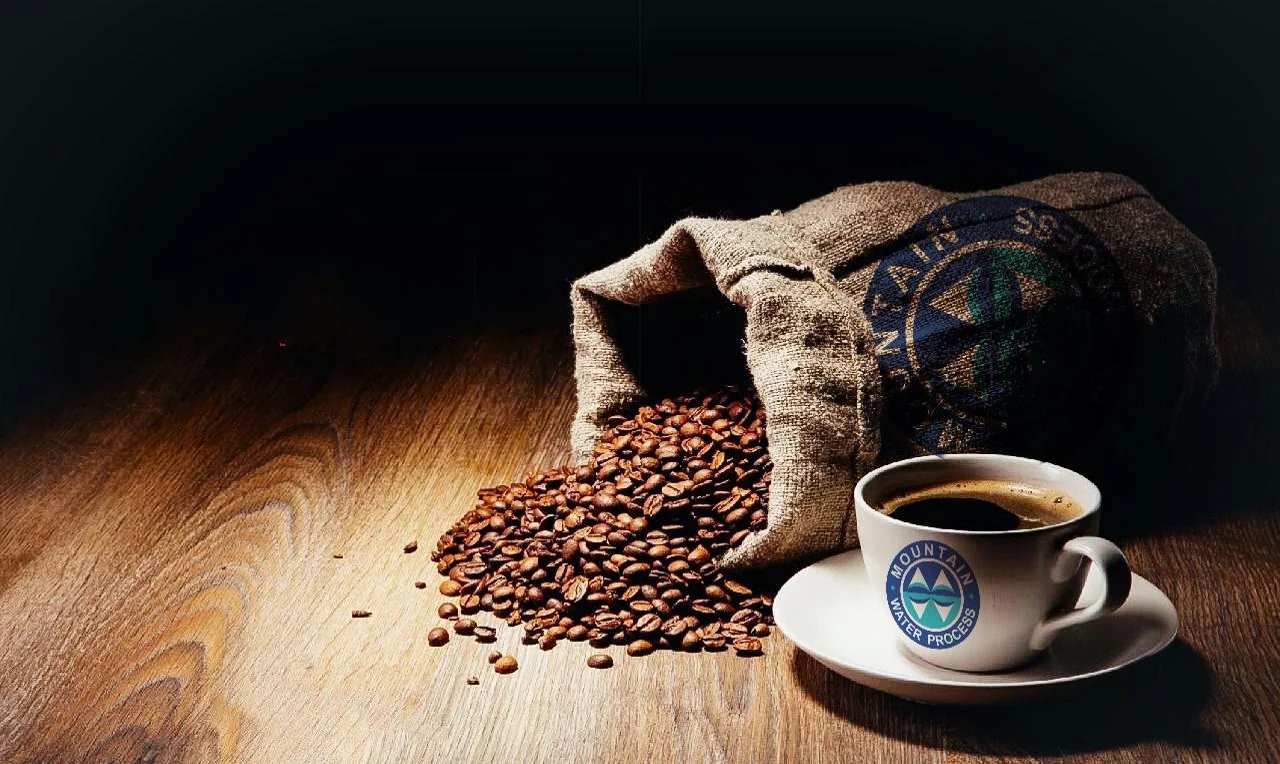
No bonus points for guessing where this method of decaffeination was invented! The Swiss Water method or the Mountain Water method involves steps that are similar to some of the approaches described above. The difference here, however, is that significantly more flavour compounds are reabsorbed into the coffee beans.
When done properly, Swiss Water decaffeinated beans can be near indistinguishable from “normal” coffee. To us, it’s one of the best answers to the question “how is decaf coffee made?”
The process looks a little something like this:
Take high-quality green coffee beans and soak them in hot water.
Allow the caffeine and other compounds to release into the water.
Pass this water through an ultra-fine filter that removes caffeine and little else (small amounts of other compounds will inevitably be captured too but at much smaller quantities).
You now have a concentrated coffee extract that’s full to the brim with flavour and low on caffeine (0.01%).
Use this delicious coffee extract to decaffeinate a new batch of green coffee beans.
Because your water is already concentrated with flavour compounds, only caffeine is removed from these new beans.
This last step is so important in Swiss water decaffeination. Significantly more flavour is preserved in every single bean. It’s chemical-free, super safe, and has been producing jaw-droppingly delicious coffee for years.
The Swiss Water Method at a Glance:
More time-consuming.
Can be more expensive.
Preserves the flavour of coffee much more effectively.
Uses just water, heat, carbon filters, and time.
Your Answer to “How is Decaf Coffee Made?”
How is decaf coffee made?
Some of the I Love Decaf range uses only the finest beans and the Swiss water or the Mountain Water method to gently decaffeinate your morning brew. We appreciate that we’re not the only decaf option out there, but we truly believe we’re head and shoulders above the rest.
We take the time needed to ensure that every single batch maintains the same standards and delicious flavour. Try it for yourself today – you won’t regret it.
The rich, warm aroma of a freshly brewed cup of coffee is the stuff of legend. We’ve been drinking it in some form or another since as far back as the 15th century. Humanity seems to have reached a consensus – coffee is one of life’s simple joys. Why, then, does this rosy atmosphere vanish as soon as you mention a word most reviled by coffee snobs everywhere – “decaf”. What is decaf coffee and why do so many people turn their noses up at it?
On this page, we’ll be diving into the decaf coffee question. We’ll cover what it is, why it’s brilliant, and how to get the perfect brew at home.
So, What is Decaf Coffee Anyway?
So what are you sipping when you raise a warm cup of decaf to your lips? Denatured sludge? Some sort of chemically constructed concoction? On the contrary – things are far less gruesome than first meet the eye.
Decaf coffee is made from regular coffee beans that have been through a process that removes the majority of its caffeine, the adenosine receptor antagonist that gives coffee its characteristic “energy kick”.
“How is decaf coffee made?” we hear you ask. Frustratingly enough, the answer is “it depends”. A handful of huge coffee companies own genetically modified plants that naturally grow without caffeine. For many decaf providers, however, regular coffee beans are taken through a process that:
Soaks the beans when green to make their caffeine content soluble.
Washes or otherwise filters the caffeine from the resulting solution.
This can be with carbon filters, natural compounds, or other methods. Some brewers also use a CO2 method which naturally removes the majority of caffeine from the beans. Depending on the specific method used, some subtle-yet-unwanted flavours can be left behind.
The Swiss Water Method is used by more premium brands to remove just the caffeine, leaving every other aspect of the coffee untouched. The result is a coffee that’s practically indistinguishable in terms of taste and texture from its more jitters-inducing counterpart.
Ignore the snobs – decaf can be absolutely delicious.
How Much Caffeine is Decaf Coffee?
What is decaf coffee?
People are often pleasantly surprised when they learn just how delicious decaf coffee can be. One thing to note, though, is that there’s still a small amount of caffeine left behind, even with super decaffeinated varieties.
You’re unlikely to get heart palpitations here, don’t worry – it’s just worth keeping in mind. Most decaffeination processes remove between 97 and 99% of active caffeine.
This means a decaf cup of coffee contains between 1-2 mg of caffeine VS coffee’s typical 95-110 mg.
Is Decaf Coffee Good for You?
So, we’ve asked ‘what is decaf coffee’, but is decaf coffee healthy? In short, yes! The science behind coffee’s health profile is much like the world’s rich cafe culture – it’s evolving all the time. Suffice it to say, however, that decaf coffee contains most of the same compounds that make “regular” coffee so revered.
These include:
Chlorogenic acids.
Trigonelline.
Melanoidins.
Diterpenes.
Other antioxidants.
These compounds are well established as offering a wealth of different health benefits.
If you want the antioxidant effects without the jitters, decaf can be a great way to go.
Decaf Coffee Pros
We’re not here to demonise caffeine. For many, it can be a great way to kickstart the day and feel a little more energised. It would be disingenuous, however, to overlook the negative impacts that caffeine consumption can have.
Many of us are familiar with coffee’s delicious flavour but no longer want to deal with the kick that it can bring (who decided that being kicked was nice, anyway?). It’s a great way to unwind and there’s no shame in that.
Decaf coffee’s benefits include:
A similar antioxidant profile to caffeinated coffee.
An excellent “transitioning tool” for those looking to reduce caffeine intake.
Much kinder to the stomach – caffeine stimulates the gut in ways that many people find unpleasant.
A great way to unwind.
Fewer jitters.
Helps you improve your sleep.
Delicious if you find the right brand.
Try Decaf the Right Way Today
We’re not just decaf aficionados – we’re absolutely fanatical about the perfect decaf brew. We only ever use the Swiss Water Method for an untarnished, perfect brew every single time.
Coffee is a very popular drink. It has an air of sophistication, a modish and fashionable image and has even been on the leading edge of a few cultural phenomena over the years.
Decaf’s reputation is a negative one. In part that’s down to its history as a less-than satisfying drink, a reputation forged in the coffee marketing of yore, when the most significant standout property of coffee was its caffeine content. Even though coffee is now celebrated in terms of its subtleties of taste and aroma, the perceived disappointment of not getting ‘a fix’ of brain jolt still seems to cast a long shadow over decaf.
The negativity around decaf also has its roots in long-gone decaffeination processes that often included some fairly dodgy chemicals. Decaffeination is now a safe process – some of the methods have even achieved organic standards – but the reputational damage lingers. Even now that doctors are recommending some of their patients to switch to decaf for health benefits, it’s still seen as a loss, or worse, a kind of medical punishment.
The biggest obstacle to decaf’s healthy redemption is that some stuck-in-the-past coffee purists and anti-decaf snobs seem to think that the well-known benefits of coffee drinking are all down to the caffeine. That’s simply not true. The same helpful compounds are found in both regular and decaf coffee.
By going decaf, you get all the benefits (and can drink more) of your favourite flavours without shaking or shuddering like a malfunctioning, off-balance spin dryer.
Decaf for Health: Learn the science that proves the decaf claims
1. Decaf coffee may reduce the risk of Type 2 Diabetes
It has long been believed that coffee can cause a reduction in the risk of type 2 diabetes, and many people advocate for coffee over decaf because of this. However, recent studies show that there are other explanations for the positive effects of coffee than the caffeine. Decaf coffee can have positive effects on Type 2 Diabetes as well, without experiencing the negative results of caffeine. It is now known that decaf coffee can be just as beneficial as regular coffee without all the risks that go with it.
2. Going decaf can have positive effects on sleep, health and mood
The first thing you might reach for in the morning is coffee to wake you up. However, this can have a negative effect on your sleep schedule because caffeine is a powerful stimulant. By introducing it into your body as soon as you wake up just reinforces dependency. Cutting back or eliminating caffeine altogether will improve sleep – and that’s really the only sustainable way of improving your morning energy levels.
Caffeine may also exacerbate symptoms of those who suffer from panic attacks or long-term anxiety disorders.
3. Decaf has nearly the same antioxidant levels as regular
Decaf has almost the same amount of antioxidant compounds, but with virtually none of the caffeine remaining. If you have been drinking caffeine for health reasons, you can switch to decaf without any consequence.
4. Decaf is less acidic and can reduce heartburn and reflux
Coffee is both acidic and often caffeinated, making it irritating for sufferers of chronic heartburn and gastroesophageal reflux disease – or GERD. A major benefit of decaffeinated coffee is its lower acidity, thanks to the decaffeination process. For those who suffer from chronic heartburn, switching to decaf can be a way of lowering their daily intake of acidic foods and limiting their reflux and other symptoms.
5. Going Decaf Can Lower your Risk of Cardiovascular Disease
Decaf coffee can reduce your risk of cardiovascular disease if you have a family history of heart or circulation issues. Decaf has fewer stimulant components than that mug of regular Joe and appears to reduce the risk of developing these sorts of conditions.
Decaffeinated coffee has many health benefits
People who drink decaf coffee are often marginalized for doing so, with caffeine snobs saying it has no point or is full of chemicals. The world’s infatuation with caffeine means that there’s much less decaf coffee and tea sold, so you don’t get much of a choice of the good decaf in the shops or supermarket. (And that’s why we started I Love Decaf.)
Coffee is an amazing and healthy drink – caffeinated or not, but only by removing the caffeine does it become even healthier. Decaf coffee is healthy. It has many benefits, and for those with conditions triggered or worsened by caffeine intake (e.g. headaches, sleep disorders, anxiety), it has fewer drawbacks.
Even if you do not suffer from the effects of caffeine, you are likely to improve your health, mood and energy levels by canning the caffeine. If only because – without all those drawbacks – you will be free to drink much more of it.
Why the best decaf coffee is the only one you want to drink.
We don’t need to tell you that coffee is one of the greatest and most popular drinks in the world. In fact, in the UK we drink almost 100 million cups a day. A day! And you wonder why the bathroom at work is so busy?
Decaf coffee for aficionados
For seasoned cofficianados, the positive effects of coffee are well known. Coffee, they say, helps you concentrate, provides you with a boost of energy, and may also increase your lifespan. They are talking about regular coffee, but most of it applies to decaf too.
There’s plenty of evidence, by the way, that the energy boost and concentration that caffeine supposedly provides only really applies if you are craving caffeine in the first place. For purposes of health, decaf coffee supplies all the antioxidants and phenols that its grown up addictive brother gives you, without needing another fix in a few hours.
Decaf coffee: no great shakes
You know that drinking too much coffee can get you jittery, give you headaches, anxiety or make you nauseous. Four cups a day of regular Joe could make you unable to walk around with a cup and saucer without sounding like a crockery cupboard in an earthquake zone.
Guess what? You can have your favourite coffee with much less caffeine – up to 99% less – and never notice the difference in taste, because decaf coffee has come a long, long way in the last few years.
Decaf coffee: the benefits of cutting caffeine
You should always head to a doctor if you want specific medical advice about caffeine, but ff you want to all but eliminate caffeine from your life, it’s time to get yourself a decaf coffee.
There are many different options, but coffee lovers are often disappointed switching from their favourite brand to the decaf version of their favourite brand. At I Love Decaf, we only sell decaf coffee and tea and have a variety of decaffeinated products to choose from. As far as decaf coffee goes, we sell it in every conceivable grind from whole beans to fine ground.
Ground Zero: the secret of I Love Decaf coffee
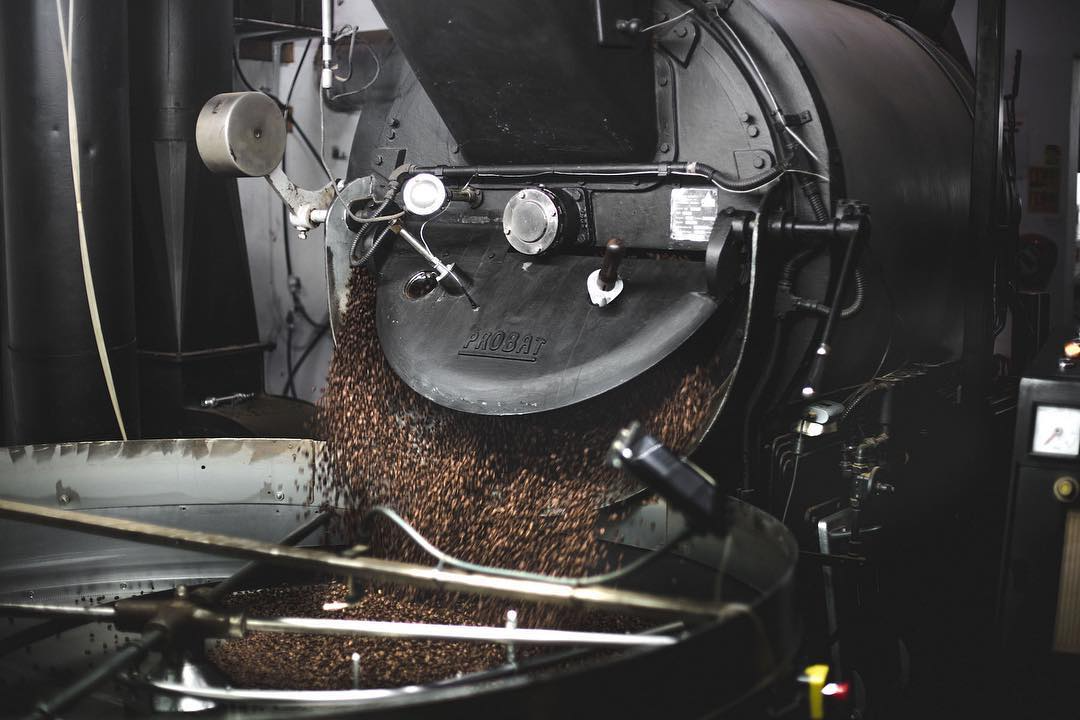
Remember, we only sell decaf – our roasters start from first principles and get the very best from our beans. Our roasters believe, and we agree, that I Love Decaf coffee is among the best coffees – caf or decaf you can get. We’ve done the grind for you, so to speak, so now make some quality coffee with our best decaf coffee.