Decaffeinated coffee has become increasingly popular in recent years, with many people seeking out the drink for its potential health benefits. It really turns out that if you love decaf, it loves you back.
While it is true that caffeine, the active ingredient in coffee, can have some negative side effects, decaffeinated coffee can still offer many of the same benefits as regular coffee, without the added jitters and potential for addiction. Here are just a few of the benefits of going decaf.
1. Heart health
Regular coffee consumption has been linked to a lower risk of heart disease and stroke. Decaffeinated coffee may offer the same benefits, as it still contains antioxidants and other beneficial compounds
2. Improved digestion
Coffee, both regular and decaffeinated, can stimulate the production of stomach acid, which can aid in digestion. It can also help to relieve constipation, making it a good choice for those who suffer from digestive issues.
3. Lower risk of certain cancers
Some studies have shown that coffee consumption, including decaffeinated coffee, may be associated with a lower risk of certain types of cancer, such as liver and colorectal cancer.
4. Improved mental function
Caffeine is well-known for its ability to improve alertness and focus, but decaffeinated coffee can still provide these benefits. It contains other compounds, such as chlorogenic acid, that may help to improve brain function.
5. Weight loss
Some research suggests that coffee, including decaffeinated varieties, may help to boost metabolism and increase fat burning, which could aid in weight loss efforts.
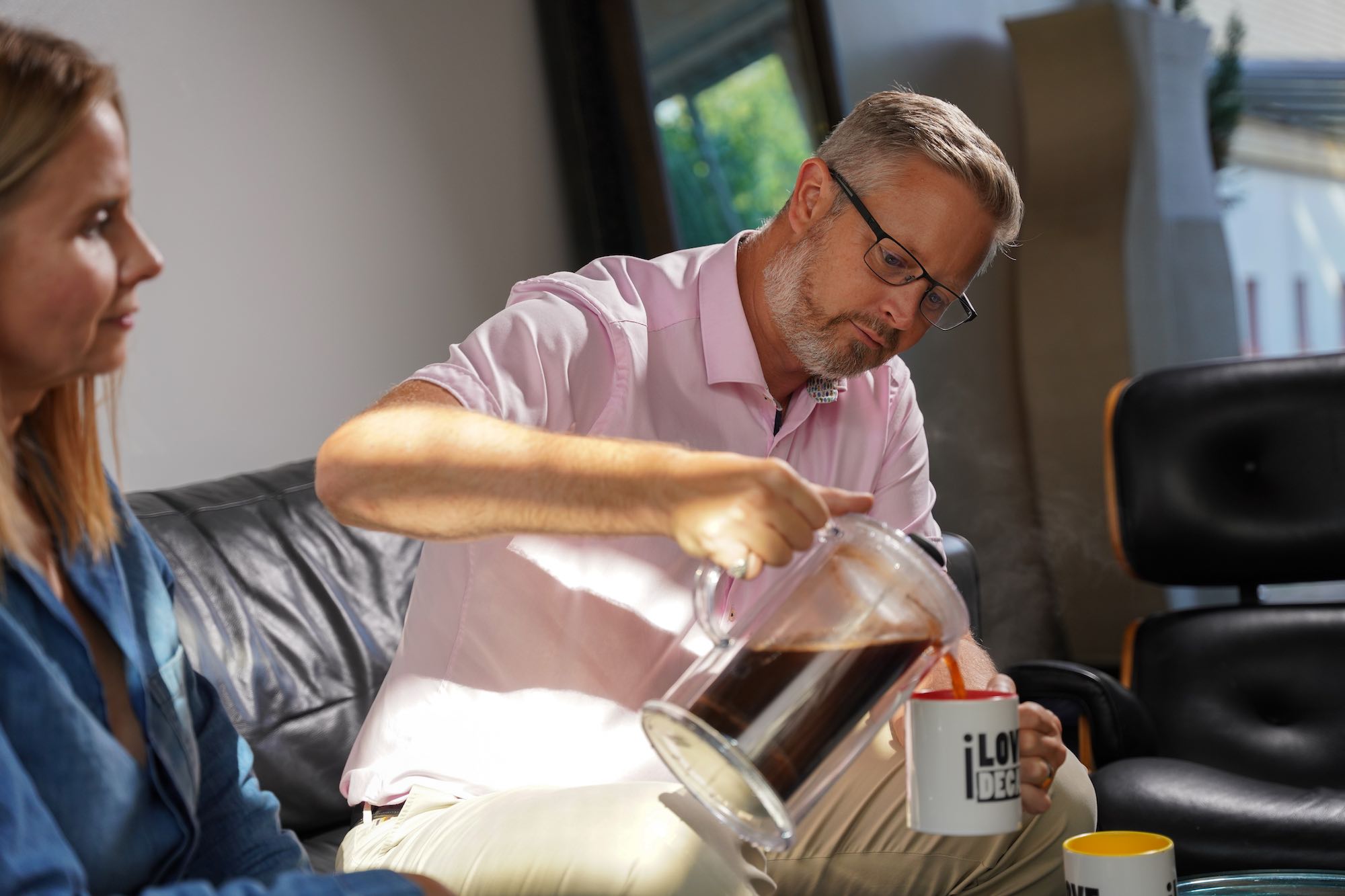
Of course, it is important to note that decaffeinated coffee is not completely caffeine-free, as it may still contain small amounts of the stimulant. However, for those who are sensitive to caffeine or looking to reduce their intake, decaffeinated coffee can be a good choice. It is also worth noting that adding cream, sugar, and other additives can obviously negate some of the potential health benefits of coffee, so it is best to consume it black or with a small amount of milk or plant-based milk.
If you believe all the moodily lit ads – the hessian sacks, mountain scenery and middle-aged men in white suits sieving beans through their hands – coffee is about so much more than roasted and ground beans soaked in hot water and served in a cup. You would be right, but not in the way those ads would have you believe.
So how does proper coffee differ from the insipid gack peddled by multinationals with big ad budgets? The taste? Yes. The aroma? Of course. The absence of pretention? Naturellement.
And with espresso, there’s the crema.
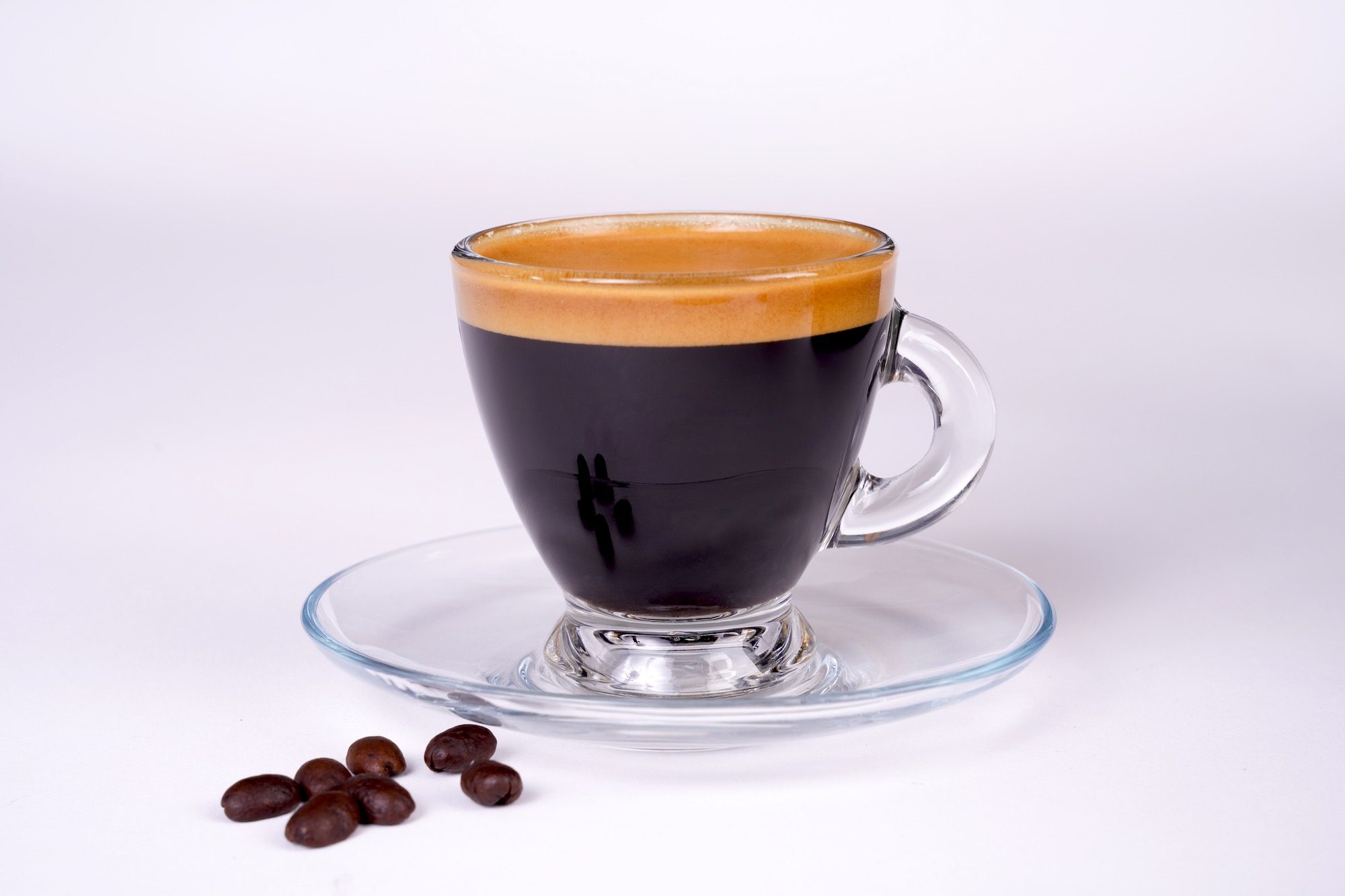
With espresso – the doyen of coffee – a lot rides on the crema. Italian for ‘cream’, the crema is a layer of dense foam that forms on top of espresso coffee. This velvety layer – actually a suspension of microscopic particles of coffee oils – tells you that the coffee has real body and texture for the flavour to emerge from. It’s a sign of espresso quality.
A joke. How can you tell when a plane full of coffee snobs lands at an airport? It’s when you can still hear the whining when they turn off the engines.
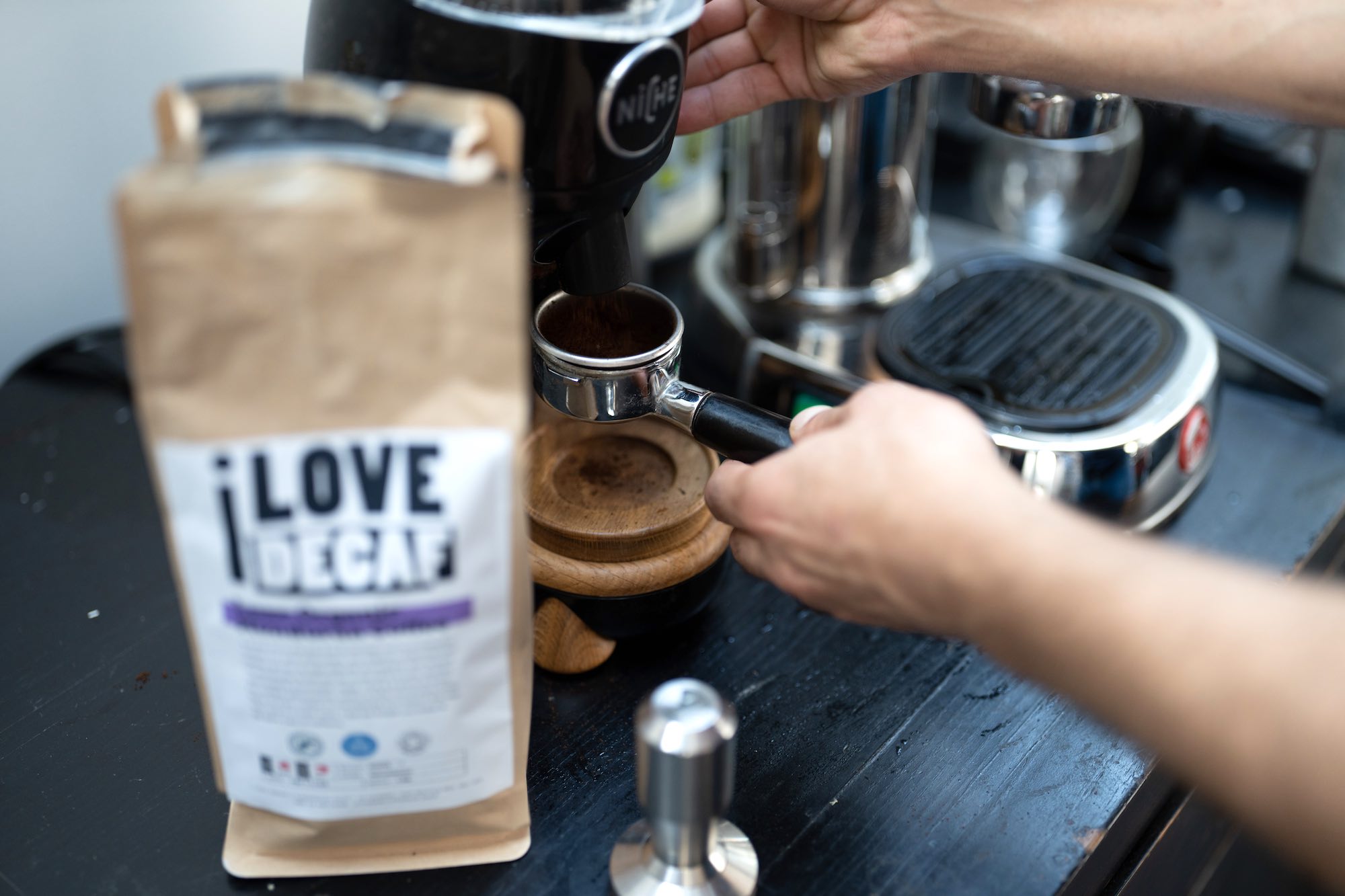
There is a lot of whining from caffeine snobs about decaf, so we thought we’d put it to the test. Can we get a full-bodied, tasty espresso from our Orizaba Mountain Water Decaf? Will it have the full aroma and a healthy crema?
Who could we ask?
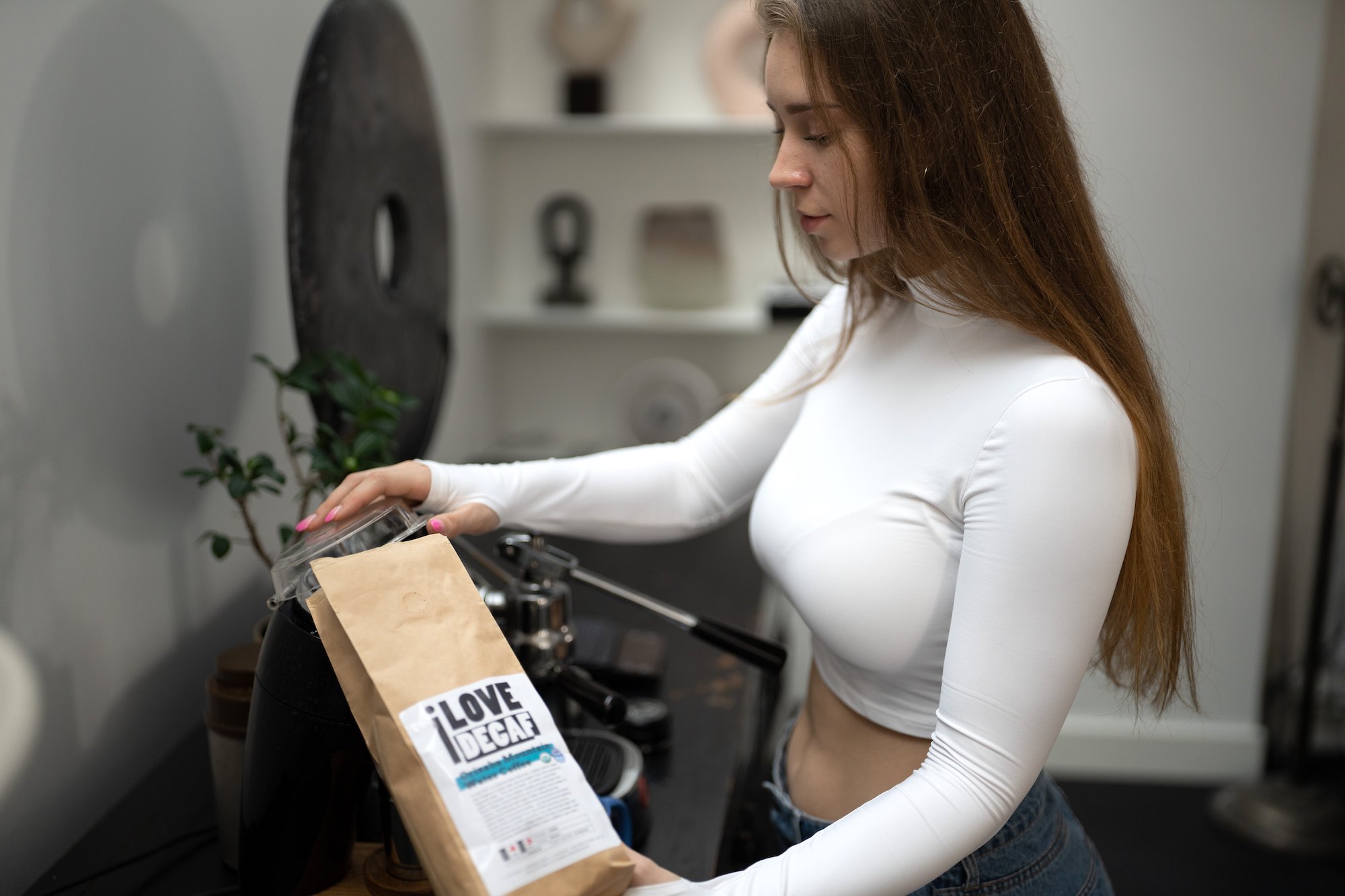
To say our photographer, Yu-Kuang Chou, is serious about his coffee is a bit under-brewed, he is more of a coffee nut who doesn’t mess around, but we knew he had an open mind. So, we lured him to the studio to take some shots of our, errrr, shots and before we knew it, the aroma overcame him, and he was carrying a bag back to his coffee lab.
His verdict?
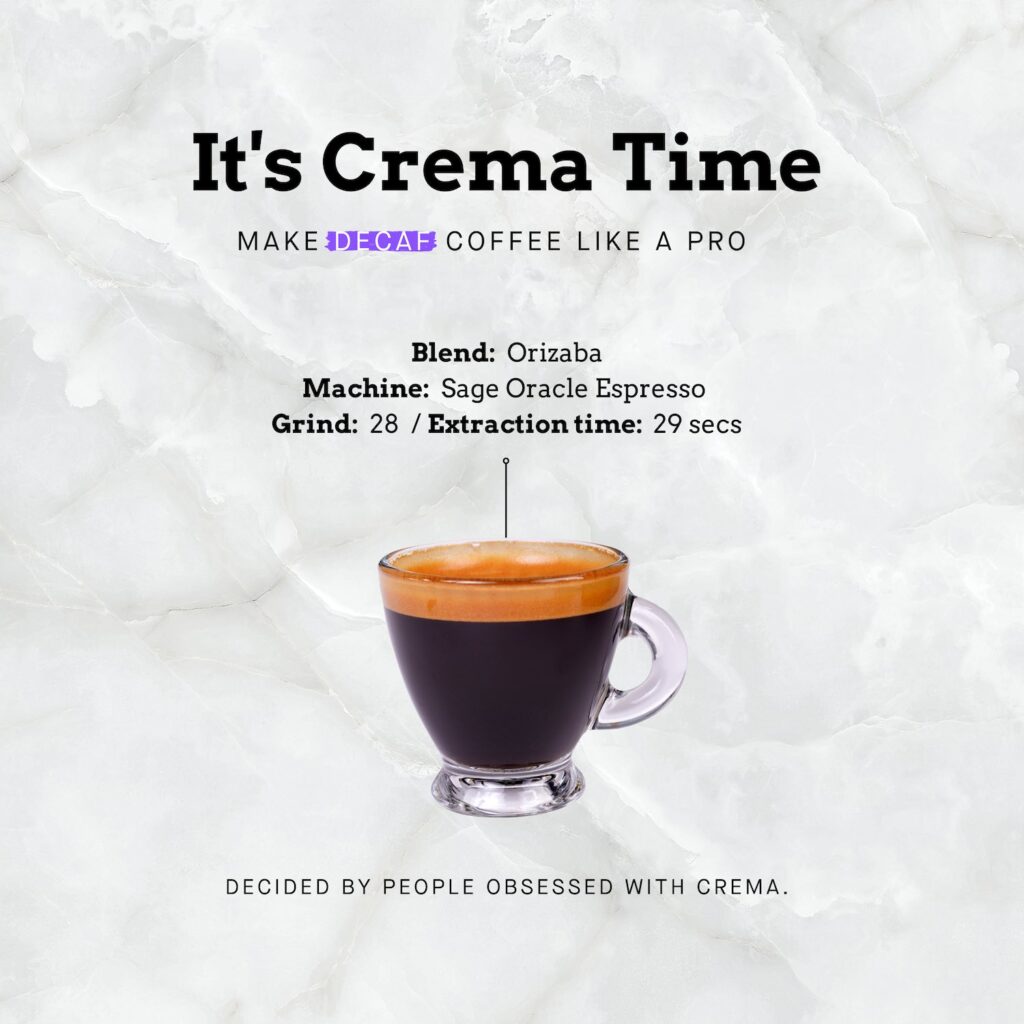
“The beans gave a lot of crema during the extraction in my Oracle espresso machine.
The flavour palate is quite full bodied and dark. It had an unexpected deep richness to it, which I didn’t expect from a decaf coffee.
I could tell it didn’t have caffeine but I didn’t mind as the flavour was right.”
Yu-Kuang Chou – I Love Decaf Photographer
Like Yu-Kuang Chou, challenge the idea that you can’t get flavour, aroma and crema from a decaf espresso like you challenge the idea that all the world’s coffee is traded by middle-aged men in white suits and Panama hats on remote mountain tops. All of that is a fairy tale; you’ll find your fantasy favourite at I Love Decaf.
We all know that coffee is packed with antioxidants and can help improve focus and concentration. But what about decaf coffee? Is it worth drinking, or is it just a waste of time and energy?
Introduction
In this article, we’ll explore 5 reasons why decaf coffee is exactly the drink you need. From its health benefits to its great taste and aroma and its ability to improve focus and concentration, decaf coffee has a lot to offer!
1. Decaf coffee is lower in acidity.
Decaf coffee is often thought of as being less tasty and weaker than regular coffee. But decaf coffee actually has a lower acidity than regular coffee. This makes it easier on the stomach for you if you have a sensitive stomach or want to try to avoid heartburn.
That’s a plus one for decaf coffee, but doesn’t regular coffee have quite a few health benefits? Does decaffeination take any of those away? The good news is that decaf coffee still has those self-same health benefits as a cup of regular coffee. Decaf is still a great source of antioxidants and can also help to improve brain function.
I Love Decaf’s decaf coffees are roasted with the same skill and ground with the same care you’d exercise for regular beans, so our decaf coffee can be just as tasty and enjoyable as regular coffee. So, if you are looking for a way to enjoy the benefits of coffee without the caffeine, decaf coffee is a great option.
2. Decaf coffee has the same health benefits as regular coffee.
There are many reasons to switch to decaf coffee, even if you’re not trying to cut down on caffeine. As we already mentioned, decaf coffee has the same health benefits as regular coffee, including a reduced risk of diabetes, cancer, and Alzheimer’s disease.
Decaf coffee is also just as effective as regular coffee at improving mood and reducing stress levels. So if you’re looking for a way to relax and improve your mood, decaf coffee is a great choice.
And if you’re worried about the taste of decaf coffee, there’s no need to worry. With I Love Decaf’s brewing methods, decaf coffee can be just as full of flavour as regular coffee. So if you’re looking for a delicious and healthy beverage, decaf coffee, again, is the perfect choice.
3. Decaf coffee is a good source of antioxidants.
I Love Decaf’s decaf coffee is a brilliant source of antioxidants, which are important for many reasons. Antioxidants help to protect your cells from damage, and they also have been linked to lower risks of some chronic diseases, such as heart disease and cancer. Decaf coffee also contains other beneficial nutrients, such as vitamins and minerals.
Decaf coffee is available in many different roasts and grinds
There are many different types of decaf coffee available on I Love Decaf. You can find decaf coffee as whole beans or a variety of grinds tailor-made to different kinds of coffee-masking equipment and in medium, and dark roasts. This means that you can find a decaf coffee that suits your taste preferences.
If you find that regular coffee makes you feel jittery or anxious, decaf coffee is the way to go. It has the same flavour and aroma as regular coffee, but without the caffeine. This means that you can enjoy your coffee without having to worry about the side effects of caffeine.
Decaf coffee is available in many different roasts and grinds, so there’s bound to be one that suits your taste. If you’re looking for a decaf coffee that tastes great and doesn’t sacrifice flavour, try one of these.
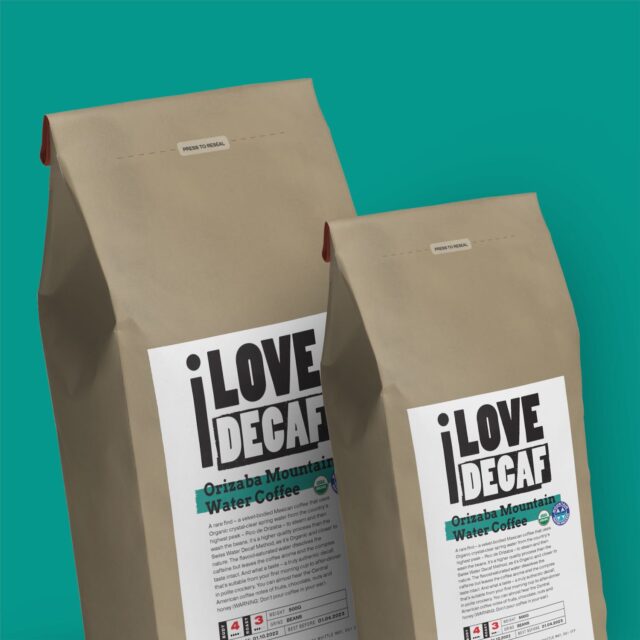
Orizaba Mountain Coffee (Swiss Water Style)
A full bodied with well-developed texture and sweetness, this exceptional Mexican coffee uses the crystal-clear spring water from the country’s highest mountain – Pico de Orizaba – to first steam the green coffee beans, then wash them free of caffeine.
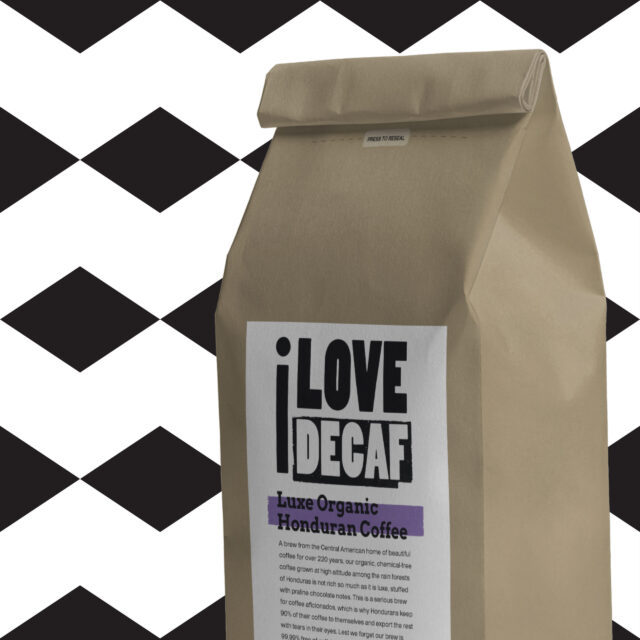
Luxe Organic Swiss Water Honduran Decaf Coffee
Medium sweet, nutty roast with a fuller body, this brew from the Central American home of beautiful coffee is organic, Fairtrade and decaffeinated usibng the chemical-free Swiss Water decaf method. The coffee itself is grown at high altitude in the rain forests of Honduras.
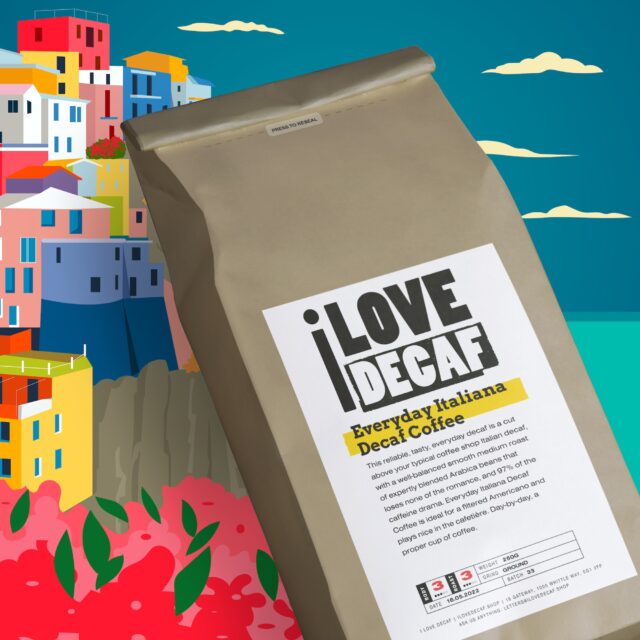
Happy Medium Roasted Decaf Coffee and Everyday Italiana Decaf Coffee
Our two great everyday decaf coffee blends are perfect brews from first thing to late night (remember: they won’t keep you awake).
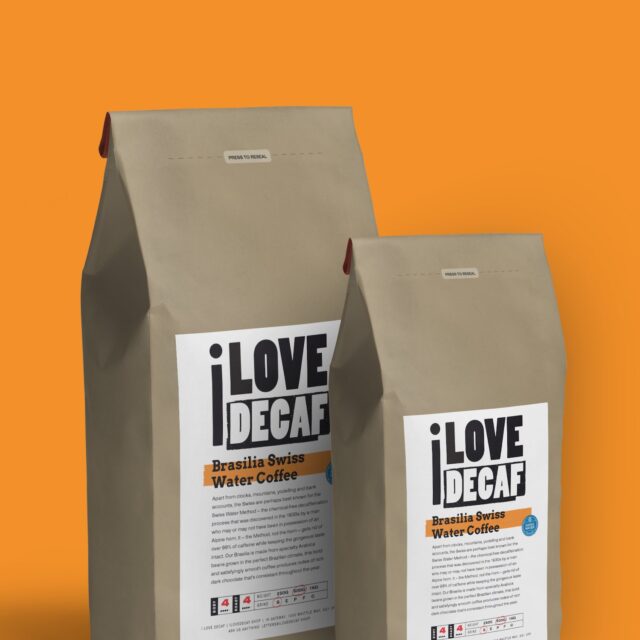
Brasilia Swiss Water Decaf Coffee
Our Swiss Water Brazilian is made from the best arabica beans grown in the perfect climate. A bold and satisfyingly smooth coffee with notes of rich dark chocolate.
Time and energy
While some people might think decaf coffee is a waste of time and energy, there are actually quite a few reasons to give it a try. For one, decaf coffee still has many of the same health benefits as regular coffee, so you can enjoy those without having to worry about the caffeine jitters. Additionally, decaf coffee is more forgiving on your stomach and won’t keep you up at night the way regular coffee can. And lastly, with the right preparation, decaf coffee can be just as delicious as its caffeinated counterpart. So if you’re looking to cut back on your caffeine intake or simply want to mix things up, be sure to give I Love Decaf’s decaf coffee a chance!
Most people don’t know that organic decaf coffee beans are the best to grind and brew with. If you are not convinced, then buckle-up as we will be exploring why they are so good and what makes them different from other coffee beans.
Why Organic Decaf Coffee Beans Are The Best
Caffeine is one of the most consumed drugs in the world. It’s responsible for giving us that quick burst of energy we need to get through the morning, and for keeping us alert during the afternoon slump. But what are the ramifications of caffeine consumption?
One of the most common side effects of caffeine consumption is anxiety. In fact, research has shown that people who consume caffeine regularly are at a greater risk of developing anxiety disorders than those who don’t. And while it’s not clear why this is, it may have to do with the fact that caffeine disrupts the normal balance of neurotransmitters in the brain.
Another downside to caffeine is its impact on sleep. Too much caffeine can keep you up at night, leading to restless nights and a lack of quality sleep. And if you’re struggling to get a good night’s sleep, it’s not only going to affect your health – it’ll also affect your mood and productivity.
So why are organic decaf coffee beans better than regular decaf?
Organic decaf coffee beans are made from beans that have been organically grown without the use of pesticides or herbicides. This means that they’re free from chemicals that are harmful to human health. By comparison, regular decaf beans are grown in massive quantities where the beans are sprayed with herbicides and pesticides.
These chemicals can be harmful, impacting the immune, nervous and endocrine systems. These chemicals have also been linked to cancers and organ damage (such as liver damage).
Organic decaf coffee beans are decaffeinated without the use of chemical solvents such as ethylene glycol or methylene chloride. This means that it’s free from harsh chemicals that can cause inflammation and damage cell membranes – which is why organic decaf may taste better than regular decaf. Now you know all of these benefits of buying organic coffee, there’s just one thing left: how to find great brands (fortunately, you are in the right place).
The Benefits of Organic Decaf Coffee Beans
The health benefits of organic decaf coffee beans are undeniable. Not only are organic beans more environmentally friendly, but they also tend to have higher levels of antioxidants, which can improve overall health. Additionally, organic coffee is often lower in caffeine than conventionally grown coffee. This means that you can enjoy a cup of joe without feeling jittery or overwhelmed. Finally, organic coffee often has a more complex flavor profile than regular coffee, making it the perfect choice for those who are looking for a unique and pleasing cup of java.
Organic Decaf Coffee Beans vs Organic Ground
As soon as you grind your organic decaf coffee beans – like all beans – you start the clock on losing flavour. Buying the beans and a grinder makes your coffee even fresher,
Tips On Buying and Brewing the Perfect Cup
Brewing organic decaf coffee beans can be tricky, but it’s well worth it. Here are a few tips to help you get the perfect cup:
Choose beans that are light and mild. Acidity is key in making a good cup of coffee.
Be sure to grind your beans just before brewing. Too much ground coffee will make your drink bitter and over-caffeinated.
Try using a French press or pour-over method to get the most flavor out of your beans. Both methods allow more contact with the coffee grounds, which results in a more intense flavour.
Finally, remember that temperature is key when brewing organic decaf. Brewing at too high or low of a temperature can result in poor taste or sourness. Experiment to find the perfect temperature for your taste preference.
Alternatives to Organic Decaf Coffee Beans
If you’re looking for organic decaf coffee beans, you should consider opting for beans that are certified organic. According to The Organic Trade Association, certified organic coffees are made from beans that have been grown without the use of synthetic pesticides, herbicides or chemical fertilizers. In addition, certified organic coffees are not processed with irradiation, which is a process that uses high levels of radiation to kill bacteria. An end-to-end organic product will not have been decaffeinated with solvents or come into contact with other chemicals either. Swiss Water Process and Mountain Water process are likely to have been used in proper organic decaf coffee beans. Consequently, certified organic decaf coffee is likely to be much more environmentally friendly than non-organic decaf coffee.
We think
If you’re looking for a better cup of coffee, organic decaf coffee beans are the way to go. Not only do they have lower levels of harmful chemicals, but they also taste better than conventionally processed beans. If you’re on the lookout for an environmentally friendly option, organic decaf coffee beans are the way to go.
OK: A taste retest of two similar-sounding coffees on an over-warm day at the nub end of a July heatwave? Are you kidding me?
It’s one of the privileges of being a minion of a coffee company that you get to try out the goods. But you know what happens, right? You pour cup after cup of the Everyday Italiana Decaf and it’s so good it becomes the first, last and always cup of the day. A satisfying, amenable, comfy coffee that weaves itself into the afternoon as much as it unzipped the morning.
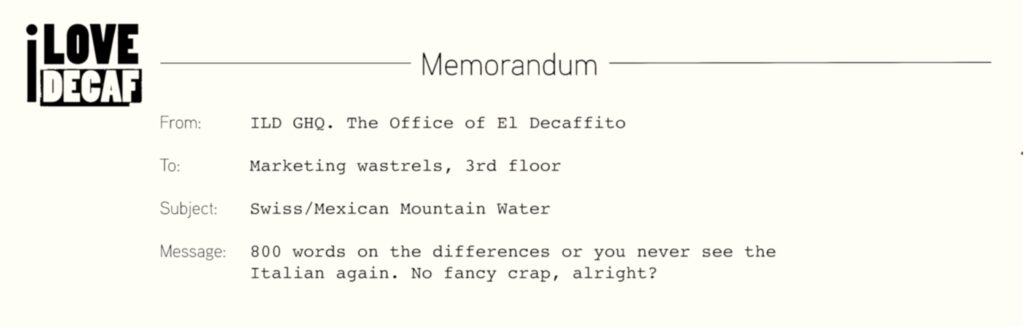
But what’s this? Word comes down from the top, El DeCaffito himself, that customers have asked him about our Brasilia Swiss Water and Orizaba Mountain Water Decafs. What are the differences? Which tastes nicest when?
Your stash of Everyday Italiana Decaf is confiscated, and you are ordered on an expedition of discovery. To scale and survey the rainforests of Brazil, the mountain scenery of Switzerland and Mexico and come back with an explorer’s account of your findings. For Decaf. For humanity.
Actually, the memo looked like this.
It’s pointless telling you that drinking coffee for a living holds any high drama or jeopardy, so we’ll take off our hiking boots, straw Panamas, put down the machetes and get on with it.
Brasilia Swiss Water Decaf vs Orizaba Mountain Water Decaf: The rules.
We hand-ground both Brasilia Swiss Water Decaf beans and Orizaba Mountain Water Decaf Coffee beans in two separate grinds. A medium grind for a French press and a fine grind for an espresso-style from a moka pot. We had to be sure not to overgrind the French press in case it over brewed in the cafetière and, likewise, sufficiently grind the espresso so its brief rendezvous with super-heated steam water in the moka pot would develop the brew enough. There’s a whole art to grinding, detailed right here on the Ground Zero blog.
Brasilia Swiss Water Decaf Coffee
This should be the bolder of our two beans and it scored well, particularly from the Moka pot. It has a slightly richer roast with that caramelised chocolate note running right through the liquid. It produced a nice crema, and we would challenge anyone to call this a decaf in a blind tasting. It has enough body to make it taste full and substantial, with the flavour oils front and centre of the brew.
The French press cup was more laid back, but had equally delicious notes, not so much caramelised but still dark enough to make a satisfying drink.
No mistake, this is everything promised by Swiss Water decaffeination – all the original flavour is still there, everything except over 99% of the caffeine.
Orizaba Mountain Water Decaf Coffee
On paper – as it is on the packaging – Orizaba Mountain Water Decaf Coffee is a slightly lighter roast than the Brasilia Swiss Water Decaf coffee. The water in this case comes from the glacial meltwater streams on Mexico’s highest mountain, Pico de Orizaba. Other than that, the origin of the beans and the difference in roast, the process is very similar to Swiss Water. Once again, then, we expect great things from our Orizaba Mountain Water Decaf Coffee.
It did not disappoint us. Even after the truly excellent Brasilia Swiss Water decaf, our Orizaba Mountain Water Decaf shone in the Moka pot brew review. It’s lighter and has some of that chocolate goodness, but also fruit and a honey-like nutty sweetness. This is less bold than the Brazilian Swiss Water decaf, but rounder and just as satisfying.
The French press gave us cause for thought though. Steeped for a few minutes in the cafetière, we found a subtly more developed fruit and nut note than we had from the Moka pot, as if the chocolatey-ness had moved over and let it through. We went back for more from the French press but, as Sheryl Crow and Cat Stevens might sing, the first cup was the deepest.
Brasilia Swiss Water Decaf vs Orizaba Mountain Water Decaf: The result.
Both coffees are magnificent, but as there can only be one winner…
No, scrub that.
What surprised us was the Orizaba Mountain Water Decaf Coffee’s performance in the French press. This reviewer prefers espresso style, but the cafetière version of Orizaba Mountain Water Decaf revealed a lot of hidden nuances in the flavour, so Orizaba Mountain Water Decaf gets the vote for the French press. Brasilia was not far behind, however.
The bolder roast of the Brasilia Swiss Water Decaf did very well in the frankly terrifying environs of the Moka pot and came out in one piece, so to speak, with its trousers on. After all the gurgling and percolating, it delivered a satisfying full punch of flavour.
Every now and then in summer, the sun shines bright, everything warms up nicely then, bit by bit, not nicely at all. Pretty soon, it gets so warm that any enclosed space feels like a fan oven. A hot, steaming cup of decaf coffee is about the last thing on your mind. You need a cold drink. You need an iced coffee.
In times like these, it’s tempting to get a tin of cold joe from the shop – most of the High Street coffee chains have their own, dreadful takes on iced decaf – but it’s not fresh and who knows what, exactly, is lurking in those cans? Chemical slop and more E numbers than the Exeter telephone exchange. It’s time to make your own.
The biggest disadvantage to making your own cold brew iced decaf coffee is that the initial brew takes quite a bit of patience. Typically, the concentrate you are making is the base for tomorrow’s cup of iced coffee.
But it’s well worth the wait. The perfect iced coffee has a smooth, round texture and taste and far less of the bitter notes. You will be steeping your ground decaf for up to a day in the fridgeand that gives plenty of time to develop the complex concentrate that gives iced coffee itsamazing full body. Slow and steady wins the race.
Steep Time: Managing the Iced Decaf Brew
Decaf that has been standing for a whole day in a cafetiere will be stewed and over extracted and about as pleasant to drink as diluted vinegar. We’ve all steeped fine ground in a French press and regretted it 3 minutes later, imagine how grim that would be in 24 hours. The trick – as with a regular cup of hot decaf – is in the grind.
For iced coffee, you should use a medium-coarse ground to prevent your brew ending up full of oily acid. If you only have fine ground, you should reduce the brew time up to 50%. You’ll get your coffee quicker, but you’ll lose some of iced decaf coffee’s best features – the smoothtexture and full body. There’s a recipe for iced decaf coffee from coarse ground and separate instructions for making do with fine ground.
You should try whatever your favourite beans are and coarse grind them for iced decaf. A typical medium roast will make an excellent decaf iced coffee and you’ll get to discover more of the mellow end of your usual decaf cuppa. Darker roasts work well too – they tend to have more of the chocolate and nut notes that develop very well for iced decaf. An espresso-style roast will work well if you plan to add milk, cream or non-dairy alternatives in the final cup.
Recipe for Cold Brew Decaf Coffee
1. Put 800ml cold water into a large jug and add 100g of coarse-ground decaf coffee. Do not stir! Cover and leave for a day.
2. Stir the mixture slowly, then decant it through a sieve or funnel lined with coffee filter paper into another jug. This concentrate – enough for about 7 or 8 cups – keeps in the fridge for 2-3 days.
3. Serve 1-part cold brew concentrate to 2-parts water poured over ice.
1. Put 50 grams of fine ground coffee into a large jug.
2. Add 450 ml of water.
3. Stir slowly for up to 60 seconds.
4. Leave in the fridge for between 8 and 16 hours You might have to experiment with this over time. If the coffee isn’t super-fresh, you should brew for the longer period.
Naturally caffeine-free coffee might not strike you as either a worthy subject for a toast or the perfect drink to charge a glass with, but the health benefits of managing the caffeine intake of you and yours could lead to better outcomes and long life. That’s something we can all raise a glass to.
So, with new discoveries in the world of caffeine awareness afoot, I Love Decaf, presents a guide to what’s going on now and in the near future.
Caffeine-free coffee beans: do they mean the end of decaffeination?
Naturally, we are all used to decaffeinated coffee. We know that, given the right beans, grind, roast and decaffeination method, there’s no need to sacrifice the great taste when we ditch the caffeine.
But could the process of decaffeination be side-stepped altogether if a bean was cultivated that had no caffeine in it at all? Coffee cultivation, like all agricultural enterprises, draws heavily on scientific principles – geology, meteorology, horticultural science, biology and botany, but as it happens, there’s no need for all the boffin ‘ologies’. There are already a few half-caff and even some no-caff coffee beans out there in the wild.
Nature beat science to it and that sounds great to us. So, why are supermarket shelves not filling up with naturally caffeine-free coffee right now? Are these naturally caffeine-free beans not suitable in some way for the big time? Is it because of a global conspiracy? Is it the warped manifesto of ‘big coffee’? Perhaps it’s a shadowy Government cabal determined to keep us as busy, wired and panic-stricken as possible? Maybe it just tastes awful, you know, like Nescafé.
None of the above. If anything, its absence from the supermarket could be down to the natural properties of caffeine itself.
Just because you want to kick it out of your coffee, the plant itself doesn’t care about your twitching eyelids or what Kid Barista at Costabucks say, caffeine has a real purpose as far as the plant is concerned.
To find out what that might be, we should look at one the most recent discoveries of naturally caffeine free coffee plants.
Un-caffeinated: the answer to decaffeination?
In the wilder corners of the world, a surprising number of new species of plants and animals are discovered all the time. An average of 10,000 a year. In 2007, however, science busted the average wide open and formally identified over 18,500 plants and animals.
Among all those breakthrough species, described scientifically for the first time, was a previously unknown coffee plant. Between a Welsh, carnivorous, white slug, a bacterium that lives in hairspray and a species of palm that tries so hard for pollination it flowers itself to death, was a naturally caffeine-free species of coffee.
Charrier Coffee – Naturally Caffeine-Free
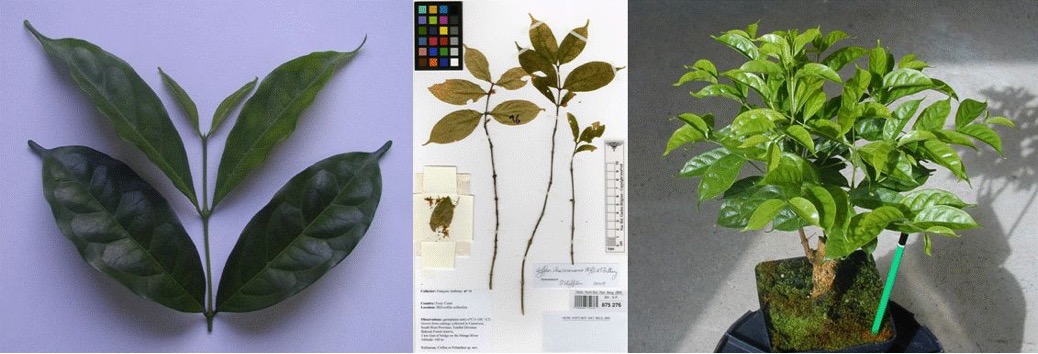
The naturally caffeine-free coffee plant, Coffea charrieriana or Charrier Coffee, was discovered in the Bakossi Forest Reserve in Western Cameroon and is the first of its kind in Central Africa. It joins an Ethiopian un-caffeinated variety of Arabica and a Kenyan coffee plant – both recently discovered – and 30 out of 47 Indian Ocean Island varieties that are known to contain very little or no caffeine.
Scientists say that the ancestors of Charrier Coffee – like most of its ilk – diverged from caffeinated coffees around 11 million years ago. So far, so good, but at its first listing millions of years down the line, wild Charrier Coffee was given a ‘red’ critically threatened conservation status. A conservation effort is underway, but seeds have also been collected and exported for commercial cultivation in Costa Rica and Brazil.
Those who have tasted Charrier Coffee report it has a much less thick texture than Arabica and has an almost tea-like quality.
What has caffeine ever done for the coffee plant?
Its endangered status might not be purely down to the usual suspects of forest clearance and habitat loss – there could be other factors at play and caffeine content might be just as important to Charrier Coffee as it is to you and me.
Some experts believe that caffeine-containing plants are safer from certain insects, vertebrates, bacteria and fungi, the caffeine acting as a kind of pesticide to protect the seeds. If caffeine has potential to safeguard the plant, caffeine-free varieties grown at scale might offer much lower yields unless they are cultivated higher up mountains beyond the range of insect pests.
Lower yields would mean much higher prices and, indeed, initial batches of cultivated naturally caffeine-free coffee sold at significant premiums.
Caffeine kills coffee plants
The jury is still out on whether caffeine’s pesticidal qualities are really all that, though other species – principally tea and cocoa – have both evolved caffeine content independently of coffee, even though that is apparently a high-stakes adaptation. Experts point to the fact that caffeine is not only a pesticide but also has the potential to kill the very plant that produces it. Caffeine produced in plants is a by-product of other processes and is physically isolated in special cell compartments called vacuoles. Ironically, concentrated caffeine is poisonous to plant cells. Even the coffee tree, it seems, doesn’t want the caffeine and operates a network of its own toxic waste dumps.
One last – and bizarre – theory for the presence of caffeine is that it is there for us and, like many other plants with psychoactive ingredients, part of their success comes from human cultivation. Like honeybees collecting nectar and pollinating flowers, we are in a symbiotic relationship with tea and coffee plants, only it’s us that gets the buzz, while they enjoy the comfort and care of the extraordinary lengths we go to in cultivation.
Half Caff Coffee
Long before Western science started going on species collection to exotic locations all over the globe (and South Wales; remember the slug?) the world knew of naturally low caffeine species of coffee plant. Liberian Coffee is one such species.
Coffea liberica or Liberian Coffee, as the name suggests, is a native of west and central Africa from Angola and Uganda in the south to Liberia at its northern range. It has also become naturalised in the Indian Ocean Islands and southeast Asia and can be found in the Philippines, Indonesia, the Seychelles, the Andaman & Nicobar Islands, and Malaysia.
Liberian is the third most popular bean in the world, but the dominance of Robusta and Arabica beans means it amounts only to around 1.5% of all cultivated coffee. Despite this, its caffeine content – around half of Robusta’s – means that it fetches premium prices on the coffee market. Unlike Charrier Coffee, it still does contain an appreciable dose of caffeine.
If you fancy a half-caff, I Love Decaf has a Halfway House half-caff offering if you’re not sure you want to go the whole hog right away or you just want a little bit of extra go in your juice. Its 50% decaf portion is even produced using the chemical solvent-free Swiss Water Process – another tick towards a healthy lifestyle.
Health benefits of lower caffeine
People who are sensitive to caffeine already have a reason to cut it out; it simply makes them feel unwell. They lose sleep, they have hand tremors, they might even have heart palpitations.
Almost all of us will experience some heart pounding after a coffee binge, so it’s no surprise that – almost to the exclusion of all other caffeine side effects – the heart and circulation are major concerns.
There is a lot of contradictory evidence on the effects of coffee generally on your health. Everyone seems to agree, however, that as a specific stimulant, caffeine does have real effects on your metabolism and by cutting it out, you still get to enjoy some of the positive effects of coffee without caffeine.
Nothing seems cut and dried on caffeine however – as this workshop clearly shows. Before reading that link, you might want to either complete a degree in biomedicine or be prepared to consume a few cups of strong joe to get to the end.
There are some easy takeaways though. It seems that caffeine use is safer sitting down than an hour before you go out for a run or hit the gym. Caffeine and exercise do not mix well with regards to circulation, blood pressure and heart health.
If you are looking after your health, especially if you are incorporating exercise and activity into a healthy lifestyle, the message is clear; it is probably best to keep off the caffeine. Also it’s clear that caffeine won’t help with high blood pressure or hypertension.
There are five ways to decaffeinate, which one works for you?
There is a problem with tea and coffee packaging. It is stricken with an unsightly rash of trademarks and logos erupting from every available surface like zits on a pizza-faced teenager. The blemishes speak of a virtuous product; Organic, Fair Trade, Rainforest Alliance, sustainable, green. Separate info boxes impart details such as strength, bean, roast, blend, grind, carbon footprint and, possibly, USB compatibility. It has made shopping for hot drinks as complex and nuanced as a conference on geopolitical ethics.
We call these little reassuring information panels LoV – Logos of Virtue. They make us feel all warm and fuzzy inside.
This is one detail you should pay attention to, because how your tea or coffee is decaffeinated is arguably more important
There’s still room on the label – just – so why not add one more detail, the method of decaffeination? This is one detail you should pay attention to, because how your tea or coffee is decaffeinated is arguably more important than many of the other LoVs. For example, with the amount of decaf the world is consuming, how that caffeine is removed has measurable consequences for the environment. Differences in decaffeination can also affect taste and aroma. And the big one; effectiveness of decaffeination varies with each process and if you are buying decaf, it makes sense that you will want it to be as caffeine-free as possible.
The truth is that decaffeinated tea and coffee comes in a bewildering variety of forms but not all are created equal. With a decaf tea or coffee, a lot hinges on the method of its decaffeination. Which one should you choose and why does it matter?
Here comes the science bit
There are five known methods of decaffeination. The original method, which used salt water and benzene is no longer legal because of, well, benzene. In 1906, a chance discovery by German coffee merchant Ludwig Roselius resulted in the world’s first mass produced decaffeinated coffee. Although his coffee later turned out to be carcinogenic, Roselius made up for it all by his involvement in a 1943 plot to blow up Hitler. You win some, you lose some.
Which leaves us four ways of taking caffeine out of tea and coffee.
1. Methylene Chloride Decaffeination
Methylene chloride is bonded to caffeine molecule by molecule by soaking the tea leaves or green coffee beans. There are two methods of achieving this, directly on the beans or leaves in hot water and indirectly, where the beans or leaves are soaked in hot water to remove the caffeine and the solvent is added to the water after the beans are removed. Although ‘solvent’ and the names of most solvents sound quite scary, only the tiniest trace residue will remain on the decaf product and even that will evaporate completely over 38°C/100°F.
2. Ethyl Acetate Decaffeination
Although ethyl acetate hardly sounds much better than the previous method, decaf produced using ethyl acetate as a solvent is sometimes touted as ‘naturally decaffeinated’ because ethyl acetate is a chemical found naturally not only in tea, but also in many fruits. The process is otherwise identical to the direct and indirect methods that use methylene chloride as a solvent. Sometimes, according to learned decafficionados, ethyl acetate decaf leaves a slight chemical taste
3. Swiss Water Decaffeination
This non-solvent alternative decaf process extracts caffeine by a long soak in hot water, followed by filtering though activated carbon to remove the caffeine. The now-decaf water is added back to the drained beans or leaves so that they can reabsorb the oils and flavours. There are a few teas that use the Swiss Water decaf method, but it is most often used for coffee.
4. Carbon Dioxide (co2) Decaffeination
This is the space age version of decaf. This was probably invented when boffins meant to be working on something very clever were momentarily appalled by the state of their decaf and filled whiteboards with obscure formulae and Greek symbols to come up with a solution to the second most important problem before them. We probably won’t have interstellar space travel because of this, but who cares when the decaf tastes this good?
Having said all that, it’s not that complicated. Beans or leaves are pressure cooked with carbon dioxide. In such pressure and temperature environments, carbon dioxide (co2) goes supercritical and becomes a solvent that attracts the small caffeine molecules, leaving the larger flavour molecules intact.
5. Mountain Water Method
Similar in many respects to the Swiss Water decaffeination method and widely regarded as a cut above all other decafs, the Mountain Water Process (MWP) is also sometimes called the Mexican Water Process as it uses water from that country’s highest mountain – Pico de Orizaba.
The process starts with steaming the green coffee beans which are then soaked in a water solution, which removes the caffeine along with the flavour compounds. The water is removed from the seeds and run through a carbon filter that captures caffeine molecules to strain them from the solution. The green coffee is then soaked in all the flavour compounds and reabsorb them without the caffeine.
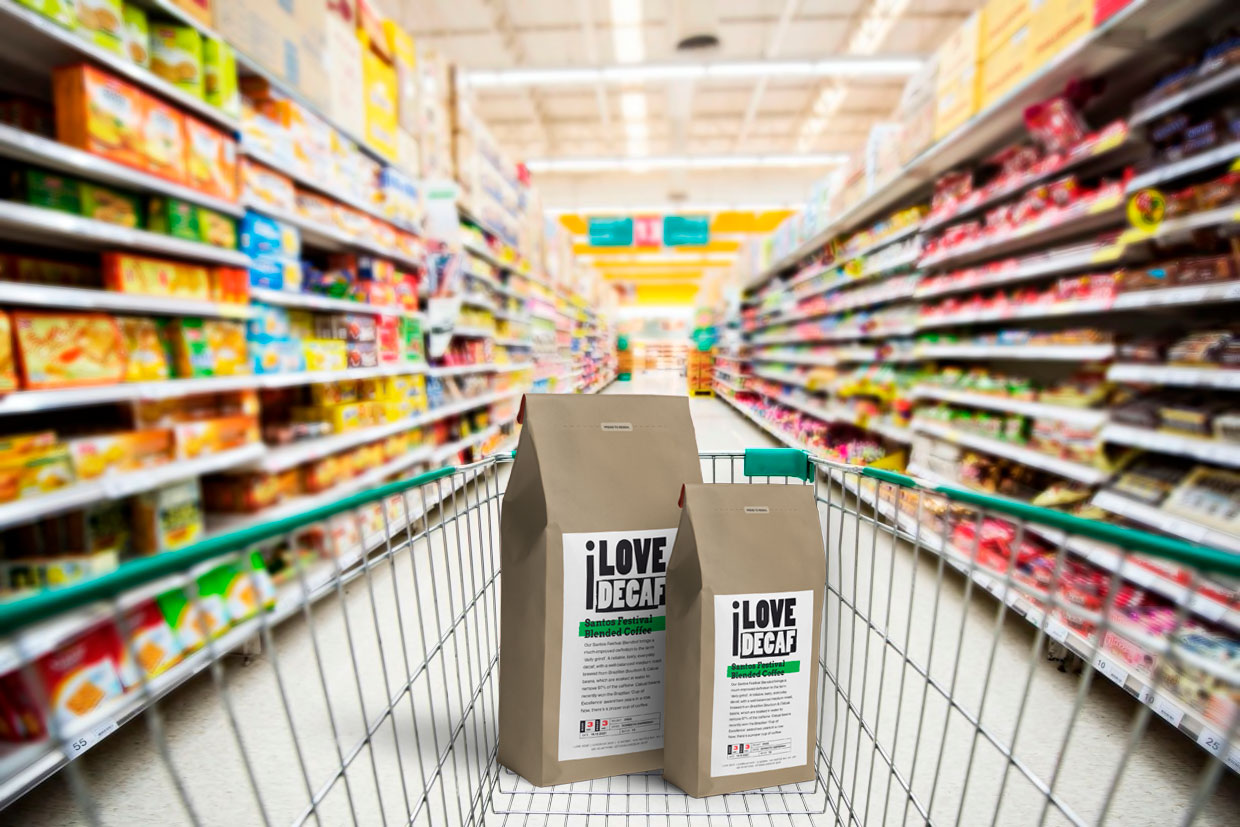
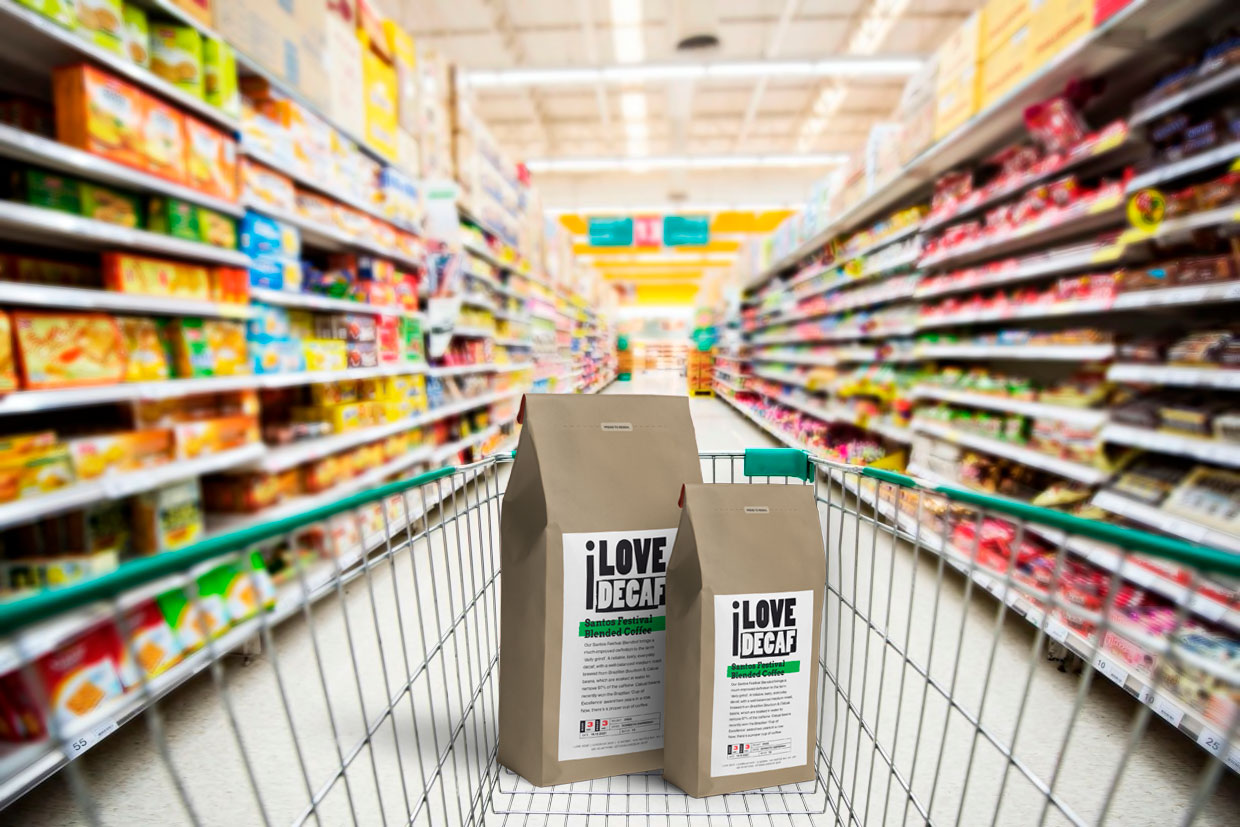
If you’re looking for decaf coffee beans in Tesco, you’re out of luck. Supermarkets don’t tend to stock good decaf coffee. But that doesn’t mean you have to give up on your caffeine-free dreams! I Love Decaf have a range of delicious decaf coffees that will make your taste buds happy.
1. Why you can’t find decaf coffee beans in Tesco
Supermarkets like Tesco don’t typically stock good decaf coffee beans. This is because there is a lower demand for decaf coffee, so it’s not as profitable for supermarkets to carry them. That’s not to say that you can’t find decaf coffee beans anywhere – you just might have to look a little harder. Specialty coffee shops and online retailers are more likely to carry a wider variety of decaf coffee beans. If you’re looking for a good cup of decaf coffee, your best bet is to search for a small, independent cafe or store that specializes in selling high-quality coffee beans.
2. What are your options when it comes to decaf in Tesco
Supermarket chains like Tesco do not stock good decaf coffee. If you are looking for a good cup of decaf, your best option is to go to a specialty coffee shop. These shops usually have a wider selection of decaf coffees, and they are roasted in-house, which means they will taste fresher. You can also order decaf coffee beans online. There are a number of online retailers that sell high-quality decaf beans, and many of them offer free shipping.
3. Where you can find decaf coffee online
If you’re looking for a good decaf coffee, your best bet is to go online. There are a lot of great websites that sell decaf coffee beans, and you’re sure to find a flavor that you love. Some of our favourites include I Love Decaf and… I Love Decaf. We have a lovely selection of decaf beans, and we offer great prices and quick shipping within the UK. So if you’re looking for a great cup of decaf coffee, be sure to check us out.
4. Flavoursome decaf and non-caff drinks
At I Love Decaf, we understand that not everyone wants to drink caffeinated drinks. That’s why we’ve created a range of superior decaffeinated and non-caffeinated drinks that are full of flavour. Whether you’re looking for a decaf coffee that tastes just like the real thing, or a non-caff tea that still has all the flavour of your favourite blend, we’ve got you covered. Our Mexican Holy Water Decaf Coffee is one of our most popular drinks, and it’s sure to become your new favourite too!
5. Why choosing decaf doesn’t mean sacrificing taste
Decaf coffee lovers, rejoice! You don’t have to sacrifice taste when choosing to cut down on caffeine. In fact, I Love Decaf offers a wide range of delicious decaf drinks that taste just as good as their caffeinated counterparts. From smooth Mexican Holy Water Decaf Coffee to our flagship Luxe Organic Honduran Decaf Coffee, there’s something for everyone. So don’t despair if you can’t find decaf beans in your local Tesco, here are some great alternatives that will make you feel right at home.
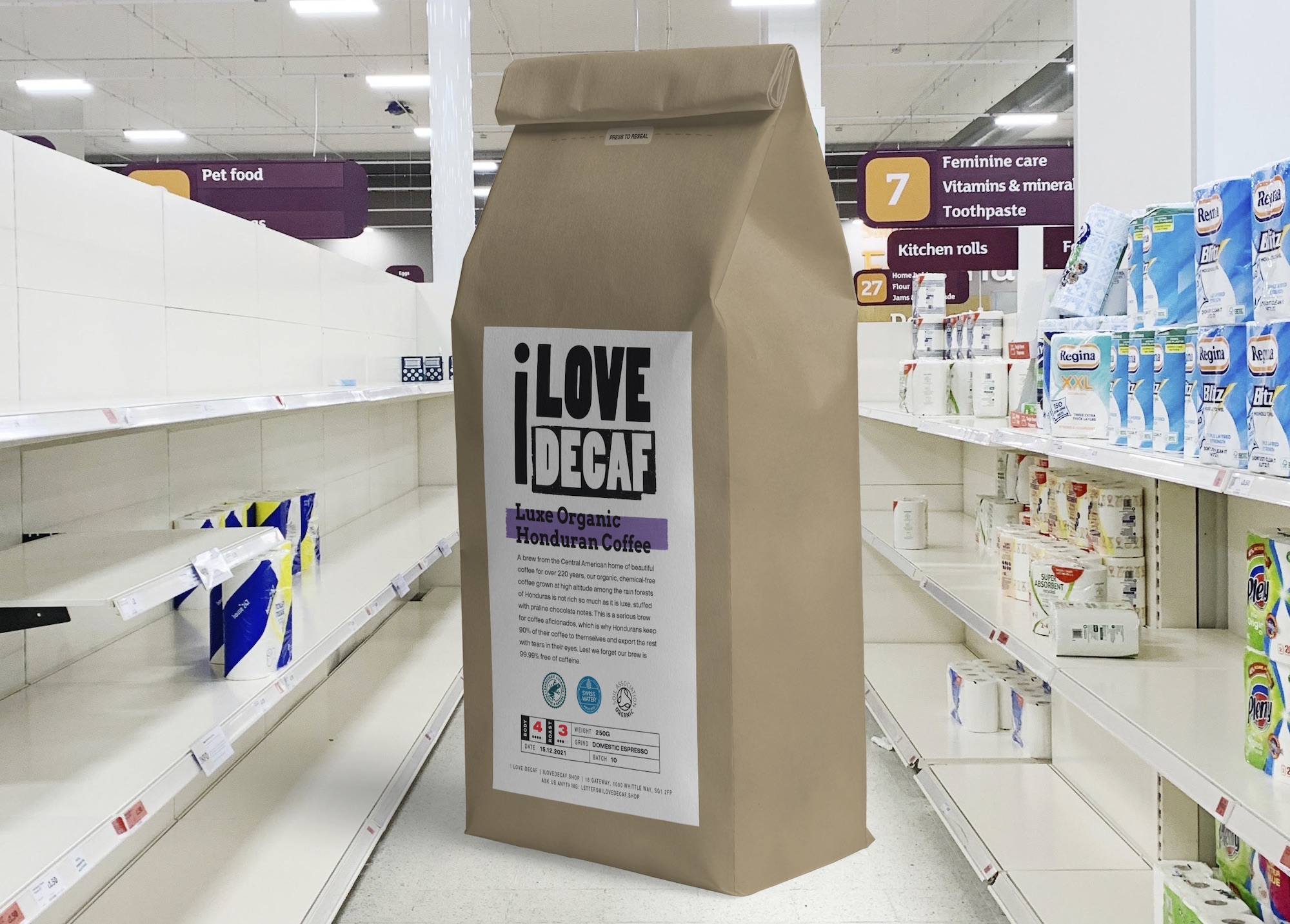
You know how it is; every time you go to the supermarket, you look at the decaf coffee on offer and feel enthusiasm being sucked from your soul. If that sounds like you, then you have tried most of the own-brand decafs already and have come to the conclusion, as we have, that really good decaf is really hard to find in a supermarket.
Many people – cofficianados and consumers alike – criticize own-brand decaf coffee for its lack of flavour, but the real problem is that it has lots of flavours, just not necessarily any pleasant ones. Even the packets remind us of that bloated feeling you get after bad coffee with its flavour notes of cat piddle and warm tyres.
There isn’t a superstore decaf that doesn’t call to mind a warm evening in a fertiliser silo – not one that we’ve discovered yet, anyway.
In fact, if we were supermarket coffee buyers, we wouldn’t go to extreme lengths to preserve the taste. We wouldn’t stick it in foiled bags with re-sealable strips. Why bother maintaining a vacuum when leaving it on the porch in an open jar would at least let the fumes escape?
Our decaf is best
We started I Love Decaf to make the best decaf coffee you can’t buy in a supermarket. We believe that some kinds of decaffeinated coffee are less like a pleasing drink and more like a punishment and we wanted to do something to set it straight. It’s not just the supermarket own-brands either; many major brand coffees miss the mark on their decaffeinated spin-offs.
That’s why asking for the best supermarket decaf coffee is like asking for the most comfortable barbed wire shirt. Just because it’s the only shirt on offer doesn’t mean you should buy it.
Our decaf is best. We started i love decaf to make the best decaf coffee you can’t buy in a supermarket.
You can’t get I Love Decaf in the supermarket
To be honest, we can’t imagine even having a meeting at any of the big supermarket chains, and that’s not just because our MD Mr Roy Bosch (he is also a part-time alligator wrestler and balloon entertainer of some note) has anger management issues with idiots, it’s because we don’t want to sit in their soulless offices drinking their horrible supermarket decaf. It’s best for all concerned if we don’t. That’s not the kind of publicity we need.